

Eastern Cornbelt:
Temperatures in the mid- to upper-80s were reported across central and southern Illinois during the week. Central Indiana was hit with 1-3 inches of rain on June 2-3, with highs in the 80s expected by the end of the week. The rain was needed in some areas, where May monthly rainfall totals were down as much as three inches from average.
Scattered storms also worked their way through northern Ohio during the week, with temperatures topping out in the upper-60s. Much warmer weather was on tap for the weekend, however.
Corn planting surged to 92-95 percent complete in the Eastern Cornbelt by the end of May, with progress tracking ahead of the average pace in all three states. Soybean planting was a full 20 percentage points or more ahead of the five-year average, with progress as of May 30 estimated at 84-89 percent complete in the region.
Western Cornbelt:

Iowa was bracing for a return of heat and high humidity in early June, with temperatures expected to reach the upper-80s and low-90s across the state late in the week and over the coming weekend. Hot weather was also expected in Nebraska after the previous week brought strong thunderstorms and several tornadoes to parts of the state.
Temperatures in the 80s were reported across much of Missouri during the week, along with drier weather after the previous week’s storm activity. Growers were able to move quickly on the remaining planting activities in early June.
Planting progress was wrapping up and tracking ahead of the average pace for most crops. The regional corn crop was 92-99 percent planted by May 30, while soybean planting had progressed to 93-94 percent complete in Iowa and Nebraska. Nebraska growers also had 45 percent of the sorghum planted by that date, trailing the state’s five-year average.
Missouri growers had only 44 percent of the soybeans planted by May 30, but cotton planting in the state was tracking 20 percentage points ahead of normal at 98 percent complete.
Southern Plains:
After some strong thunderstorms and tornado activity in central and western Kansas during the final days of May, dry, hot weather returned to much of the state in early June, with highs climbing to the mid- to upper-80s.
Central Oklahoma was also under a tornado watch on May 27-28 as strong thunderstorms pushed through the state, bringing heavy rain, hail, and strong winds. Scattered thunderstorms were reported in parts of western Texas during the first days of June, and strong thunderstorms brought 3-5 inches of rain and flash flooding to parts of New Mexico on May 29-30.
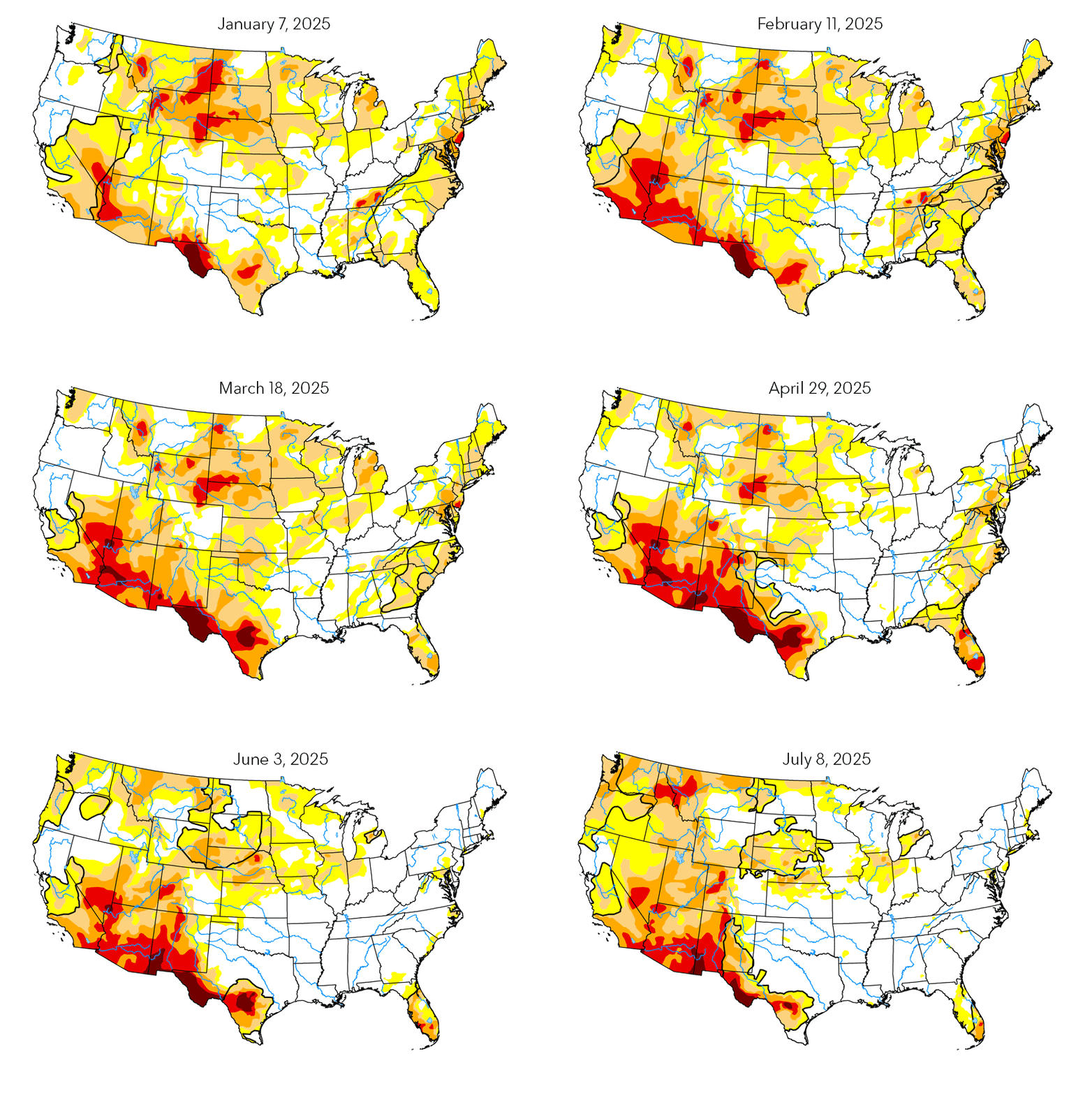
The June 3 U.S. Drought Monitor continued to show extreme-to-exceptional drought across much of New Mexico, western Colorado, and the western edge of Texas, but Kansas and Oklahoma were essentially drought-free.
“I guess the main story here in Central Texas is we had a drought busting rain since May 12,” said one contact. “This has put a stop or at least a big slowdown to fieldwork and pasture work.”
Corn planting as of May 30 had progressed to 95 percent complete in Texas and 83 percent in Kansas, with some 58 percent of the Kansas soybean crop planted. Cotton planting was estimated at 66 percent complete in Kansas, 54 percent in Texas, and 39 percent in Oklahoma, while sorghum planting lagged at just 17 percent complete in Kansas, 26 percent in Colorado, 30 percent in Oklahoma, and 82 percent in Texas.
South Central:
Flood warnings were in effect at several locations in Arkansas along the Black, Cache, and White Rivers at midweek due to recent heavy rain and cool temperatures. Severe weather alerts were also in effect for parts of Kentucky and Middle Tennessee at midweek, with forecasts warning of heavy rain, large hail, and damaging winds.
Heavy rain was also causing problems in parts of eastern Texas and Louisiana, with forecasts warning of flash flooding and gusty winds after one of the wettest Mays on record. Many areas were expecting an inch or more of additional moisture as bands of heavy rain track through both states in early June.
Planting was generally equal to or slightly ahead of the average pace for all crops in the region, although progress was lagging in Louisiana because of the wet conditions. USDA reported that 92-98 percent of the corn was planted in Kentucky and Tennessee by the end of May, with soybean planting estimated at 89 percent complete in Mississippi, 81 percent in Arkansas, 798 percent in Louisiana, and 66 percent in Kentucky and Tennessee.
Cotton planting was reported at only 63 percent complete in Louisiana by May 30, compared with 83 percent in Mississippi and 92 percent in Arkansas and Tennessee. Some 89-91 percent of the regional rice crop was emerged by the end of May.
Southeast:
Sources reported a brisk planting and application pace in much of the Southeast in early June, although some areas were expecting heavy rain as the week progressed.
Forecasts warned of torrential rains and flooding in parts of North Carolina on June 2-4, with the entire region under a level one threat for severe weather. Some areas had collected 2-6 inches of rain by June 3, with another 1-3 inches likely on June 4, along with 45 mph winds.
North Carolina needs the precipitation. “Lack of moisture has slowed us down,” said one industry contact. “If we get more moisture, we should finish soybean planting soon. We’ll sell a little soybean fertilizer and topdress some late corn, but most of our tons are already out.”
Rain was also expected across central Georgia late in the week, and sources reported some thunderstorm activity in northern Alabama on June 3. Conditions were wet across southern Florida during the first days of June as well, with weekend highs in the 90s expected.
Planting of most crops in the Southeast was well-advanced and tracking slightly ahead of the average pace. Cotton planting progress as of May 30 was estimated at 78-89 percent complete in the region, with 73-89 percent of the peanuts planted. North Carolina growers also had 60 percent of the soybeans and 100 percent of the corn planted by that date.