

Eastern Cornbelt:
After a weekend of heavy rain and additional thunderstorm activity at midweek, several central Illinois counties were under a flash flood warning on July 15. Multi-day rainfall totals ranged from 2-4 inches across parts of central and northern Illinois.
Saturated field conditions were also reported in central Indiana, with some areas posting 12 inches of rain since the start of summer. Forecasts warned of an addition 1-2 inches over the coming weekend.
Strong storms were also tracking through parts of central and northern Ohio during the week, with forecasts warning of up to three inches of rain and gusty winds in northeastern areas of the state on July 15.
Crop conditions remained favorable in the region in mid- July. Good or excellent ratings were assigned to fully 75-79 percent of Ohio’s corn and soybeans on July 11, compared with 70-73 percent in Indiana and 56-60 percent in Illinois. The winter wheat harvest had reportedly progressed to 95 percent complete in Illinois, 77 percent in Indiana, and 69 percent in Ohio by that date.
Western Cornbelt:

A band of strong thunderstorms churned through parts of central, northern, and eastern Iowa on July 14, with extensive crop and structural damage reported due to damaging winds, hail, and at least 12 confirmed tornadoes.
The previous weekend also brought severe thunderstorms to parts of western Nebraska, with reports of baseball-sized hail in Alliance, Neb., on July 9. Another round of storms tracked through parts of the Nebraska Panhandle on July 13.
Missouri was also in the crosshairs at midweek, with 1-4 inches of rain reported across a swath of central Missouri on July 15.
Crop conditions remained very favorable in Nebraska, where 77-79 percent of the corn and soybeans were rated as good or excellent, along with 80 percent of the sorghum. USDA placed 65-66 percent of Iowa’s corn and soybeans in the good or excellent categories on July 11, compared with 56-61 percent in Missouri. Cotton and rice crops in Missouri were 69 percent good or excellent on that date.
Southern Plains:
Strong thunderstorms were moving through parts of Kansas as the week progressed, with reports of strong winds and heavy rain in some locations. Forecasts warned of 1-3 inches of rain in Topeka at midweek, prompting a flash flood watch. Even higher amounts were expected in northeastern areas of the state.
Strong to severe storms also swept across central Oklahoma over the previous weekend, with reports of high winds, hail, and heavy rain in some areas. Sources in western Texas reported hot, dry weather at midweek, with temperatures climbing to the upper-80s and 90s.
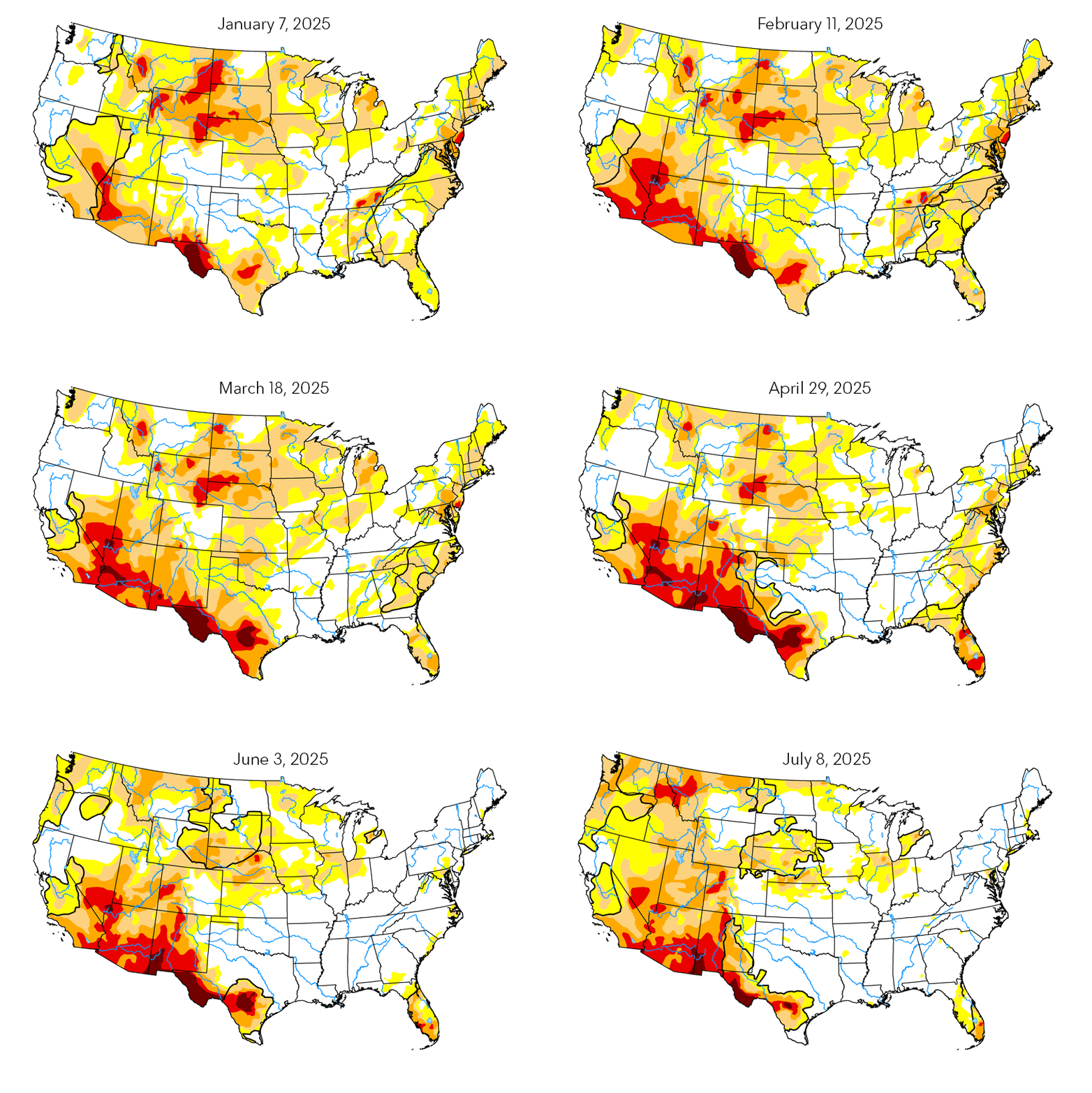
The U.S. Drought Monitor on July 15 continued to report a wide band of extreme-to-exceptional drought extending from central and northern New Mexico into western Colorado. While much of eastern Colorado was drought-free, nearly all of New Mexico was experiencing some form of drought at mid-month.
Thanks to what one source described as some “drought-busting rains” across Texas in June, crop conditions were generally favorable in the region. Fully 77 percent of Colorado’s corn was rated as good or excellent on July 11, compared with 70 percent in Kansas and 68 percent in Texas. The Kansas soybean crop was 62 percent good or excellent, while cotton in those two categories totaled 43 percent of the acreage in Texas and 65 percent in Kansas and Oklahoma.
The regional sorghum crop looked great in mid-July, with good or excellent ratings assigned to 90 percent of the acreage in Oklahoma, 80 percent in Colorado, 73 percent in Kansas, and 67 percent in Texas.
South Central:
Strong thunderstorms churned through parts of northern Arkansas, southern Kentucky, and Middle Tennessee on July 10-12, with reports of damaging winds and large hail in some locations. High heat and humidity was reported in Louisiana and Mississippi during the week.
Plenty of heat and moisture this summer has contributed to favorable crops conditions in the South Central region. Fully 80-84 percent of the corn in Tennessee and Kentucky was rated as good or excellent on July 11, while soybeans in those two categories totaled 81 percent of the acreage in Kentucky and Mississippi, 78 percent in Louisiana, 76 percent in Tennessee, and 67 percent in Arkansas.
The cotton crop was also described in very favorable terms, with good or excellent ratings assigned to 62 percent of the acreage in Tennessee, 72 percent in Mississippi, 82 percent in Arkansas, and fully 95 percent in Louisiana.
Sources reported “a very healthy urea rice run” this year, thanks to an early start and what one contact described as “a heavy tail.” Some areas were expecting demand for the final application to continue for another 7-10 days. USDA placed fully 86 percent of Mississippi’s rice crop in the good or excellent categories at mid-month, compared with 65-68 percent in Louisiana and Arkansas, and 55 percent in Texas.
Southeast:
Much of the Southeast experienced high heat and humidity at mid-month, with frequent afternoon thunderstorms popping up on the radar.
Severe thunderstorm warnings were issued at midweek for parts of Virginia and Maryland as the Mid-Atlantic region sweltered under steamy weather conditions. Florida was also experiencing widespread showers from a tropical wave during the week
One week earlier, Tropical Storm Elsa brought wind and rain to parts of Georgia, North Carolina, and Virginia. Rainfall totals across central North Carolina ranged from 1-3 inches as Elsa passed through, with 50 mph wind gusts reported in some locations.
Surplus moisture contributed to favorable crops conditions in mid-July. USDA assigned good or excellent ratings to 78 percent of North Carolina’s corn and 67 percent of the state’s soybeans on July 11, while cotton in those two categories totaled 64 percent of the acreage in North Carolina, 74-75 percent in Georgia and South Carolina, 82 percent in Alabama, and 92 percent in Virginia.
The regional peanut crop was also described in very favorable terms, with good or excellent ratings assigned to 67 percent of the acreage in Florida, 76-77 percent in North Carolina and Georgia, 85-86 percent in Alabama and South Carolina, and 95 percent in Virginia.