

Eastern Cornbelt:
Seasonal temperatures and mostly dry weather was reported across the Eastern Cornbelt in early August after a series of thunderstorms during the last days of July. Highs in the mid- to upper-80s were common across Illinois, Indiana, and Ohio during the week, with higher temperatures and humidity expected by the coming weekend.
Crop conditions continued to be described in generally favorable terms, particularly in Ohio. “We’ve had timely rains,” said one Illinois contact at midweek. “It’ll be a good crop, but not a great crop.”
USDA on Aug. 1 rated 67-68 percent of the corn and soybeans in Illinois as good or excellent, compared with 72-76 percent in Indiana and 74-80 percent in Ohio.
Western Cornbelt:
After a week of slightly cooler temperatures, another wave of high heat and humidity was taking aim at the Western Cornbelt region. Temperatures in the low- to mid-90s were expected across Nebraska by the coming weekend.

USDA rated 59-64 percent of the corn and soybeans in Iowa and Missouri as good or excellent on Aug. 1, compared with 71-80 percent in Nebraska. Crop quality in all three states was slightly lower than the previous week. Missouri’s cotton and rice were 64-66 percent good or excellent, also down slightly, while Nebraska’s sorghum crop had slipped to 64 percent good or excellent, down from 75 percent in late July.
Southern Plains:
Temperatures in eastern and central Kansas warmed to the low-90s as the week advanced, with high humidity driving the heat index into the triple digits. Forecasts warned of potentially strong thunderstorms over the coming weekend.
Temperatures in the 90s were also reported across much of Oklahoma during the week. In Texas, the week began with lows dropping into the 60s in northern areas of the state, but the return of high heat and humidity was expected to usher in some strong thunderstorms in southern Texas as the week advanced.
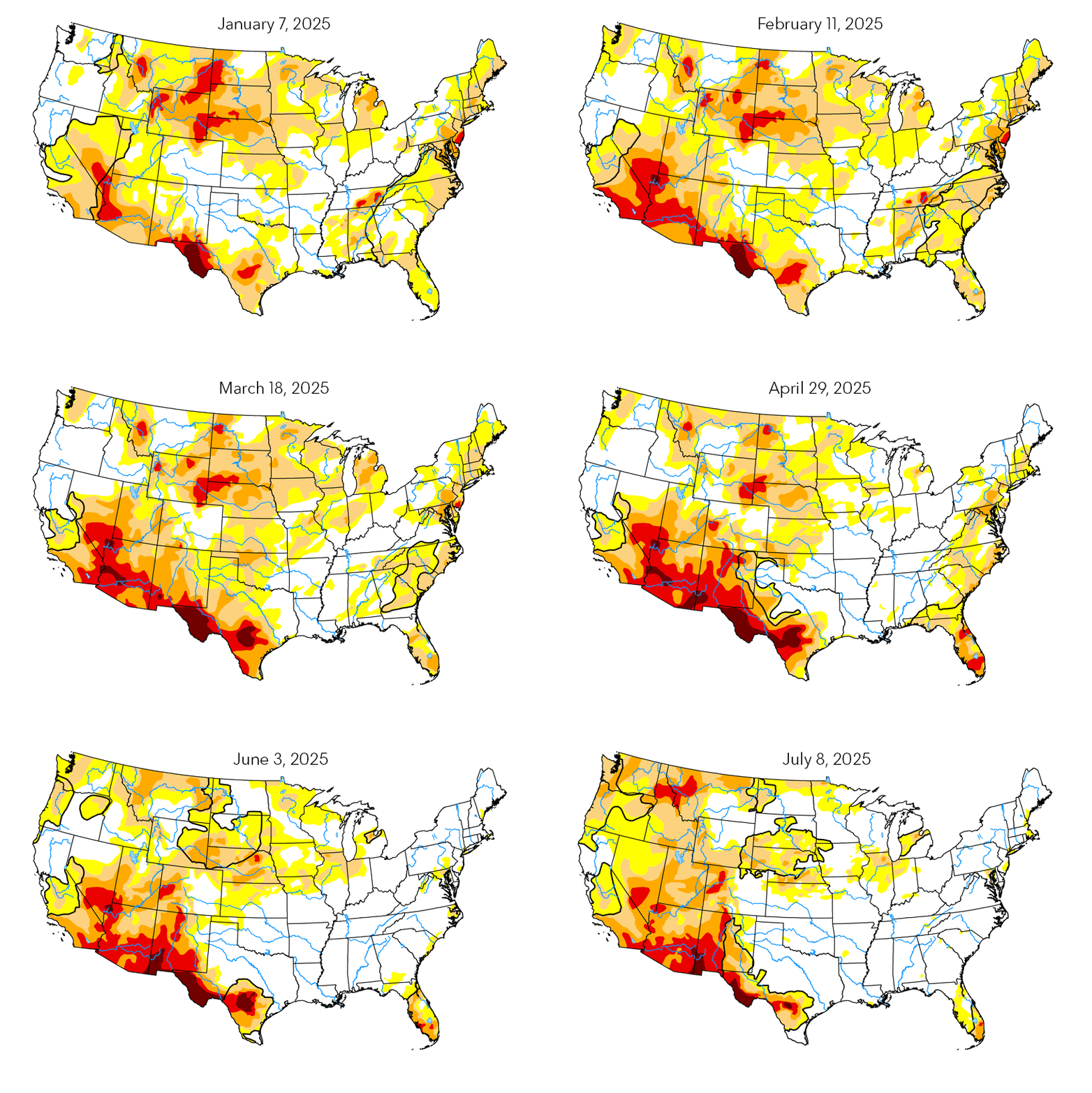
While nearly all of New Mexico remained locked in drought in early August, powerful storms unleashed heavy rains and flash flooding on Aug. 3 in the northern mountains and some northeastern areas of the state. Heavy mountain rains in Colorado on Aug. 2 also prompted warnings of flash floods and mud slides.
USDA rated 63-65 percent of the regional corn as good or excellent on Aug. 1, along with 59 percent of the Kansas soybean crop. Good or excellent ratings were also assigned to 61 percent of the cotton in Kansas, compared with 54 percent in Texas and 41 percent in Oklahoma. Sorghum in the good or excellent categories totaled fully 81 percent of the acreage in Colorado, compared with 60-66 percent in the rest of the region.
South Central:
Strong thunderstorms hammered parts of Tennessee on the last day of July, dropped a record 3.13 inches of rain in Nashville and leaving thousands of residents without power. Kentucky sources reported high heat and humidity during the week, with highs pushing to the mid- to upper-80s.
Louisiana experienced cooler weather and widespread rainfall early in the week after ten consecutive days of heat warnings and advisories. Temperatures gradually warmed as the week progressed, however, with highs returning to the low-90s as the wet weather moved out. High heat and humidity was also reported across Mississippi during the week.
The combination of heat and moisture continued to benefit crops across the South Central region. Fully 82-84 percent of the corn in Kentucky and Tennessee was rated as good or excellent on Aug. 1, while soybeans in those two categories totaled 64 percent of the acreage in Arkansas, 79 percent in Tennessee, and 82-83 percent in Mississippi, Louisiana, and Kentucky.
Cotton and rice crops were also described in favorable terms. Fully 96 percent of Louisiana’s cotton was rated as good or excellent on Aug. 1, along with 81-82 percent of the acreage in Arkansas and Mississippi, and 68 percent in Tennessee. Rice in the good or excellent categories totaled 92 percent of the crop in Mississippi, 74 percent in Louisiana, 66 percent in Arkansas, and 64 percent in Texas.
Southeast:
High heat and humidity contributed to several strong thunderstorms in the Southeast in late July and early August. Tornado warnings were posted for parts of North Carolina and Virginia on July 31, with widespread power outages reported due to severe weather.
Strong thunderstorms also moved through South Florida on Aug. 3-4, coupled with a soaring heat index that climbed into the low triple digits. Parts of Georgia and Alabama also picked up scattered showers at midweek, with highs reported in the upper-80s to mid-90s.
Most of the crops were in good shape in the region in early August. USDA rated 68-74 percent of North Carolina’s corn and soybeans as good or excellent on Aug. 1, while cotton in those two categories totaled 64 percent of the acreage in North Carolina, 78 percent in Alabama, 80 percent in South Carolina, and 92 percent in Virginia.
The regional peanut crop was in exceptional condition, with good or excellent ratings assigned to fully 97 percent of the crop in South Carolina, 94 percent in Virginia, and 73-77 percent of the acreage in the rest of the region.