

Eastern Cornbelt:
Hot, humid weather continued across much of the Eastern Cornbelt in mid-August, along with scattered thunderstorms. Heavy moisture from Tropical Depression Fred hit parts of northeastern Ohio at midweek, pushing monthly rainfall totals to more than five inches for some locations.
Highs in the mid- to upper-80s continued to benefit corn and soybeans at mid-month. USDA on Aug. 15 rated 75-81 percent of the Ohio corn and soybean crops as good or excellent, compared with 71-74 percent of the acreage in Illinois and 68-71 percent in Indiana.
Western Cornbelt:
Most of the Western Cornbelt experienced high heat and humidity in mid-August, although forecasts called for slightly cooler weather and an increased chance of showers by the coming weekend.
Midweek temperatures across Nebraska and Iowa were reported in the upper-80s to low-90s, with head index values climbing into the mid-90s. Sources also reported hazy skies in western Nebraska from wildfires burning in the western states.
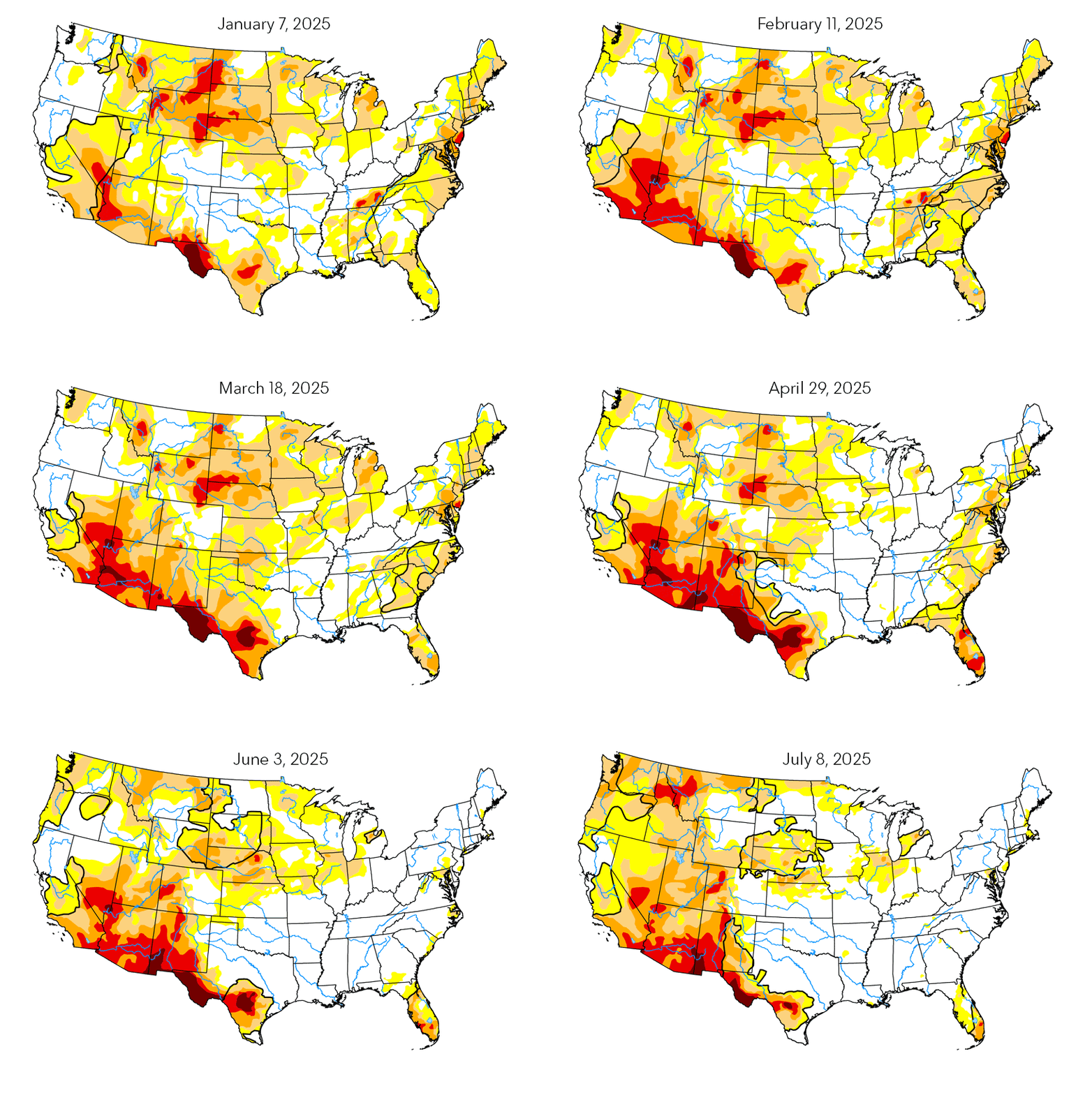
Areas of severe-to-extreme drought were expanding across northern Iowa in mid-August, with much of Nebraska also experiencing some form of drought at mid-month. While crop conditions remained generally favorable in the region, ratings were down from the previous week for most crops.
USDA rated 58 percent of the corn and soybeans in Iowa as good or excellent on Aug. 15, compared with 65-67 percent in Missouri and 69-72 percent in Nebraska. Missouri’s cotton was 66 percent good or excellent, while 68 percent of the state’s rice crop fell into those two categories. Nebraska’s sorghum crop remained at 59 percent good or excellent, unchanged from the prior week.
Northern Plains:
High heat and humidity persisted across the Northern Plains in mid-August, along with a thick layer of smoke in parts of the Dakotas. Highs in Minnesota were reported in the upper-80s and low-90s during the week. Temperatures in the Dakotas climbed to the mid-90s at midweek, with heat index values near or in the low-100s.
The entire Northern Plains region was experiencing drought conditions ranging from moderate to exceptional in mid-August, with the worst drought reported across North Dakota, northern Minnesota, and north-central South Dakota. The parched conditions speeded the harvest of small grains in the region, but crop conditions were deteriorating rapidly.
Good or excellent ratings on Aug. 15 were assigned to 29-35 percent of the soybeans and corn in Minnesota, compared with 22-24 percent in South Dakota and 14-20 percent in North Dakota. The corn and soybean acreage rated as poor or very poor totaled 26-28 percent of the crops in Minnesota, 39 percent in South Dakota, and 47-52 percent in North Dakota.
Minnesota growers already had 86-92 percent of the oats, barley, and spring wheat harvested by Aug. 15, compared with 80-88 percent in South Dakota and 43-57 percent in North Dakota. USDA placed 16-19 percent of Minnesota’s spring wheat and barley in the good or excellent categories at mid-month, with 37-40 percent of the acreage rated as poor or very poor.
North Dakota’s spring wheat and barley was in considerably worse shape, with just 8-12 percent rated as good or excellent and 60-61 percent as poor or very poor. South Dakota’s spring wheat crop was just 7 percent good or excellent, with fully 73 percent of the acreage rated as poor or very poor on Aug. 15.
Northeast:
Temperatures in the 80s were reported across much of the Northeast during the week, with high humidity giving way to an increased chance of thunderstorms later in the week.
Flash flood watches were in effect for portions of central, northern, and northeastern Maryland on Aug. 17 after multiple bands of thunderstorms developed across the central and upper Chesapeake Bay coastal areas.
More rain was expected across Pennsylvania and New England on Aug. 19 as the remnants of Tropical Depression Fred pushed into the region. The storm dumped heavy rain over portions of the Florida panhandle and southern Georgia, prompting widespread flood watches. Forecasts warned of 1-2 inches possible in parts of southern and central New England, along with flash flooding.
Crop conditions remained favorable across the Northeast, thanks to plentiful rain and summer heat. Some 37 percent of Pennsylvania’s corn crop was in the dough by Aug. 15, slightly behind the average for this time of year, with fully 87 percent of the crop rated as good or excellent.
Eastern Canada:
High heat and humidity were reported across Eastern Canada at mid-month, along with an influx of moisture from Tropical Depression Fred.
Heat warnings were issued for all of the Maritimes over the previous weekend. Highs in the upper-20s C were reported in southern Ontario at midweek, with humidex values climbing to the mid- to upper-30s C. In southern Quebec, temperatures were expected to reach 30 C again late in the week, with humidex values reaching 40 C in some areas.
The remnants of Fred moved into the region at midweek, producing heavy rainfall in parts of southern Ontario and Quebec. Many of those areas have already experienced an unusually wet summer, which has benefited corn crops but hampered the harvest of winter wheat in some locations.