

Eastern Cornbelt:
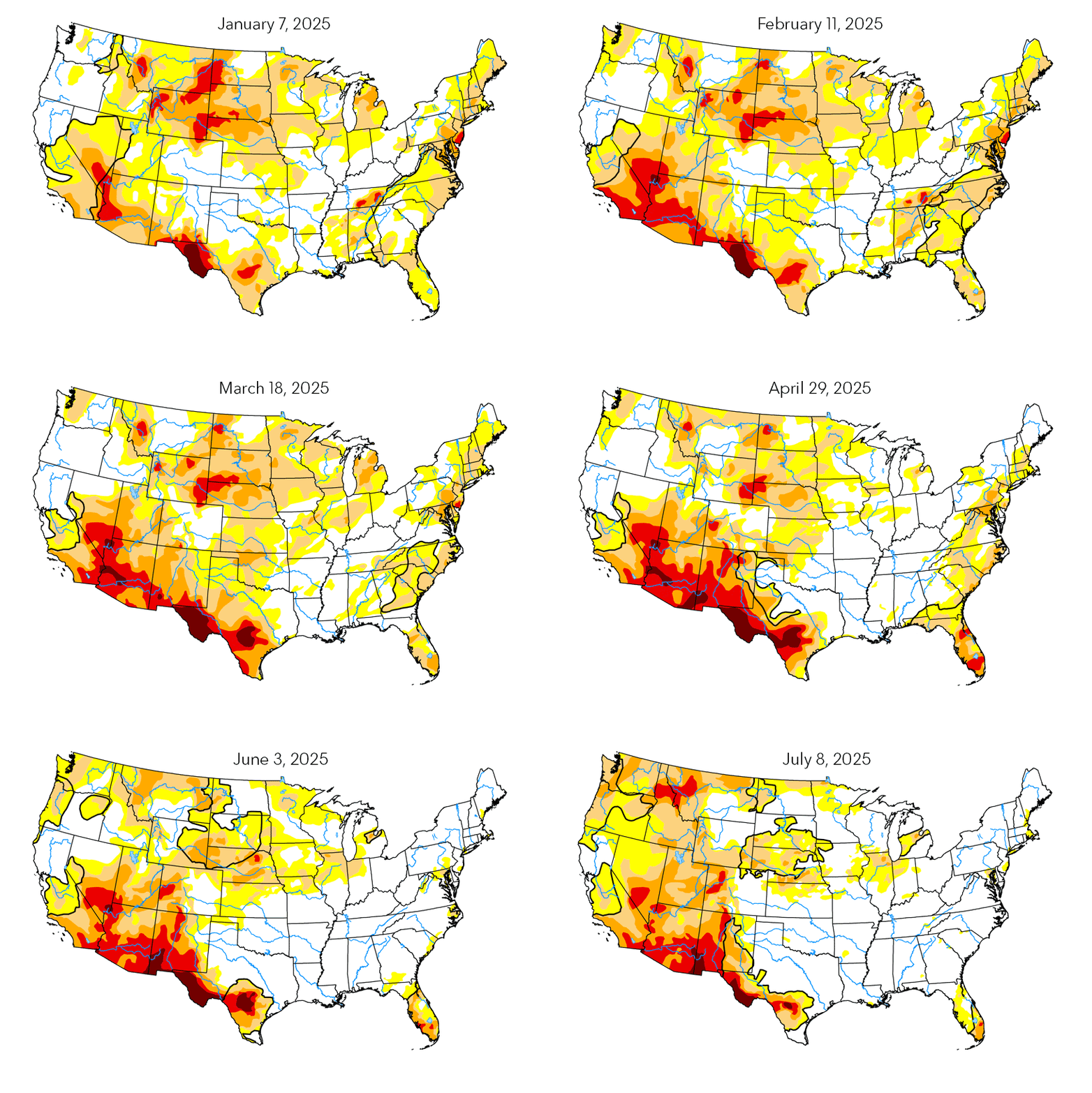
Wet, windy weather dominated across the Eastern Cornbelt for much of the week, limiting fieldwork and further delaying preplant fertilizer applications in many areas.
Temperatures in the 50s were common across Illinois, Indiana, and Ohio at midweek, with reports of heavy showers over parts of central Indiana. Gusty winds also battered all three states, and much colder weather was on tap for the end of the week. Forecasts warned of a mix of rain and snow across the region on April 8, with temperatures staying in the 40s.
Western Cornbelt:
Unseasonably cold and windy conditions were reported across much of Iowa during the week, with a mix of rain and snow in some locations late in the week. Much warmer weather was on tap for the coming weekend, however, with sources expressing optimism about getting in the field.
Strong winds also battered much of Nebraska during the week, with gusts of 55-65 mph reported. The state experienced colder than normal temperatures for early April, with some areas seeing a mix of rain and snow during the week.
Wet, windy weather hammered Missouri as well, with parts of the state bracing for a freeze by the weekend. Temperatures were expected to drop into the upper-20s on April 8-9 in some areas of the state.
Oat planting was reported at 14 percent complete in Nebraska and 7 percent in Iowa by April 3, with both states tracking at or slightly ahead of the average pace. Nebraska’s winter wheat crop was rated at 27 percent good or excellent, compared with 58 percent in Missouri.
Southern Plains:
Strong winds, along with critically dry conditions, prompted red flag fire warnings in western Kansas, eastern Colorado, western Oklahoma, central and northern Texas, and much of New Mexico during the week.
Except for eastern areas of Kansas, Oklahoma, and Texas, the entire Southern Plains region was in some form of drought in early April, with most of the region experiencing severe-to-extreme drought conditions. Broad patches of exceptional drought – the worst drought category – were also evident across Texas, New Mexico, and Oklahoma.
Winds of 30-60 mph hammered western Kansas, Colorado’s Front Range, and northern and western Oklahoma during the week. Severe weather rolled through northern Texas early in the week, producing four confirmed tornadoes but little precipitation. The dry cold front also brought strong winds and low humidity to central Texas.
Temperatures across New Mexico were 10-20 degrees above normal during the week, with highs reaching the 80s in eastern areas of the state. Low humidity, dry vegetation, and gusty winds prompted fire weather warnings for most of the state during the week.
The worsening drought was most evident in the region’s winter wheat ratings. As of April 3, fully 81 percent of the Texas wheat crop was rated as poor or very poor, along with 44 percent of the crop in Oklahoma, 30 percent in Kansas, and 29 percent in Colorado.
As for spring planting, Texas growers had 43 percent of the sorghum, 6 percent of the cotton, and 54 percent of the corn crop planted by April 3, while the Kansas corn crop was rated at just 2 percent planted. “Corn planting is wrapping up here and moving to cotton,” said one Texas source. “Application on pastures and hayfields is very limited thus far.”
“Planters are running in the central part of Kansas, but wet fields in the eastern third are limiting what can go,” added a Kansas source. “Western Kansas is dry, and wheat is going backwards. Nothing sounds promising in the weather forecast for moisture.”
South Central:
Heavy rain, tornadoes, and damaging winds were reported across the South Central region during the week.
Strong thunderstorms battered southern Arkansas as the week began before moving into Middle Tennessee and southern Kentucky, with reports of heavy rain and strong winds on April 5-6. Temperatures across Middle Tennessee were expected to fall at the end of the week, with highs only reaching the 40s and 50s and widespread frost likely on April 9-10.
A band of thunderstorms on April 5-6 hit southeastern Louisiana with 60 mph winds and 1-3 inches of rainfall, and also generated at least six tornadoes in Mississippi and three in Texas. Flash flood warnings were in effect for multiple Mississippi counties at midweek, with another 2-3 inches of rain possible in some locations.
Spring planting was underway, but lagging the average pace in the region. Rice planting as of April 3 was reported at 49 percent complete in Louisiana, 43 percent in Texas, 3 percent in Mississippi, and 2 percent in Arkansas, with all four states trailing their five-year averages.
Southeast:
Powerful storms brought tornadoes, damaging winds, and heavy rain to many parts of the Southeast during the week.
More than two dozen tornadoes were reported across the South during the week, with ten confirmed in South Carolina alone on April 5. As of midweek, the number of confirmed tornadoes since Monday was put at 11 in South Carolina, five in Georgia, and two in Alabama.
The storms also produced heavy rain, resulting in numerous flood watches and warnings across southwestern and south-central Georgia, southeastern Alabama, and northern Florida. The National Weather Service warned that Tallahassee, Fla., could see 4-6 inches of rain by April 7-8.
Sources reported some fieldwork and planting underway in the region, as soil and weather conditions allowed. “Planting has slowed because we are getting rain, but before that folks were busy planting,” said one Georgia contact. “Application is wide open.”
Three percent of North Carolina’s corn crop was planted by April 3, equal to the five-year average. “It’s a little cool and wet, but they are working right now,” said one source in that state. “It’s kind of late, but not too bad.”
Sources continued to comment on potential application rate reductions this spring. “Tonnage in Florida is down due to high input costs and low citrus returns due to freeze damage and diseases,” said one source. “Low beef prices have contributed to lower fertilizer demand for pastures and hayfields also.”