

Eastern Cornbelt:
Wet weather continued to delay fieldwork and spring planting across much of the Eastern Cornbelt, but much warmer and drier conditions were in the forecast for the second week of May.
Rainfall blanketed most of central and southern Illinois as the week progressed, with reports of damaging winds and hail in some southern parts of the state on May 5. Similar conditions were reported in central Indiana and northern Ohio, where highs topped out in the mid-60s on May 5-6.
During the second week of May, however, forecasts called for clear, warm weather through much of the region, with highs reaching the 70s in northern Ohio and the low-80s in central Indiana. Forecasts even talked of highs reaching the upper-80s and low-90s in parts of Indiana and Illinois on May 9-11.
With planting progress lagging considerably, growers are looking forward to the weather improvement. Corn planting in Illinois was just 7 percent complete by May 1, well behind the 43 percent five-year average. Progress in Indiana and Ohio was rated at 3-6 percent complete, also trailing the 16-25 percent average pace.

The regional soybean crop was 2-5 percent planted by May 1, compared with five-year averages of 19 percent in Illinois, 13 percent in Indiana, and 8 percent in Ohio. Oat planting in Ohio was also lagging at 46 percent complete by May 1, compared with 61 percent on average.
Western Cornbelt:
Cool temperatures and scattered showers moved through Iowa as the week progressed, limiting spring fieldwork in many areas. The wet weather was expected to continue through the Mother’s Day weekend, but highs in the 80s were on tap for the second week of May.
Cold, wet weather was also reported in Nebraska during the week, with western areas of the state collecting most of the moisture on May 4 followed by eastern locations on May 5. Much of Missouri also experienced a wet week, with 1-3 inches of rain reported across the state.
The wet spring has delayed planting significantly. Just 27 percent of Missouri’s corn was planted by May 1, well behind the 52 percent five-year average. Progress in Iowa lagged even more at 9 percent complete, compared with an average of 42 percent, while Nebraska corn growers had 28 percent of the crop seeded by May 1, behind the 34 percent average pace.
Soybean planting was reported at 4-5 percent complete in Iowa and Missouri, compared with five-year averages of 17 percent and 6 percent, respectively. Soybean planting in Nebraska was actually ahead of schedule, however, with progress reported at 19 percent complete compared with the five-year average of 14 percent.
Missouri growers had 8 percent of the cotton planted by May 1, equal to the average pace. Rice planting in the state was way behind, however, with progress estimated at just 5 percent complete by May 1, compared with a 51 percent five-year average.
California:
Unseasonably hot weather moved into Central and Northern California as the week progressed, pushing temperatures from the mid- to upper-70s up into the mid-80s and low-90s in some locations. The high temperatures were accompanies by 25-35 mph winds, raising wildfire and drought concerns.
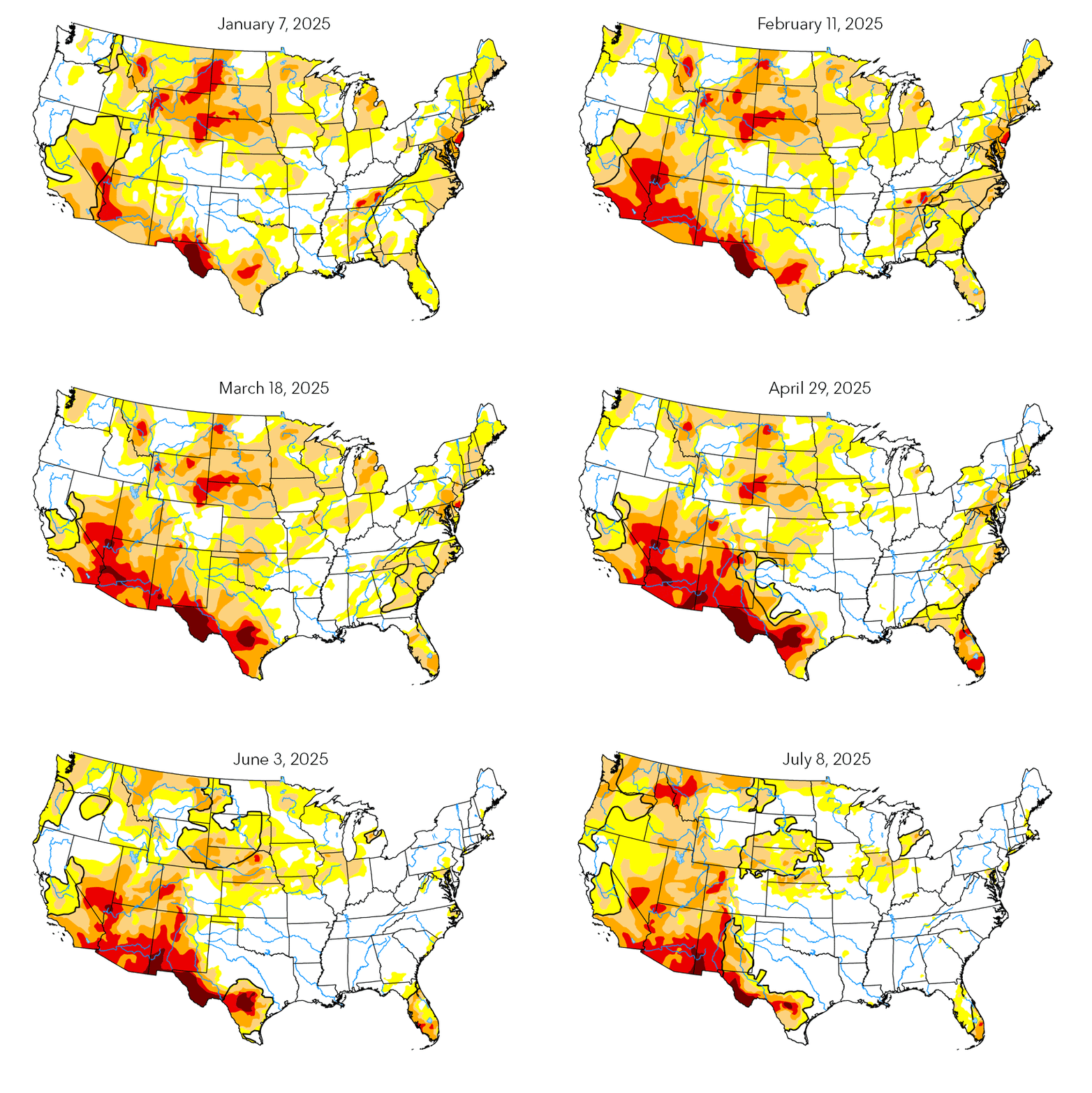
Nearly all of the state was experiencing severe-to-extreme drought
in early May, although Northern California was expecting light rain by
the weekend, along with a rain/snow mix in the Sierra.
Cotton planting in California had progressed to 95 percent complete by May 1, well ahead of the five-year average. Rice planting was also ahead of average at 20 percent complete by that date.
Pacific Northwest:
Cold, wet weather was reported across Oregon and parts of Washington as the week progressed. Heavy rain was in the forecast for western Oregon on May 5-8, with up to four inches possible on the coast and 1-2 inches in the Willamette Valley. Forecasts warned of 3-6 inches of snow at higher elevations in western Oregon and western Washington.
Rainfall was also reported across southern Idaho and western and central Montana early in the week, but temperatures climbed to the 70s as the week progressed. Cooler weather and more precipitation was on tap for the coming weekend in both states, with highs in southern Idaho topping out in the mid- to upper-40s.
The planting of potatoes, sugar beets, corn, and spring grains continued in the Pacific Northwest in early May. “Potatoes are popping and corn is being planted in the Columbia Basin,” reported one contact. “Dryland areas have had a real slow start this spring.”
Idaho growers had 88 percent of the sugar beets planted by May 1, while spring wheat and barley planting had progressed to 31-44 percent complete in Montana, 57 percent in Idaho, and 65-75 percent in Washington.
Good or excellent ratings were assigned to 52-57 percent of the winter wheat acreage in Idaho, Oregon, and Washington in early May, while only 12 percent of Montana’s crop fell into those two categories.
Western Canada:
Parts of Manitoba were hit with 10-20 cm of snow on May 3. The snowfall followed heavy rain in the province over the prior weekend, including an average of 40-50 mm in the Red River Basin. As of May 2, 18 municipalities in the province had issued local states of emergency in response to flooding and infrastructure failure, according to the provincial government.
Conditions were also wet in southeastern Saskatchewan, but a contrasting weather pattern was in place across Alberta and western Saskatchewan, where sources reported extremely dry conditions. Saskatchewan’s first crop report on May 5 said just one percent of the spring crop had been seeded, trailing the 5 percent five-year average, with the greatest progress reported in southwestern Saskatchewan.
“Cooler-than-normal weather has delayed spring applications in Western Canada,” commented one regional source at midweek. “Southern Alberta is ready to go, but Saskatchewan and Manitoba are fairly quiet. It may take a couple more weeks before things start picking up.”
Another source speculated that fieldwork and fertilizer application in wet areas of Manitoba and Saskatchewan will be delayed at least through the second week of May, which he noted was three weeks later than last year and two weeks behind the average start.