

Eastern Cornbelt:
High heat and humidity sparked a number of strong thunderstorms in the Eastern Cornbelt during the week, including a supercell on June 13 that prompted tornado warnings across northern Illinois and northern Indiana. Highs in the mid- to upper-90s were common across Illinois and Indiana during the week, with heat advisories issued in both states.
The heat wave extended into Ohio, where midweek temperatures hit 93 degrees in Youngstown, 94 in Akron, and 98 in Toledo. Cooler weather was on tap for the coming weekend, however, with highs on June 18-19 expected to top out in the 70s across Ohio.
Corn planting was 93-98% complete in the Eastern Cornbelt by June 12, with progress tracking slightly ahead of the average pace in all three states. Corn emergence was also ahead of average at 96% in Illinois, 89% in Indiana, and 80% in Ohio.
Soybean planting was 92-94% complete in Indiana and Illinois, ahead of Ohio’s 80% progress. Soybean emergence was reported at 80-88% in Indiana and Illinois and 63% in Ohio as of June 12.
Western Cornbelt:

Strong thunderstorms rolled through eastern Nebraska and parts of western and central Iowa at midweek, with another round of potentially severe weather likely across southeastern Nebraska on June 16.
Much hotter temperatures were expected through the weekend and into the following week. Forecasts warned of triple digit highs across Iowa on June 19-21. Heat advisories were in effect across central Missouri during the week, with heat index readings in the triple digits.
Corn planting was 96-100% complete in the Western Cornbelt by June 12, with emergence estimated at 95% in Iowa, 92% in Nebraska, and 89% in Missouri. Soybean planting was 97-99% complete in Nebraska and Iowa and 71% in Missouri, with emergence reported at 89% in Nebraska, 84% in Iowa, and 56% in Missouri.
As for other crops, Missouri growers had 97% of the cotton planted by June 12, while Nebraska’s sorghum crop was estimated at 90% planted by that date.
California:
High heat blanketed much of California in mid-June. Triple-digit temperatures were common across the Central Valley during the week, with a number of daily record highs set on June 10.
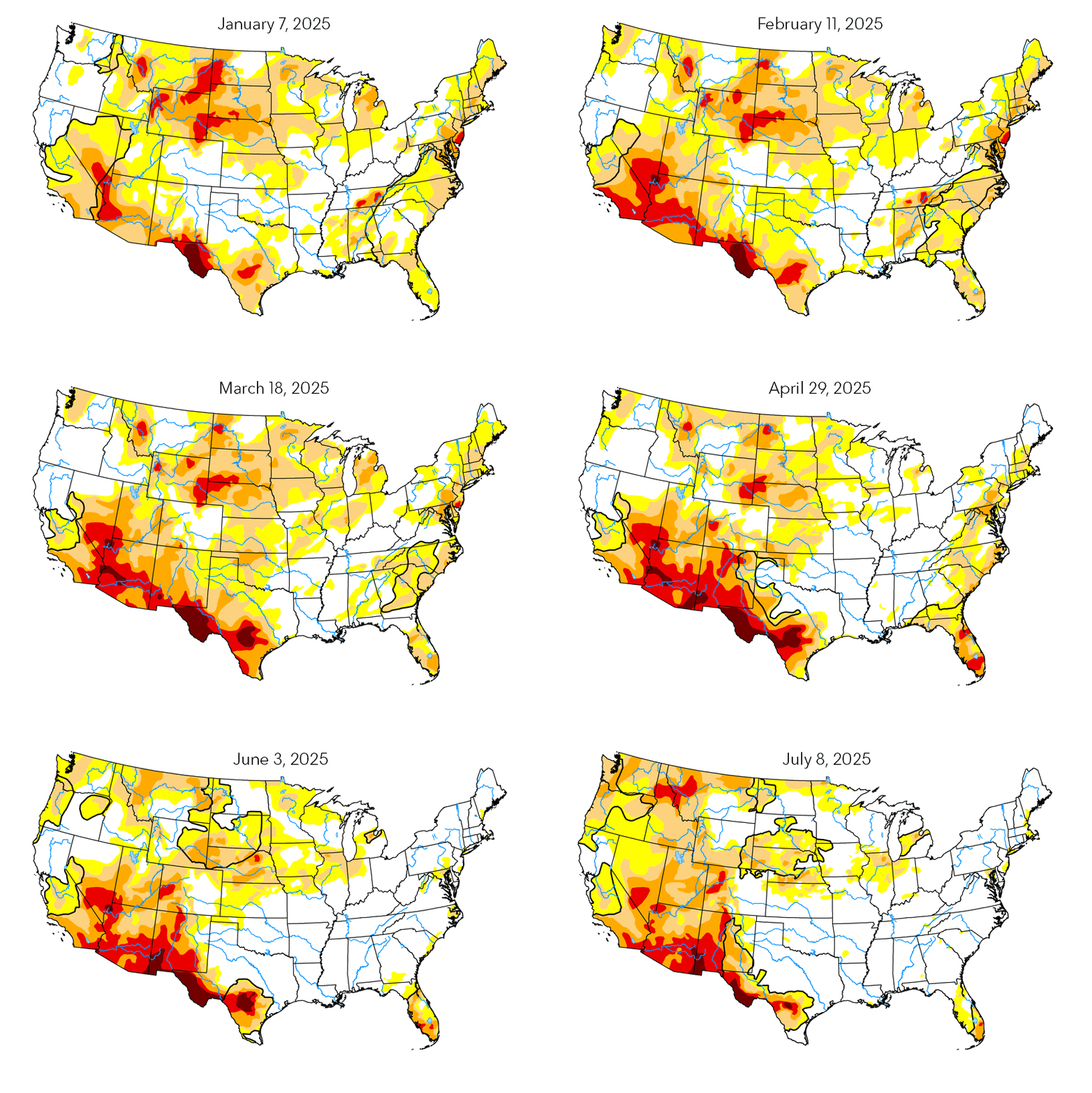
Nearly all of California continues to experience severe, extreme, or exceptional drought, prompting a new set of mandatory water use restrictions from the State Water Resources Control Board for residents and businesses in Southern California. Areas of California that depend on the Colorado River for water have so far been spared conservation measures, although water levels in the river are also unusually low.
As of June 12, 85% of California’s rice crop was emerged, with 65% of the acreage rated as good or excellent. All of the cotton crop was planted in California and Arizona by that date, with good or excellent ratings assigned to 85% of the acreage in California and 80% in Arizona.
Pacific Northwest:
A weather event known as an “atmospheric river” brought relentless rains to much of the Pacific Northwest in early June, pushing area streams and rivers to flooding stage. In northern Wyoming and southern Montana, the raging Yellowstone River washed out highways and stranded or flooded certain communities, including Red Lodge and Gardiner, Mt.
An unusually wet June was accompanied by unseasonably cool temperatures, particularly in Montana. With planting complete, the emergence of spring wheat and barley was rated at 92-97% across the region, with good or excellent ratings assigned to 79-86% of the acreage in Idaho, 78-81% in Washington, and just 12-15% in Montana.
Western Canada:
Heavy rainfall inundated parts of British Columbia, Alberta, Saskatchewan, and Manitoba during the week, prompting flood watches, evacuation notices, and local states of emergency for some areas due to rapidly rising rivers and streams.
A powerful system produced heavy rain from Monday through Thursday across the region, with some areas receiving more than four inches of precipitation. Strong winds and much cooler temperatures accompanied the moisture. Reports of power outages and downed trees were common across southern Alberta and western Saskatchewan due to 70-90 km/h gusts.