

Eastern Cornbelt:
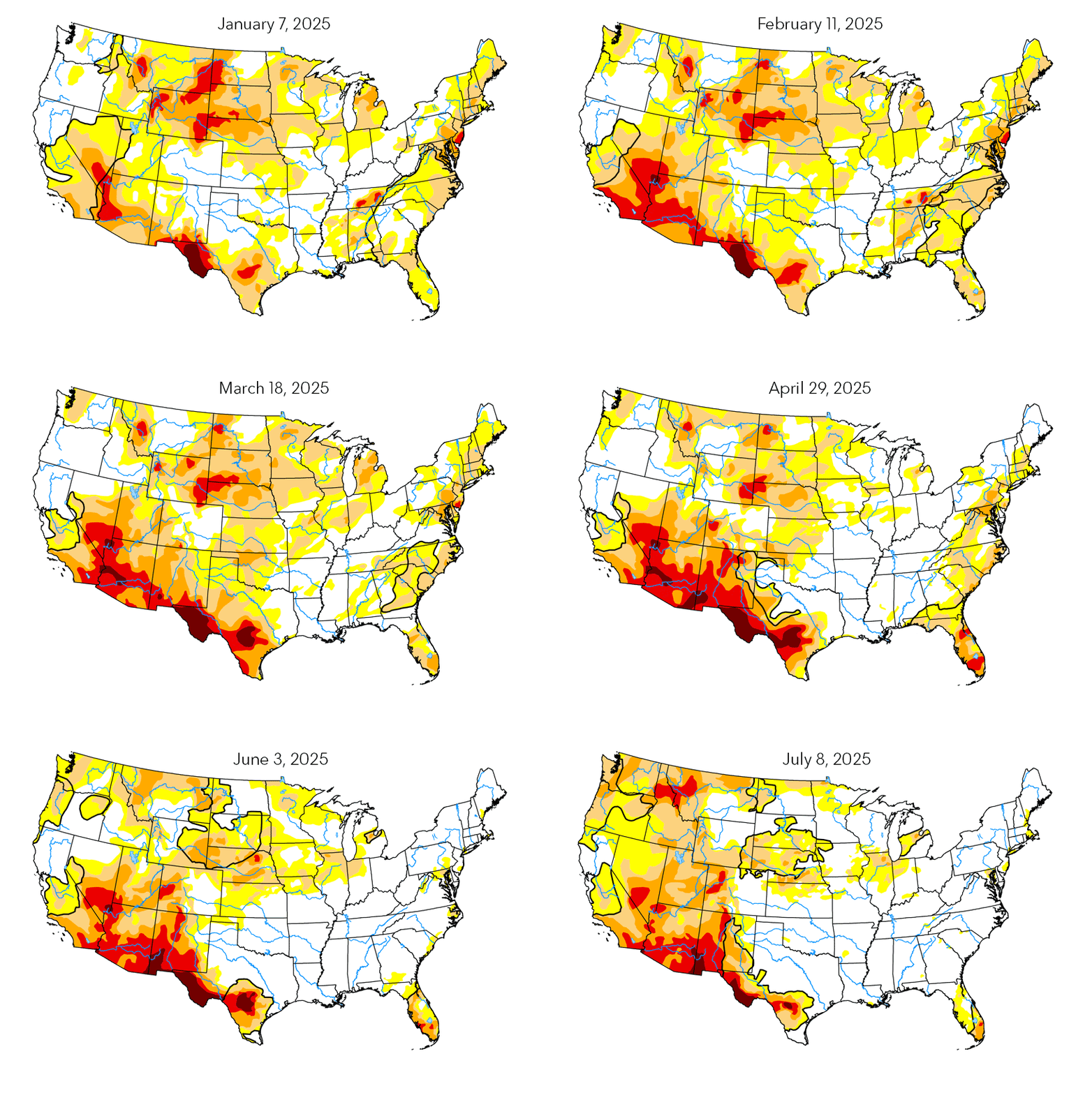
Highs in the low- to mid-80s were common across the Eastern Cornbelt during the week, providing welcome relief from the previous week’s scorching heat and humidity.
Although most areas enjoyed mostly dry conditions, scattered thunderstorms were reported in all three states as the week progressed, with temperatures dropping to the upper-70s in northern Ohio by the end of the week.
Good or excellent ratings were assigned to 71% of the Illinois corn crop on July 24, along with 61% of the state’s soybeans. Ohio’s crop conditions improved from the previous week, with 54-55% of the corn and soybeans reported as good or excellent. Indiana’s corn and soybeans were rated at 46-48% good or excellent in late July.
Western Cornbelt:
Temperatures across Iowa were in the mid-80s during much of the week, with spotty thunderstorms reported as the week progressed.
Similar conditions were observed in Nebraska, although some strong thunderstorms were reported in the panhandle and central Nebraska at midweek, with reports of hail and damaging winds in some locations.

In Missouri, a record amount of rain on July 25-26 sparked widespread flooding in the St. Louis area, causing the death of at least one person and the rescue of more than 100 residents. More than 9 inches fell in St. Louis, the greatest single day total for the city in more than 100 years, with 7 inches falling in just six hours.
Fully 75-80% of Iowa’s corn and soybeans were rated as good or excellent on July 24, compared with 57-60% in Nebraska and 46-53% in Missouri. All three states experienced crop quality declines from the previous week, which carried over into Nebraska’s sorghum crop, which sunk to 39% good or excellent from the prior week’s 50%. Missouri’s cotton and rice were reported at 53% and 56% good or excellent, respectively.
California:
Drought conditions ranging from severe to exceptional continued to cover nearly all of California, with the driest areas reported in Central California.
Parts of the state were also experiencing unusually hot temperatures in late July. Highs in Northern California were expected to reach 100-113 degrees in the northern Sacramento Valley on July 28-29, and possibly as high as 115 degrees in Trinity County. Local reports said overnight lows in those areas were only falling to the low-80s and high-70s.
Good or excellent ratings were assigned to fully 95% of California’s cotton and rice crops on July 24, along with 80% of the cotton acreage in Arizona.
Pacific Northwest:
Heat advisories and excessive heat warnings were in effect for much of Oregon, Washington, and the Idaho panhandle during the week.
Highs climbed to 102 degrees in Portland and 94 degrees in Seattle on July 26, and Portland was bracing for another triple-digit high on July 29. The heat spell was expected to last into the weekend, and extended to western Washington as well.
Southern Idaho and much of Montana also experienced blistering heat during the week, including multiple days of triple-digit highs across southwestern Idaho.
The regional winter wheat harvest had progressed to 18% complete in Montana and Oregon by July 24, compared with 2-5% in Idaho and Washington. Good or excellent ratings were assigned to fully 96% of Washington’s spring wheat and barley, along with 63-68% of the acreage in Idaho and 35-43% in Montana.
Western Canada:
Strong thunderstorms were reported in parts of Manitoba and Saskatchewan in late July, prompting warnings of high winds. Temperatures were building across the region as the week progressed, with highs climbing from the mid-20s C into the 30s. Excessive heat warnings were posted for nearly all of Alberta at midweek.
Overall crop conditions as of mid-July were rated at 75% good or excellent in Alberta, above the provincial five-year average of 65%, although some areas reported significant hail damage from July thunderstorms. Hail damage is also prevalent across Saskatchewan and Manitoba, with crop conditions described as variable.