

Eastern Cornbelt:
Mild, dry weather created ideal harvest conditions across Illinois and Indiana during the week. A frost advisory was issued for parts of northern and western Illinois at midweek, with lows dropping into the 30s, but highs in the low- to mid-70s were expected for the balance of the week and into the weekend for much of Illinois and Indiana.
While spotty showers moved through Ohio earlier in the week, sunny and mild weather was on tap for the final days of September, allowing a flurry of harvest activity as the month concluded.
The corn harvest as of Sept. 25 was 6% complete in Illinois and Indiana and had yet to start in Ohio. The soybean harvest was estimated at 5% complete in Indiana, 3% in Ohio, and 2% in Illinois. All three states were trailing their average harvest paces for the week. Good or excellent ratings were assigned to 66-69% of the corn and soybeans in Illinois, 60-61% in Ohio, and 54-55% in Indiana.
Western Cornbelt:
Much of Iowa experienced its first frost of the fall early on Sept. 28, with temperatures dropping to the 30s in many locations and even falling into the upper-20s in parts of Northern Iowa. Mild daytime temperatures were reported across the region, however, with very little rain.
Highs rose to the mid- to upper-70s across Nebraska as the week progressed, jumping to the low-80s in some locations to close out the work week. No rain was in Nebraska’s weekend forecast, so growers were expecting to make rapid progress on the fall harvest.

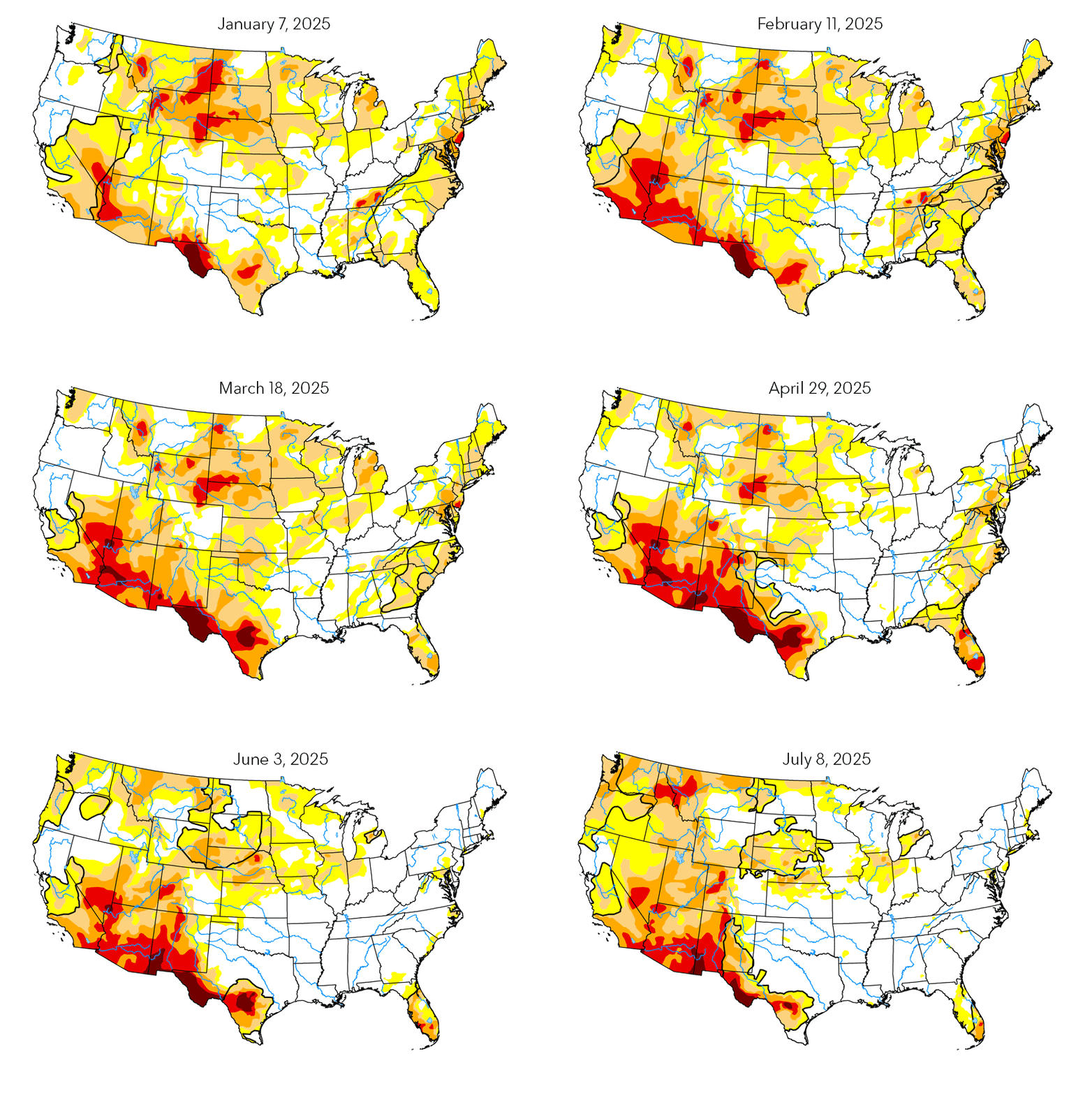
All of Nebraska remained locked in drought, however, with extreme-to-exceptional drought covering a large area in the northeastern corner of the state.
The corn and soybean harvest was 13% complete in Nebraska by Sept. 25, with 38-41% of the state’s corn and soybean acreage rated as good or excellent on Sept. 25, compared with 47-48% in Missouri and 62-64% in Iowa. Iowa growers had 5-7% of the corn and soybeans in the bin by Sept. 28, compared with 1-3% in Missouri.
With 7% of the sorghum crop harvested in Nebraska, fully 65% of the acreage was rated as poor or very poor in late September. Missouri growers had 2% of the cotton picked and 35% of the rice harvested, with 52% of the state’s cotton crop rated as good or excellent.
California:
Heat warnings were once again issued for a large swath of Southern California early in the week. Highs in the upper-90s and low-triple digits were reported across the Inland Empire, Orange County, and the San Fernando Valley on Sept. 26-28, but cooler weather was on tap for the end of the week.
Severe-to-exceptional drought continued to cover the entire state in late September, with a wide band of exceptional drought covering the inland Central California region. “It still remains a very uncertain fall, with water supply and financial stress for a number of California commodities,” commented one source.
The cotton harvest was 15% complete in Arizona, but had yet to start in California as of Sept. 25. Fully 90% of California’s cotton was rated as good, while 85% of Arizona’s crop fell in the good or excellent categories. The rice harvest was 20% complete in California by late September, and 5% of the winter wheat crop was planted.
Pacific Northwest:
Rain finally arrived to parts of Oregon and Washington after weeks of dry weather and above-normal temperatures. Most of the precipitation was reported on Sept. 29, with up to a half inch expected in the Portland area. Highs in the 70s were expected late in the week.
Summer heat persisted in parts of Idaho, with Boise notching a record 95 degrees on Sept. 27 before temperatures dropped to the low 70s for the balance of the week. Similar conditions were reported in Montana, with scattered showers and cooler temperatures moving in as the week progressed.
The harvesting of potatoes, sugar beets, and small grains was well underway in the region. Idaho growers had 25% of the sugar beets picked by Sept. 25, while the spring wheat and barley harvests had progressed to 96-100% complete in the region.
“The weather has been exceptional. Growers are busy collecting their crops, and we are preparing for a fall season,” commented one regional source at midweek.
Western Canada:
Dry, mild weather was reported across Manitoba during the week, allowing growers to make strides on the fall harvest after earlier delays due to wet weather.
Manitoba’s harvest progress overall was estimated at 47% complete, well behind the five-year average of 79%, reflecting a lag of roughly three weeks. Saskatchewan’s harvest was fully 81% complete by contrast, slightly ahead of its 75% average pace.
Unseasonably hot weather resulted in 11 daily heat records in Alberta on Sept. 27, allowing growers across the province to wrap up 87% of the fall harvest by the third week of September.
“Farmers are just about finished harvesting in parts of Saskatchewan and Alberta,” said one regional contact. “Ammonia application has already started in both provinces in a modest way. The Manitoba crop is later, and they still need 5-10 days to finish harvesting canola. Crop yields are reported to be above average and there is some concern farmers’ bins may not have room for fertilizer storage until later in the fall. That could slow dry fertilizer movement.”