

Eastern Cornbelt:
Highs reached the 70s and low-80s in the Eastern Cornbelt during the week, sparking a flurry of spring fieldwork and preplant fertilizer applications. The combination of warm temperatures, low humidity, and gusty winds prompted a red flag fire warning for multiple counties in northern Illinois and Indiana at midweek.
Ohio also posted highs in the 70s during the week, but rain and much cooler weather was in the weekend forecast. Northern Illinois was expecting a mix of rain and snow on April 16, with temperatures dropping to the low-30s.
Corn planting was just 1% complete in Illinois by April 9, with progress estimated at 5% in Kentucky. Ammonia was rolling hard in the region during the week, with truck availability becoming a major issue as the week progressed. “There’s plenty of product, but we can’t get enough trucks,” reported one source on April 13.
Western Cornbelt:
Summer-like temperatures blanketed much of the Western Cornbelt during the week, sending highs into the low- to mid-80s across Iowa, and even the upper-80s in southern Nebraska.
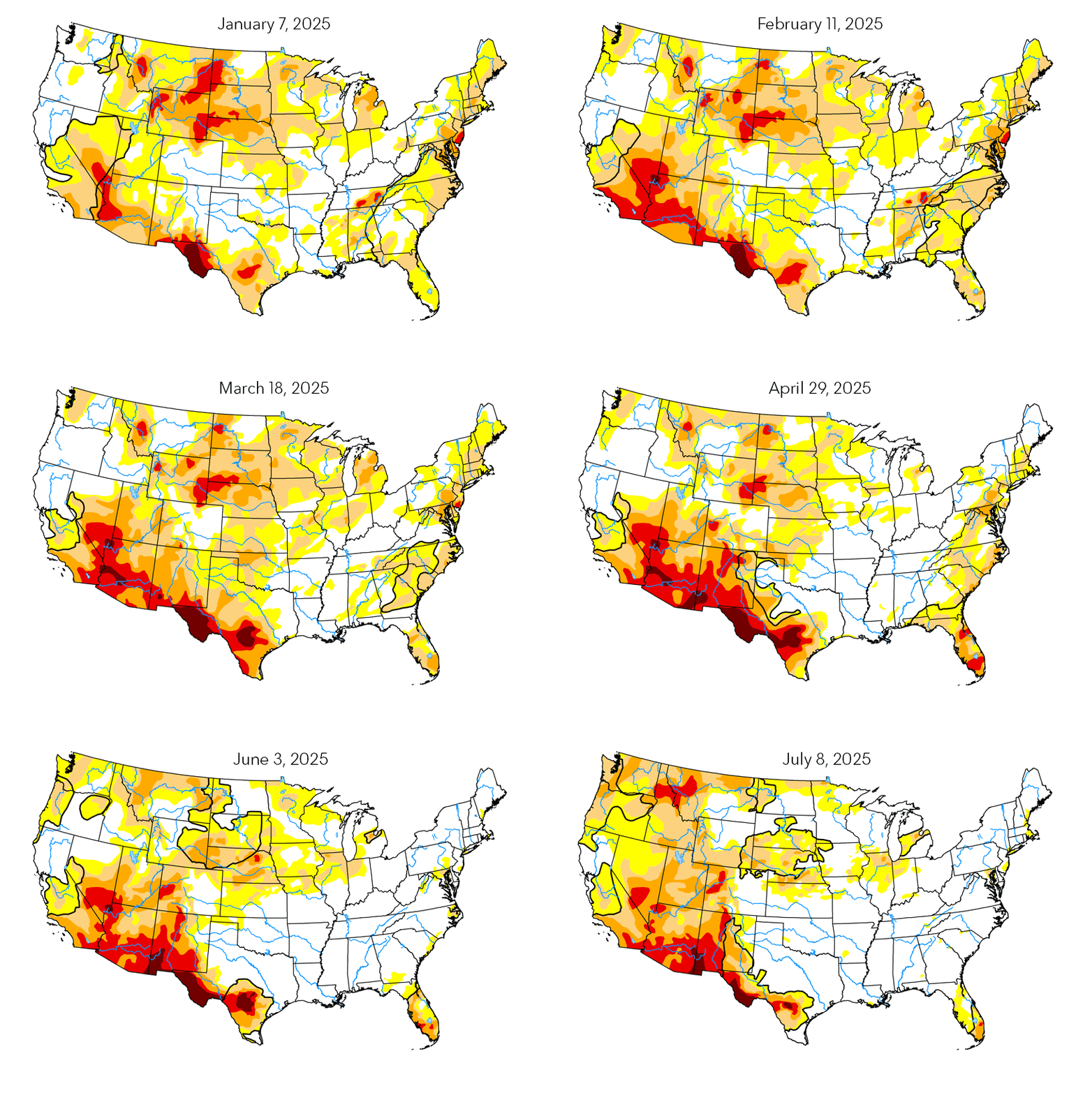
The warm weather sparked brisk spring fieldwork across the region, but also triggered a fire weather watch for much of southeastern Nebraska and southwestern Iowa due to low humidity and gusty winds. With nearly all of Nebraska experiencing drought conditions ranging from moderate to exceptional, firefighters have been battling numerous grass fires across the state since late March.

Forecasts warned of an increased chance of showers and thunderstorms in Iowa by April 14. The incoming cold front was expected to drop temperatures down to the high-50s and low-60s across Iowa and Nebraska by the weekend.
Corn planting had yet to register any progress in the Western Cornbelt as of April 9, but USDA said 6% of the Kansas crop was seeded by that date. Missouri growers had just 1% of the rice crop planted by that date, with oats planting estimated at 13% complete in Iowa and 20% in Nebraska.
California:
Fieldwork and spring planting were finally underway in California after one of the coldest and wettest winters on record. “It’s great to finally have weather conducive to movement,” said one source.
Parts of Northern California posted their coldest March on record, and the state as a whole experienced its coldest December-March period in 44 years. Central California also endured its wettest winter on record, stretching from the Central Valley into the southern and central Sierra Nevada.
With snowpack also at record levels, the state is bracing for a record-breaking amount of snow water in the coming weeks and months. According to the latest forecasts, widespread flooding is inevitable in the Tulare Basin and is also likely in the San Joaquin watershed and in the Owens Valley.
Pacific Northwest:
Winter weather conditions continued over much of the Pacific Northwest during the week. Snow was once again in the midweek forecast for Portland, Ore., Vancouver, Wash., and the western Columbia River Gorge, with up to a half-inch of accumulation at elevations above 1,000 feet and a mix of rain and snow at lower elevations.
Snow was also reported across parts of Idaho and western Montana on April 12-13, with the heaviest accumulation limited to mountain passes. Spring fieldwork was delayed as a result. The planting of spring wheat was estimated at 11% complete in Washington and 2% in Idaho as of April 9, with barley planting reported at 5% in Washington, 2% in Idaho, and 1% in Montana.
Western Canada:
Cool temperatures settled over Saskatchewan and Manitoba during the week, with a mix of freezing rain and snow reported early in the week in parts of central and northern Saskatchewan. Warmer weather was in the weekend forecast, however, with highs expected in the low teens.
Higher elevations in Alberta were bracing for heavy snow on April 11-12, with 100 km/h wind gusts reported in multiple areas of the province on April 11. Parts of southern British Columbia were under rainfall warnings during the week, with flood advisories issued for the Okanagan, Similkameen, South Coast, and East and West Kootenay regions.
Manitoba also released an updated spring flood forecast on April 12, which detailed major flood risks for the Red River between Emerson and the Red River Floodway inlet, and low-to-moderate risks in the Interlake region along the Fischer, Icelandic, and Assiniboine rivers.
“It’s still too early for fieldwork but I think we’ll see the snow melt off quickly, so maybe a late April start in some areas,” said one regional contact.