

Eastern Cornbelt:
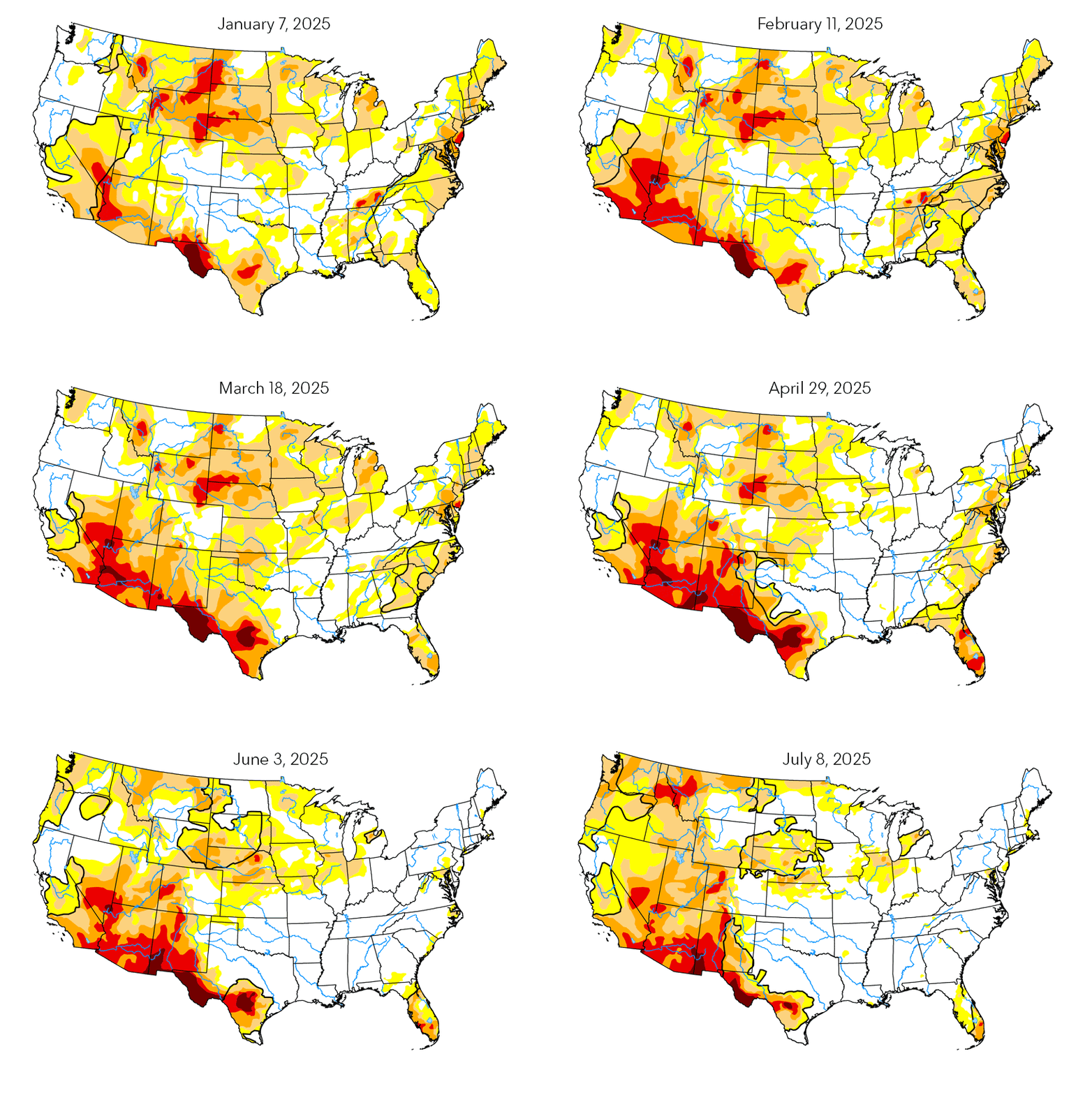
Warm, dry weather across much of the Eastern Cornbelt continued to fuel a rapid planting pace, with sidedress fertilizer and post-emergence herbicide applications also picking up steam.
Below-normal rainfall for April and May has resulted in abnormally dry conditions spreading across central Illinois, with some forecasts warning of a “flash drought” if summer heat arrives early. Temperatures in the 70s and low-80s were common across the region in late May, with slightly cooler weather reported on May 25.
Corn and soybean planting was tracking ahead of the average pace in all three states. Corn planting as of May 21 was 91% complete in Illinois, 77% in Indiana, and 66% in Ohio, while soybean planting was estimated at 85% complete in Illinois, 72% in Indiana, and 63% in Ohio.
Western Cornbelt:
While parts of Iowa received spotty showers at midweek, most locations enjoyed dry weather with temperatures in the 70s and low-80s. Missouri sources also reported a “quiet” weather week.
Nebraska was expecting spotty showers over the Memorial Day weekend, which would be welcome as drought continues to grip the state. Severe drought blanketed most of the state in late May, with the eastern third experiencing extreme-to-exceptional drought conditions.
Planting was ahead of the average pace for nearly all crops in the region. Corn planting as of May 21 was 87% complete in Nebraska and 95-97% in Iowa and Missouri, while soybean planting had progressed to 84% in Iowa, 79% in Nebraska, and 74% in Missouri. Missouri growers also had 97% of the rice and 81% of the cotton crop planted by that date.
California:

With the exception of the desert region in Southern California, where temperatures reached the 90s during the week, much of the state enjoyed cool, dry weather in late May.
Drought conditions were all but eliminated in California after the onslaught of atmospheric rivers that soaked the state this winter. The latest Drought Monitor showed only small areas of abnormally dry-to-moderate drought in the Southern California interior, as well as a small patch of abnormally dry conditions on the northern edge of the state.
California’s cotton crop was 95% planted by May 21, nearly equal to the average pace, while rice planting in the state lagged at 60%, well behind the 86% five-year average.
Pacific Northwest:
After record-breaking heat earlier in the month, Oregonians enjoyed more seasonal May temperatures during the week, with highs warming from the 60s to the 70s and low-80s as the week progressed.
A smoky haze from wildfires in Alberta continued to blanket much of eastern Washington, Idaho, and Montana during the week, though Idaho and Montana received plenty of moisture. Torrential rain and large hail in southern Idaho caused flash flooding in Idaho Falls, Blackfoot, and Rexburg on May 23.
The wet weather delayed planting in parts of Montana and Idaho. The spring wheat and barley crops were 72-78% planted in Montana and 87-90% in Idaho by May 21, with both states trailing their five-year averages. Washington, by contrast, had 95-98% of the spring wheat and barley seeded by that date, with both tracking slightly ahead of the average pace.
Western Canada:
Thunderstorms churned through much of Western Canada during the week, bringing much-needed rain to parts of Alberta and British Columbia, where up to 84 wildfires were raging in late May.
Local reports said at least 23 of those fires were uncontained as the week began, with 2,500 firefighters reportedly deployed and more than 10,000 residents forced to evacuate homes as the fires advanced.
Southern Saskatchewan and southern Manitoba were bracing for potentially severe storms late in the week, with forecasts warning of 100km/h winds, large hail, and the potential for localized flooding.