

Eastern Cornbelt:
An EF1 tornado was reported in southern Indiana early in the week, causing damage to buildings in Paoli. No injuries were reported, but another round of strong thunderstorms moved through central portions of the state at midweek.
Central and northern Illinois were bracing for potentially severe weather on Aug. 11, with forecasts warning of large hail, heavy rain, damaging winds, and the possibility of tornadoes. Storms were also reported in northern Ohio as the week progressed, with potentially severe weather expected in western Michigan on Aug. 11.
Crop development in the region was tracking close to or slightly behind the average pace in early August. Good or excellent ratings were assigned on Aug. 6 to 67-73% of the corn and soybeans in Ohio, 64-65% in Indiana, 58% in Illinois, and 42-46% in Michigan.
Western Cornbelt:

Parts of western and central Iowa were hit with heavy rain over the prior weekend, with 3-6 inches falling across multiple counties and as much as nine inches reported in the northwestern corner of the state.
Storms also churned through Missouri on Aug. 4-5, with a tornado reported near Russellville and heavy rain prompting flash flood warnings in some areas. Nebraska saw temperatures in the high-80s and low-90s during the week, with forecasts warning of the potential for severe storms in northeastern areas of the state late in the week.
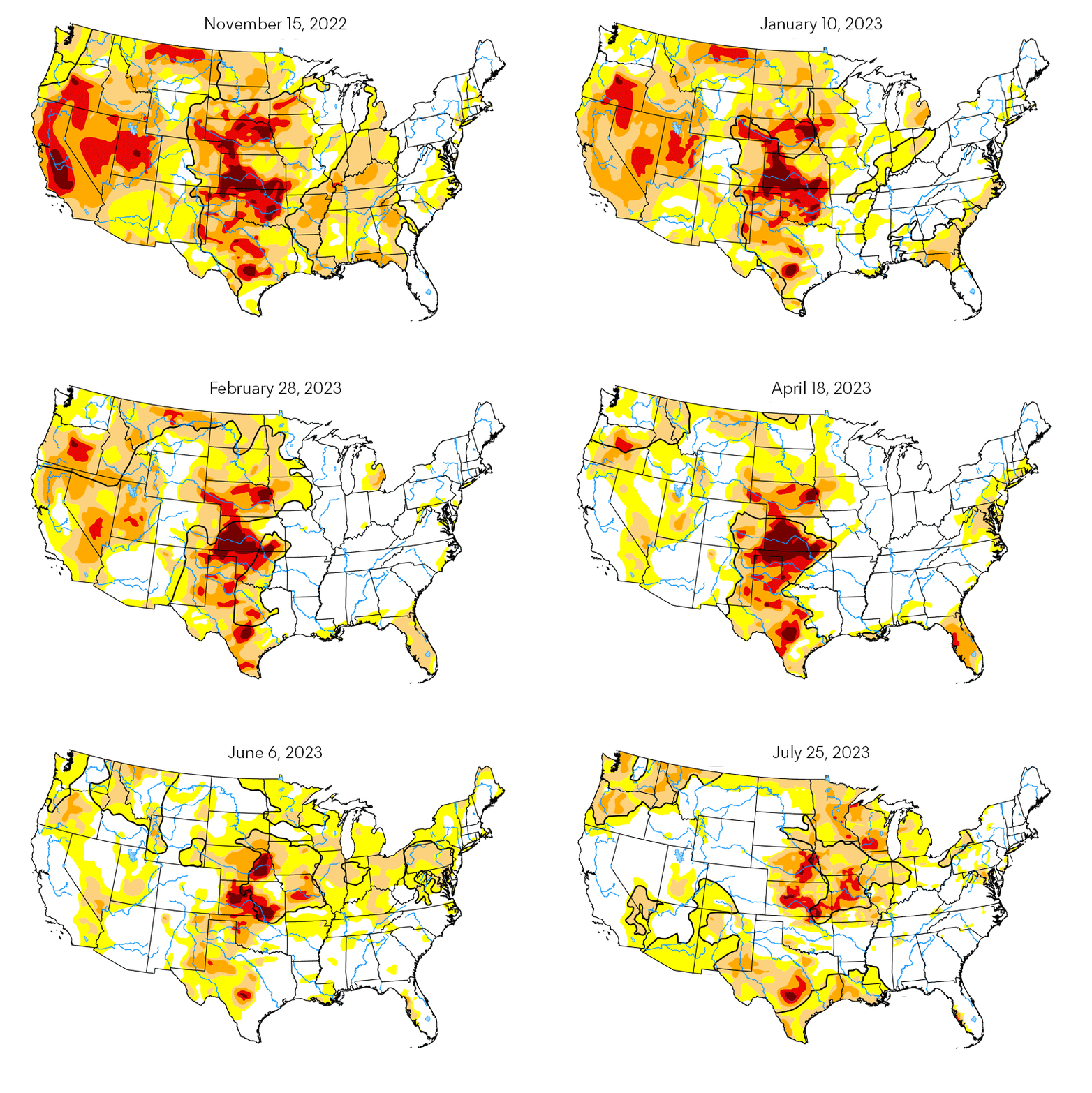
Drought conditions continued to affect Missouri’s crop quality, with just 29-32% of the state’s corn and soybeans rated as good or excellent on Aug. 6, compared with 53-59% in Iowa and 56-61% in Nebraska. Good or excellent ratings were also assigned to 62% of Nebraska’s sorghum crop, along with 70% of Missouri’s cotton and 75% of the state’s rice crop.
Southern Plains:
Strong thunderstorms hit parts of Kansas, Oklahoma, and New Mexico during the week, while blistering heat remained in place over much of Texas.
A supercell blasted through northeastern Kansas on Aug. 5, producing 110 mph wind gusts and large hail. A powerful system also brought heavy rain to parts of New Mexico on Aug. 8, causing flash flooding in some locations. Storms then hit parts of eastern and southern Oklahoma on Aug. 9.
Sweltering heat remained in place over much of Texas, with Dallas-Fort Worth on Aug. 9 posting its 17th straight day of temperatures over 100 degrees. “The heat is brutal with no end in sight,” said one Central Texas contact at midweek. “If it’s not irrigated, then it’s not happening.”
The impact of heat and drought was especially evident on the Texas cotton crop, which was just 17% good or excellent on Aug. 6, compared with 42% in Oklahoma and 63% in Kansas. “The poor wheat crop in the hard red winter wheat region is impacting seed wheat availability,” commented one source. “Certified seed is/will be a problem for wheat growers.”
Soybeans in Kansas were 44% good or excellent, while corn in those two categories totaled 48% of the crop in Kansas, 62% in Texas, and 76% in Colorado. Fully 81% of Colorado’s sorghum crop was rated as good or excellent on Aug. 6, compared with 53-56% in the rest of the region.
South Central:
Tornado watches were in effect for central and northern Arkansas on Aug. 9-11 as strong thunderstorms pushed through the region. Earlier in the week, a series of storms battered parts of eastern Tennessee and eastern Kentucky with 70 mph winds, quarter-sized hail, and flash flooding.
Intense heat continued over Louisiana in early August, with New Orleans temperatures soaring to 100 degrees for three straight days through Aug. 7. Record triple-digit streaks were also reported in Alexandria, Lafayette, and New Iberia. Baton Rouge reached the triple-digit mark for 10 straight days through Aug. 7.
Crop conditions were favorable in the region in early August, with fully 70% of the corn in Tennessee and Kentucky rated as good or excellent. Soybeans in those two categories totaled 72% of the acreage in Arkansas, Mississippi, and Tennessee, 70% in Kentucky, and 63% in Louisiana.
Arkansas’ cotton crop was 84% good or excellent, along with 77% of the acreage in Louisiana, 70% in Tennessee, and 66% in Mississippi. The regional rice crop was 79% good or excellent in Texas, compared with 72% in Arkansas, 63% in Mississippi, and 59% in Louisiana.
Southeast:
Severe storms hit the western Carolinas on Aug. 7 with damaging winds, heavy rain, and several confirmed tornadoes, leaving thousands without power.
The same system fueled strong thunderstorms in central and southern Virginia early in the week, with reports of strong winds and golf ball-sized hail in some locations, along with torrential rains. Another wave of thunderstorms moved through northern and central Alabama and northern Georgia on Aug. 9-10, bringing heavy rain, large hail, and gusty winds.
The region’s heightened thunderstorm activity was accompanied by sweltering temperatures, with daily record highs in early August confirmed at St. Simons Island, Ga., Naples, Fla., and Key West, Fla.
Favorable crop conditions were reported in the Southeast in early August, with 68-77% of North Carolina’s corn and soybeans rated as good or excellent. Cotton in those two categories totaled 59-60% of the acreage in the Carolinas, 71% in Georgia, 82% in Alabama, and 95% in Virginia. Peanuts were also flourishing, with good or excellent ratings assigned to 76-90% of the regional crop on Aug. 6.