

Eastern Cornbelt:
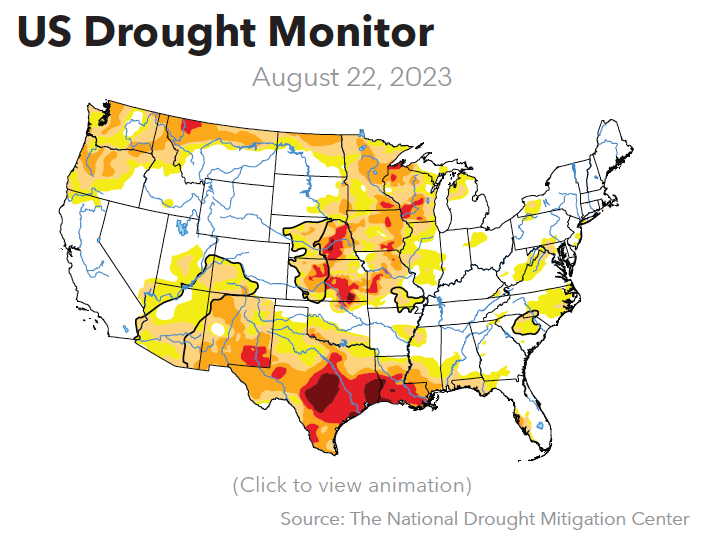
The week began with warm, summer-like temperatures for much of the Eastern Cornbelt, with highs reaching the low- to mid-80s. A strong cold front was in the forecast for Oct. 5-7, however, dropping temperatures as much as 30 degrees and ushering in widespread rain in all three states.
The harvest of corn and soybeans was 19-23% complete in Illinois by Oct. 1, compared with 13-17% in Indiana, 4-7% in Ohio, and 5-7% in Michigan. Good or excellent ratings were assigned to 70-74% of the acreage in Ohio, 66% in Illinois, 64-65% in Indiana, and 49-51% in Michigan.
Western Cornbelt:
Highs across Iowa and Nebraska dropped from the 80s to the upper-60s and low-70s as the week progressed, with the potential for patchy frost in western Iowa on Oct. 6. Gusty winds and chilly temperatures were also in the forecast for parts of Missouri by the weekend.
The corn harvest as of Oct. 1 had progressed to 42% complete in Missouri, 22% in Nebraska, and 16% in Iowa, with good or excellent ratings assigned to 35% of the acreage in Missouri and 51-53% in Nebraska and Iowa. The soybean harvest was 12% complete in Missouri and 24-29% in Nebraska and Iowa by that date, with 47-47% of the crop rated as good or excellent.

Growers also had 10% of Missouri’s cotton and 14% of Nebraska’s sorghum in the bin by Oct. 1, with 65-68% of the acreage rated as good or excellent.
Northern Plains:
After highs in the 80s across the Dakotas and southern Minnesota during the first days of October, much colder weather moved in as the week progressed, prompting the first freeze watch of the season on Oct. 5-6 for western and central North Dakota. Lows were expected to drop to the mid-30s in Bismarck, N.D., on Oct. 6, well below the high of 88 posted on Oct. 1.
The corn harvest as of Oct. 1 was tracking ahead of the average pace at 18% complete in Minnesota, 16% in South Dakota, and 8% in North Dakota, with good or excellent ratings assigned to 75% of the acreage in the Dakotas and just 39% in Minnesota. The soybean harvest was 20-33% complete by that date, with 43-48% of the regional crop rated as good or excellent.
The sugar beet harvest was 16-17% complete in the Dakotas by Oct. 1, and South Dakota growers also had 11% of the sorghum crop in the bin by that date, with 51% of the acreage rated as good or excellent.
Northeast:
Summer weather conditions continued over much of the Northeast during the first week of October, with highs reaching the mid-80s in New England and Pennsylvania.
A Great Lakes cold front was expected to bring cooler temperatures and showers by the end of the week, however, and rainfall from Tropical Storm Philippe was likely to reach or exceed 3 inches in parts of the region on Oct. 7. Forecasts warned of localized flooding possible in northern and western New England, with highs dropping to the 50s by Oct. 8.
The harvest pace was picking up in the region in early October, with 7% of Pennsylvania’s corn crop in the bin by the first of the month. Plenty of heat and rain this summer contributed to excellent crop conditions, with fully 81% of Pennsylvania’s corn crop rated as good or excellent.
Eastern Canada:
Unseasonably warm weather was reported in Ontario and Quebec during the week, with multiple daily record highs recorded. Toronto posted a high of 28 C and a humidex in the low-30s on Oct. 3, but steadily cooler weather was on tap for the balance of the week.
In fact, a polar vortex was taking aim at Ontario and Quebec over the Thanksgiving weekend, with temperatures falling 8-10 C below seasonal levels. Forecasts warned of the potential for wet snow in parts of northern Ontario over the holiday weekend, while highs in Montreal were expected to top out at 11-13 C on Oct. 8-9.
The Maritimes were bracing for heavy rain and strong winds over the coming weekend as Tropical Storm Philippe makes its way toward Canadian waters. Special weather statements were issued for New Brunswick, Nova Scotia, and Prince Edward Island warning of 50 mm or more of rain, along with 80 km/h winds.
“Fall harvest is just underway and, depending on location, beans are anywhere from 10-50% harvested,” reported one contact. “Yields are looking good, with some areas above average in the 60-75 bushels range. On corn, only a few fields are off in the south as some growers had early contracts that needed to be filled. Most of the corn crop is still in the 32-26% moisture range.”