

Eastern Cornbelt:
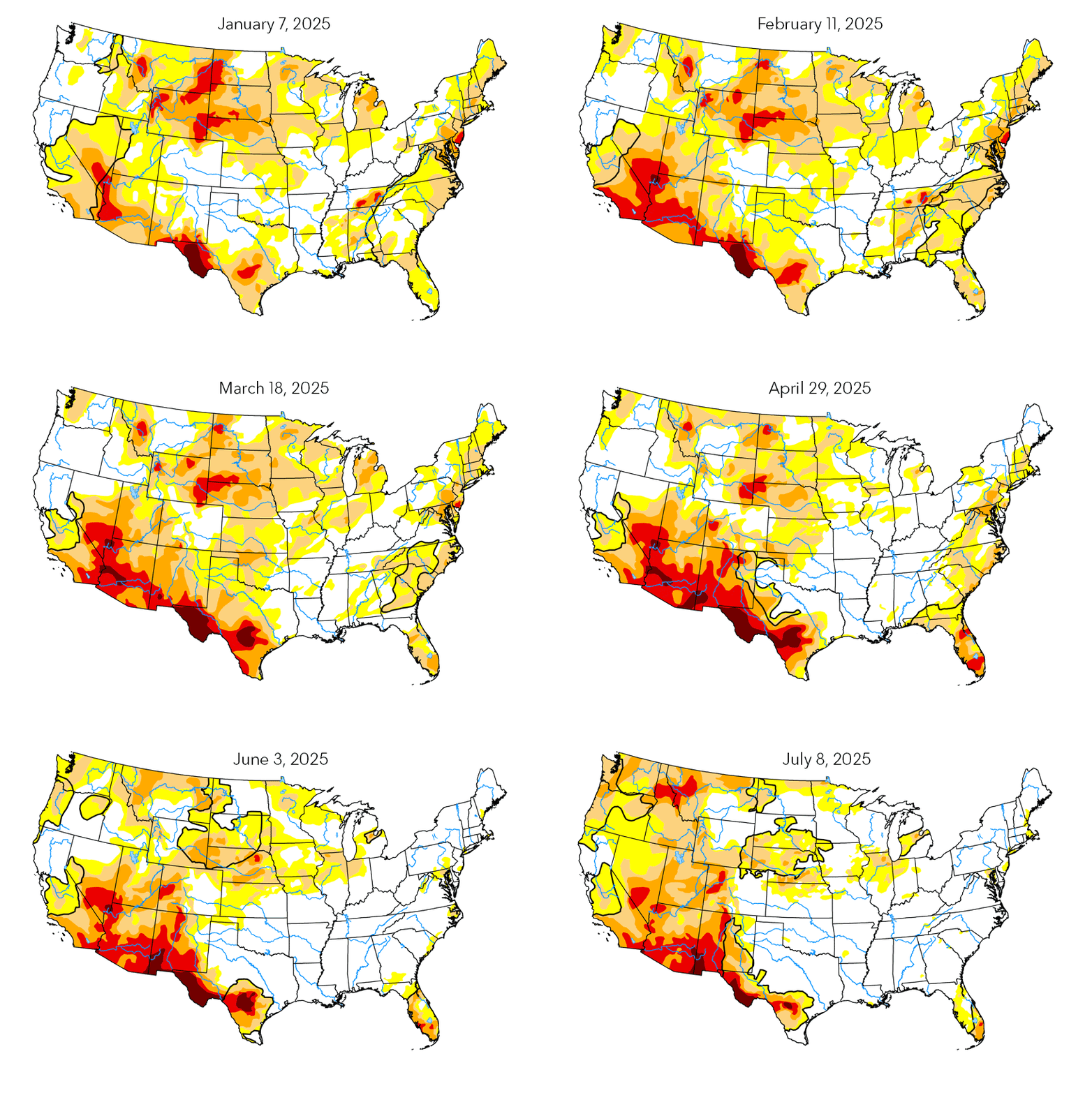
Highs in the 60s were common across the Eastern Cornbelt during the week, along with dry conditions that allowed growers to wrap up the fall harvest in many locations. The mild weather also prompted a flurry of fall fieldwork and fertilizer application in mid-November.
Temperatures were expected to drop late in the week, with rain chances picking up. Up to a half-inch of rain was possible in parts of southern Indiana on Nov. 17, with temperatures peaking in the mid-50s.
Northern Ohio and southern Michigan also posted highs in the mid- to upper-60s during the week, but cooler temperatures and rain were in the forecast for Nov. 17 and into the weekend.
The corn harvest as of Nov. 12 was 95% complete in Illinois, 82% in Indiana, 68% in Ohio, and 52% in Michigan, while the soybean harvest had progressed to 94-97% complete in the Eastern Cornbelt and 83% in Michigan.
Western Cornbelt:
Highs reached the upper-60s in Iowa and Nebraska and the low-70s in parts of Missouri at midweek, but a cold front was expected to move into the region late on Nov. 16, with highs topping out in the 50s on Nov. 17 and through the weekend.
The fall harvest continued to track ahead of the average pace for all crops in the region, with the corn harvest as of Nov. 12 rated at 91-94% complete in the region, and soybeans at 91% complete in Missouri and 99% in Iowa and Nebraska. Growers also had 93% of Missouri’s cotton and 90% of Nebraska’s sorghum in the bin by that date.
Northern Plains:

Warm, windy conditions were reported across the Northern Plains during most of the week, with highs reaching the upper-60s in Minneapolis, Minn., and the mid- to upper-40s in the Dakotas. Temperatures were expected to fall below freezing in the region late in the week, however, before rebounding again over the weekend.
The regional corn harvest had progressed to 93% complete in Minnesota, 87% in South Dakota, and 76% in North Dakota by Nov. 12, with all three states tracking ahead of their five-year averages.
The soybean harvest was 97-100% complete in the region, while fully 86% of South Dakota’s sorghum crop was in the bin by Nov. 12. The sunflower harvest was rated at 59% complete in North Dakota and 72% in South Dakota by that date.
Northeast:
Warm, breezy weather was reported over much of the Northeast and Mid-Atlantic regions during the week, with highs reaching the low-70s in Maryland.
A potentially strong weather system was expected to hit the Northeast starting on Nov. 17, however. Forecasts warned of rain and gusty winds for New England’s coastal communities, with snow possible at higher elevations in New York, New Hampshire, Vermont, and Maine. Another system was expected to bring more rain during the Thanksgiving week.
Just over half of Pennsylvania’s corn crop was in the bin by Nov. 12, well behind the 71% five-year average. Pennsylvania’s soybean harvest was actually tracking ahead of the average pace, however, at 76% complete by that date.
Eastern Canada:
After rain, freezing rain, and snow across central Ontario earlier in November, much of the province enjoyed mild temperatures and ideal harvest conditions at mid-month. Weather alerts were in effect for northeastern Ontario on Nov. 16, however, with forecasts warning of strong wind gusts up to 80 km/h and possible power outages in the region.
The same system that brought winter weather to Ontario in early November also hit southern Quebec and parts of the Maritimes. Southern Quebec collected 2-6 inches of snow on Nov. 7-9, along with strong winds and blizzard conditions. Heavy rain also prompted flash flood warnings in some areas.
The pleasant mid-month weather in Ontario was “certainly helping with the corn harvest,” according to one regional contact. Another source reported good yields and quality as the harvest continues, though he added that “drying costs will be high.”