

Eastern Cornbelt:
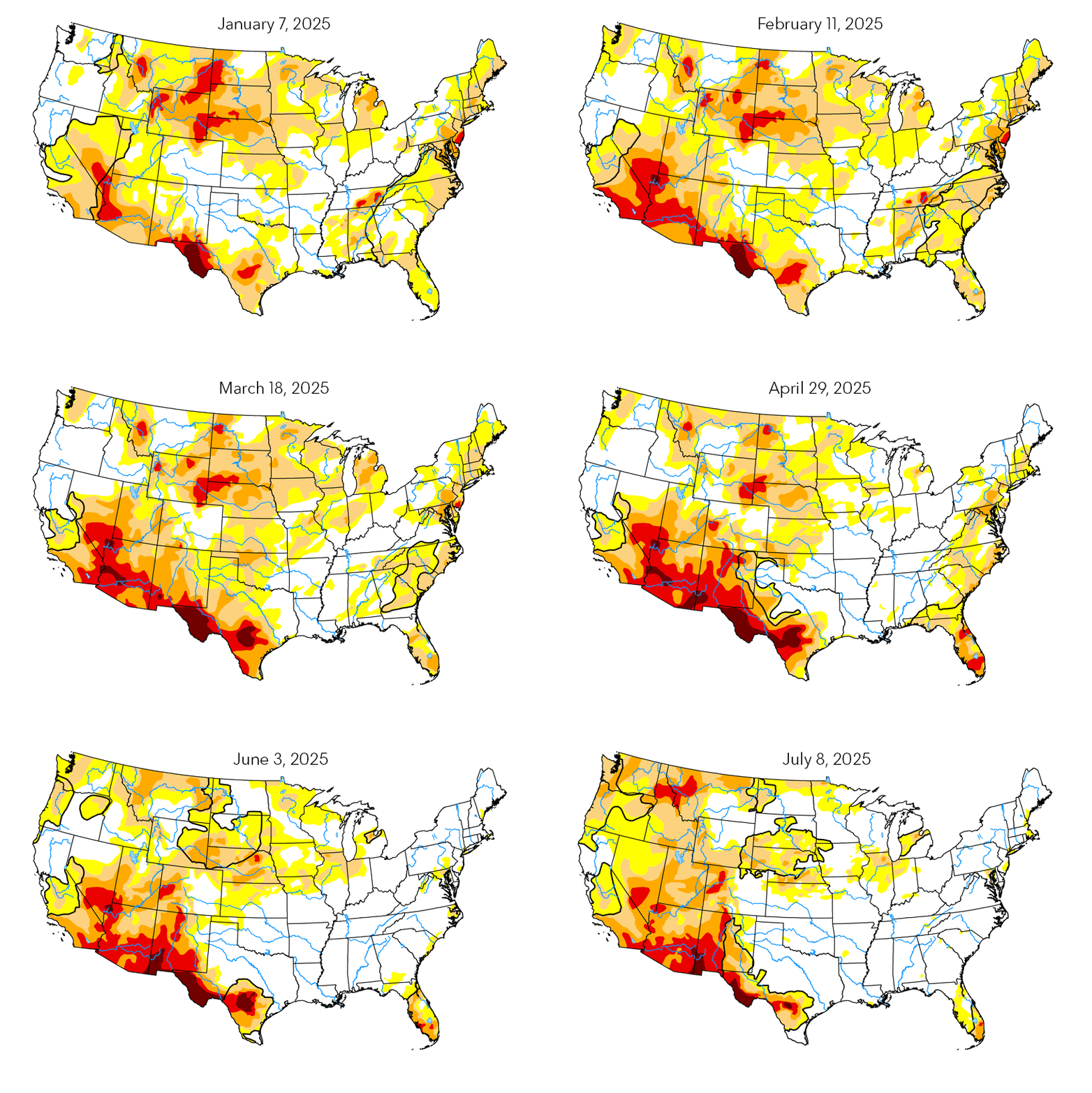
Unseasonably mild temperatures sparked another round of thunderstorms in the Eastern Cornbelt during the first full week of March.
After near-record highs on March 4 that reached the mid-70s, some 20-30 degrees above normal, a cold front at midweek brought heavy rain, gusty winds, and lightning to parts of Illinois and Indiana, as well as an EF-0 tornado to northwestern Ohio. Cooler weather followed the storms, with highs topping out in the mid-40s in the region.
After notching one of its warmest Februarys on record, Michigan was bracing for multiple rounds of rain and snow as the week advanced. Forecasts called for 2-5 inches of snow in northern Michigan by the weekend, and an inch or less in southern and central areas of the state.
Western Cornbelt:
Temperatures generally ranged in the 50s and 60s across the Western Cornbelt during the first full week of March, though potentially strong storms were expected to move in as the week progressed.
Southeast Iowa was bracing for a half-inch to an inch of rain on March 7-8. Rain and snow were also in the forecast for western and central Nebraska as the week progressed, with reports of school closures in effect in parts of the panhandle on March 7. The precipitation moved through Missouri as well, with reports of heavy rainfall and potentially severe storms in the Ozarks.
Northern Plains:

The first weekend in March brought freezing rain and snow to northern North Dakota and northern Minnesota, but temperatures in the 40s and 50s were common across the Northern Plains in early March. Highs in the 60s were in the weekend forecast for parts of South Dakota.
Mild temperatures, a lack of snow, gusty winds, and drought conditions ranging from abnormally dry to severe prompted a red flag warning for several counties in southern Minnesota at midweek.Sources said those same weather conditions were hinting at an early start to spring fieldwork in the region.
Northeast:
Flood watches were in effect across the Northeast and southern New England as forecasts warned of 1-3 inches of rain on March 6-8. The heavy rainfall is expected to impact areas from New York to Massachusetts, with snowfall also likely in parts of New England.
Pennsylvania sources reported several days of fertilizer application on small grains in early March, but activity was limited as many areas were stalled by wet weather.
Eastern Canada:
Parts of Ontario posted record high temperatures early in the week, with Toronto notching 16 C on March 4, well above the previous record of 13.3 C set on March 4, 1974.
A powerful weather system was expected to move into Eastern Canada by the coming weekend, however. Most areas were expecting heavy rain, with 30-40 mm possible in southern Ontario and snowfall likely in eastern Ontario and Quebec.
Precipitation hit the Maritimes much earlier, with rain, freezing rain, gusty winds, and snow reported on March 6-8 in parts of New Brunswick, Nova Scotia, and Prince Edward Island, prompting winter weather warnings for the region.
Forecasts warned of a much colder weather pattern developing across Eastern Canada around the official first day of spring and continuing through the end of March and into early April.
“It could be an early spring, as all the snow has melted and there is very little frost in the ground,” said one Ontario contact. “We had record breaking temps early this week, in the high 60’s F. If the ground stays dry, we could be going by mid-April.”