

Eastern Cornbelt:
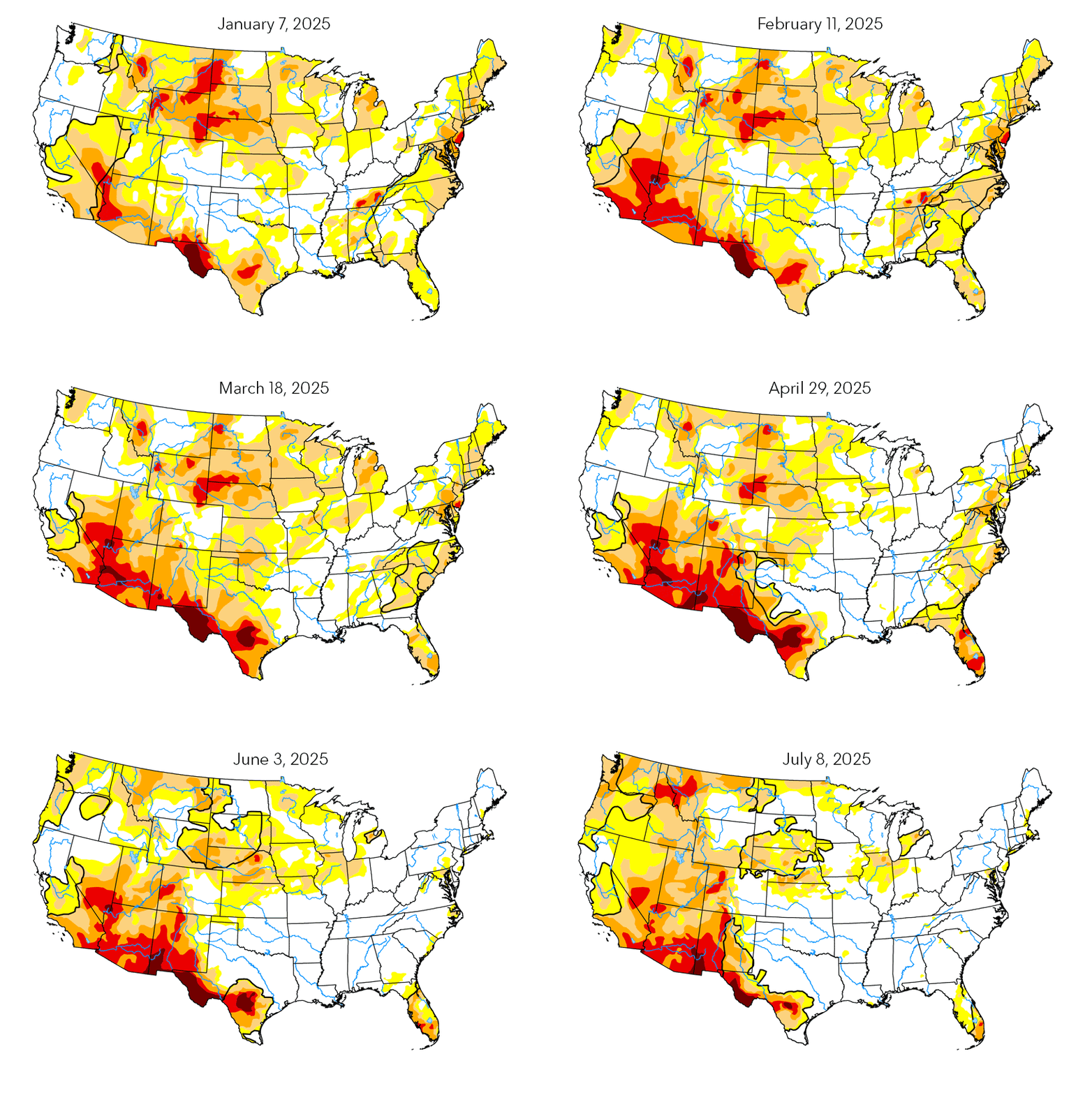
Temperatures in the mid- to upper-80s were reported in central and southern Illinois and Indiana during the first days of May, with highs in northern Ohio reaching the mid-70s. The summer-like weather sparked a flurry of spring fieldwork and planting, though showers were in the weekend forecast for many locations.
Illinois growers had 25-26% of the corn and soybeans planted by April 28, compared with 8% in Indiana and 6-7% in Ohio. Planting progress in Michigan was estimated at 4% for corn and 7% for soybeans.
Western Cornbelt:
Strong storms hit eastern Nebraska and Iowa on the last day of April, producing large hail and brief but heavy rainfall. A stronger system pushed through southern Iowa and Missouri on May 2, spawning a tornado near Joplin, Mo., and unleashing 1-3 inches of rain in Iowa that prompted flash flood warnings in some areas.
Corn planting as of April 28 had progressed to 63% complete in Missouri, 39% in Iowa, and 22% in Nebraska, with soybean planting estimated at 25% complete in Iowa, 24% in Missouri, and 10% in Nebraska. While progress in Iowa and Missouri was tracking ahead of the five-year average, Nebraska’s pace was lagging slightly.
Missouri growers also had 68% of the rice and 10% of the cotton planted by that date, while oats planting had progressed to 82-90% complete in Nebraska and Iowa.
California:
After nearly a week of 80-degree temperatures, central and northern California were bracing for another wet weekend, with up to a three-quarters of an inch of rain expected across the Sacramento Valley.
The weather system is also expected to drop heavy snow in the Sierra, with many areas looking at a foot of accumulation but others expecting as much as 18-24 inches from the storm. The snowfall arrives after an active winter that pushed mountain snowpack in California to above-average levels and left several reservoirs near capacity, including Lake Shasta and Lake Oroville.
California growers had 40% of the cotton and 15% of the rice planted by April 28. Fully 75% of the state’s winter wheat crop was headed by that date, with 95% of the acreage rated as good or excellent.

Pacific Northwest:
Another round of heavy rain was expected in western Oregon and western Washington over the coming weekend, with 1-2 inches of rain likely in the valleys and 2-6 inches of snow in the Cascades. The moisture was welcome news for areas east of the Cascades, where an April drought contributed to dry field conditions.
Multiple systems brought rain and snow to parts of Idaho and Montana during the week, pushing temperatures down to the 20s, and leaving several inches of snow accumulation in the valleys and heavier amounts at higher elevations in the Rockies.
Idaho growers had 63% of the sugar beets planted by April 28, trailing the average pace. The planting of spring wheat and barley was tracking ahead of average, however, with progress estimated at 70-76% complete in Washington, 65-72% in Idaho, and 30-35% in Montana.
Western Canada:
Most of Western Canada was hit with rain or snow during the week, limiting spring fieldwork but alleviating drought conditions in some areas.
Southern Manitoba received 10-20 mm of rain as the week progressed, with slightly less reported across southern Saskatchewan. Colder temperatures were expected late in the week as skies begin to clear, with frost warnings in effect for parts of Saskatchewan by the weekend.
Special weather statements were posted for parts of Alberta during the week warning of rain, snow, and even tornado activity. The province’s first tornado of the season was reported on April 28 near Kathyrn, while snowfall hit the same area later that day. Some areas of the province saw 10-25 cm of snow accumulation by the end of the week.
“Seeding is well underway in our area,” said one Saskatchewan contact at midweek. “We had some rain over the last couple days so things are shut down for a while, but no one is complaining and everyone is liking the moisture.”
“Some of the southern prairies have a fair amount done,” added another regional contact. “A few stations are reporting that the farmers are done seeding their wheat already. But, of course, some areas haven’t even started yet at all.”