All posts by hlancey@bloomberg.net

Sulfur

Tampa:

First-quarter Tampa contracts were valued at $69/lt CFR, a $33/lt drop from $102/lt CFR in the fourth quarter.

US Gulf:

US Gulf sulfur was stable at $69-$71/mt FOB in a well-balanced market, players said.

Brazil:

Brazil imports continued at $95-$100/mt CFR. Sources predicted firmer pricing in the next round of business.

Vancouver:   

Vancouver solid sulfur prices held steady at the week-ago $65-$68/mt FOB level.

Alberta:

Alberta netbacks continued at (-)$46-(-)$1/mt FOB, with molten sulfur cargoes contracted into the US market and solid tons sold through the Vancouver export market represented in the range.

West Coast:

West Coast prills continued in line with Vancouver at $65-$68/mt FOB. Fourth-quarter molten sulfur contracts were noted at $50-$55/lt FOB.

China:

China’s return from the Lunar New Year holiday saw import prices moving up to $100-$105/mt CFR, an increase from $94-$95/mt CFR at last report.

ADNOC:

Abu Dhabi National Oil Co. (ADNOC) sulfur was posted at $69/mt FOB Ruwais for February loading, a 10.4% decline from January’s $77/mt FOB.

Qatar:

Muntajat offers for February were reported at $69/mt FOB Ras Laffan, down 6.8% from January’s $74/mt FOB posting.

Ammonium Thiosulfate

Eastern Cornbelt:

The ammonium thiosulfate market remained at $265-$270/st FOB in the Eastern Cornbelt, with the low reported at Cincinnati and Ottawa and the high at Terre Haute, Ind.

Western Cornbelt:

Ammonium thiosulfate pricing was unchanged at $260/st FOB in the Western Cornbelt.

Southern Plains:

The ammonium thiosulfate market slipped to $155-$200/st FOB in the Southern Plains, down another $20-$30/st, with the low reported in Kansas and the high in Texas.

South Central:

Ammonium thiosulfate pricing was unchanged at $250-$255/st FOB Memphis.

CAN

Germany:

CAN prices softened slightly this week, with a €5/mt decrease seen at the high end of the range. Producers continue to be encouraged by good demand prospects, and expect a buying wave in the coming weeks when soils dry and application can begin in earnest.

While softer this week, the recent CAN price appreciation on the mainland was underscored by CF’s £10/mt price increase for ammonium nitrate in the UK late last week, to £330/mt DEL.

Crops/Weather

Eastern Cornbelt:

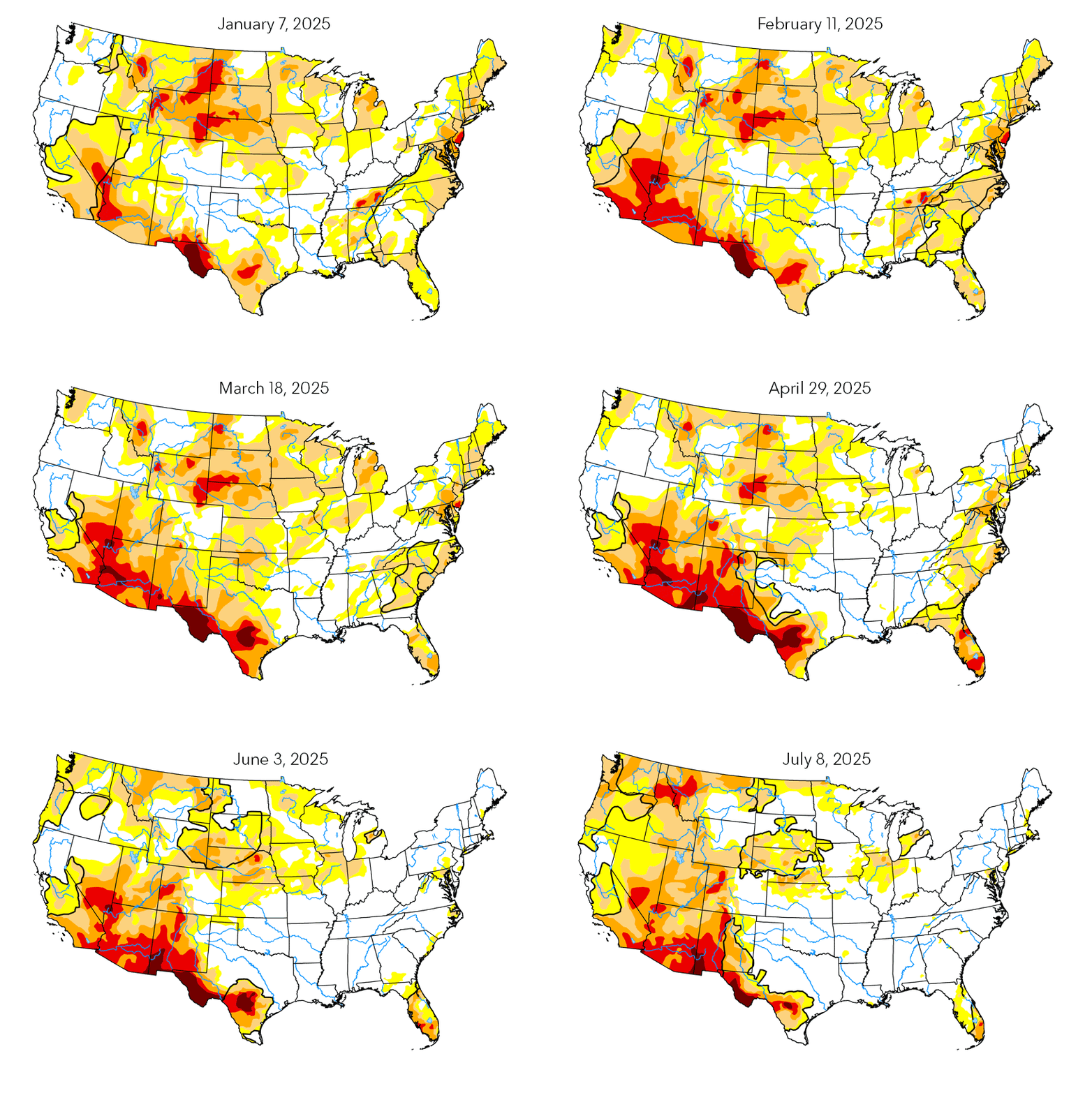
US Drought Monitor

Highs in the 50s were reported across central and northern Illinois during the week, keeping the Chicago area on track to record one of its warmest Februarys on record. With temperatures expected to climb to the 40s and 50s for the balance of the month, the city could register a record 27 February days with temperatures above the 40-degree mark.

The unseasonably mild weather sparked strong thunderstorms across northern Indiana as the week progressed, with forecasts warning of up to half-inch of rain possible in some locations late on Feb. 22. Northern Ohio was also bracing for rainfall later in the week, with high temperatures falling from upper-40s to the 30s on Feb. 23.

Western Cornbelt:

Unseasonably mild temperatures in the 50s and 60s were reported across much of the Western Cornbelt during the week, prompting some early spring fieldwork and ammonia application in some locations. All of Iowa remained locked in drought, however, with a broad expanse of severe-to-extreme drought conditions covering southern and eastern areas of the state.

Southern Plains:

Corn Wheat Soybean Index

Highs in the upper-60s and low-70s were common across Kansas and Oklahoma during the week, creating favorable conditions for topdress and preplant fertilizer applications. Highs even reached the low- to mid-80s in northern and central Texas, where growers were planting corn in late February.

Nearly all of New Mexico remained in drought conditions ranging from moderate to exceptional, according to the Feb. 22 US Drought Monitor. Drought conditions extended into western and southern Texas as well, with moderate drought noted in northern Kansas.

South Central:

Scattered showers and above-normal temperatures were reported across Arkansas, Tennessee, and Kentucky during the week, with highs climbing into the 60s. All of Middle Tennessee and southern Kentucky were under a severe weather outlook at midweek, with forecasts warning of strong thunderstorms moving through the region.

Gusty winds in Mississippi contributed to fire danger warnings as the week advanced, with some northern areas of the state experiencing moderate-to-severe drought in late February.

Southeast:

Highs in the 50s and 60s were reported in Virginia and the Carolinas, with an increased chance of showers as the week progressed. A wind advisory was in effect for northern Alabama on Feb. 22, while scattered showers were expected to move through Georgia late in the week.

Lows across Florida dipped to the 40s and 50s during the week, while highs were reported in the low-80s in some locations.

Transportation

US Gulf:

Planned repair operations will block travel through the Florida Avenue Bridge, located at Miles 1-2 of the East Canal, from 6 a.m. to 10 p.m. on Feb. 24. Emergency repairs underway at the West Canal’s Lapalco Bridge were reported limiting navigation between 7 a.m. and 6 p.m. daily through an estimated March 1.

Unplanned repairs continued at the Black Bayou Bridge, leaving weekday navigation unavailable at 5-8 a.m. and again from 4-7 p.m., while weekend closures were reported at 6-8 a.m. and 5-7 p.m. No expected date of completion was available on Feb. 20.

Guidewall repairs necessitated daytime shutdowns at Bayou Sorrel Lock from 7 a.m. to 4 p.m. Most wait times were noted in a wide 10-40 hour range during the week. Dive operations were projected to kick off at Colorado Lock on Feb. 26, restricting daylight navigation for an estimated 10-day stretch.

Repairs in progress since Feb. 5 at the Ellender Bridge, at Mile 243 of the West Canal, will block weekday travel from 7 a.m. to 5 p.m. through April 12. St. Claude Avenue Bridge maintenance will shut that site to navigation from 6 a.m. to 10 p.m. on Feb. 24, sources said.

Bayou Boeuf Lock repairs scheduled to begin in mid-March are expected to require three separate closures lasting four days each. Additional daytime shutdowns for timber replacement are expected in tandem with the project.

Brazos Lock is closed for maintenance from 7 a.m. to 7 p.m. through approximately Feb. 29. Tows were restricted to one loaded barge or two empty barges per pass, sources said, triggering intermittent 4-9 hour waits.

Port Allen Lock delays were posted up to seven hours, while wait times were clocked up to 28 hours at Industrial Lock. Most Algiers Lock waits fell in the 10-20 hour range during the week.

Mississippi River:

Sources noted a 10% reduction in loading drafts on vessels transiting the St. Louis area. Tows moving between St. Louis and Cairo, Ill., reportedly saw draft reductions of 5-10%.

While through-travel from St. Louis to St. Paul, Minn., remains unavailable until mid-March, Locks 11-16 and 18-20 were reportedly open for weekday lockages between 8 a.m. and 4 p.m. through March 9, though Lock 19 was slated to shut for eight hours daily on Feb. 27-29. Locks 21 and 22 are available for locking 24/7, a Corps posting indicated.

The upper river is scheduled to reopen for spring navigation on March 4-16, conditions permitting. Barges loading from New Orleans for locations below Dubuque, Iowa, were said to begin releases in the second week of February, while cargoes destined for docks north of Dubuque will resume upriver travel in the second half of February, sources said.

Illinois River:

Starved Rock Lock wait times were quoted up to six hours during the week. Wickets remained in the lowered position at LaGrange Lock and Peoria Lock, allowing tows to transit both sites without locking.

Looking ahead, the Corps announced a Lockport Lock closured slated to run from Jan. 14-March 11, 2025. The project will completely block movements between the Illinois River and Chicago.

Ohio River:

An unplanned Meldahl Lock main chamber closure continued during the week, prompting lengthy delays. With locking only available through the secondary chamber, Corps data showed wait times in the 16-31 hour range, down from 50-75 hours one week earlier.

Greenup Lock will shut for valve repairs between March 4 and April 12, while work at both Cannelton Lock and Markland Lock is expected to slow travel from April 22 to June 7. Markland Lock will also see miter gate repairs on June 10-28.

Racine Lock is scheduled for machinery work from June 1 to July 11, while Hannibal Lock will undergo dewatering and miter gate repairs from June 15 to Nov. 7, with significant delays expected. An as-yet unscheduled Belleville Lock project affecting both the lock’s primary and secondary chamber is anticipated in the second half of the year, sources said.

On the Tennessee River, Kentucky Lock delays were reported up to 14 hours, while boats waited up to 10 hours to pass Wilson Lock. The Cumberland River’s Old Hickory Lock will close to overnight travel on March 18-April 1, followed by a complete shutdown running April 1 through May 9.

Arkansas River:

The Van Buren Bridge will close to navigation on March 11-29. A single opening is planned for March 20 or 21 to clear waiting vessels. The bridge is located at Mile 300.8 of the Arkansas River.