

California:
Granular SOP Magnesia was unchanged at $505-$520/st FOB in California.
Pacific Northwest:
The SOP Magnesia market was quoted at $430-$440/st FOB for granular tons in the Pacific Northwest.
California:
Granular SOP Magnesia was unchanged at $505-$520/st FOB in California.
Pacific Northwest:
The SOP Magnesia market was quoted at $430-$440/st FOB for granular tons in the Pacific Northwest.
California:
Potassium nitrate pricing in California remained at $1,235/st FOB Stockton for bulk, $1,340/st FOB for bulk bags, and $1,360/st FOB for 50-pound bags.
Eastern Cornbelt:
Potassium thiosulfate pricing in the Eastern Cornbelt remained at $700/st FOB Terre Haute for the last offers.
Potassium thiosulfate pricing was unchanged at $700/st FOB Waterloo.
California:
The last potassium thiosulfate offers were confirmed at the $700/st level FOB Sacramento.
Eastern Cornbelt:
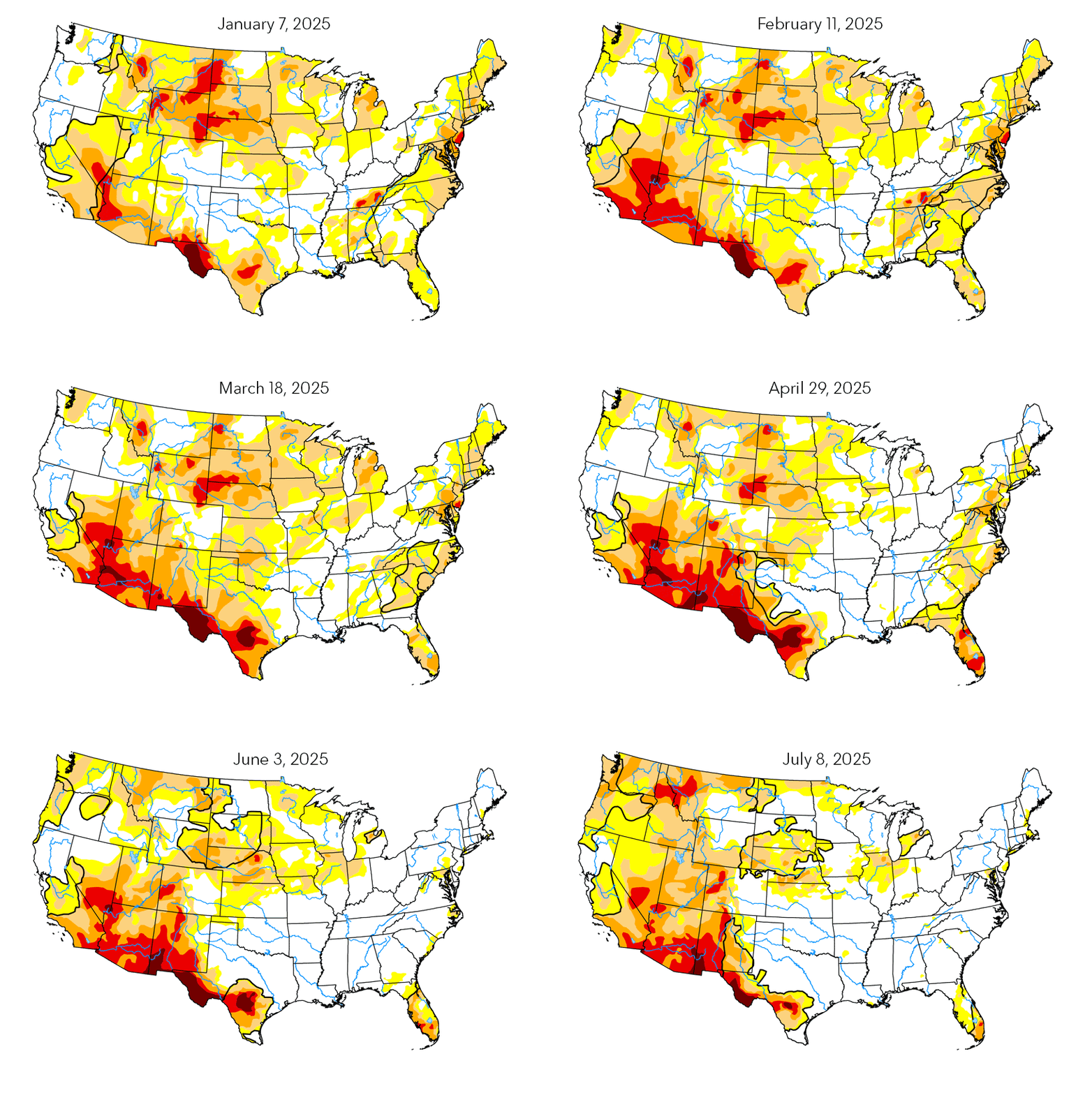
Winter weather moved into the Eastern Cornbelt at midweek, bringing snow and cold temperatures to many locations. Lows in the teens were reported in central Indiana, with highs only reaching the 20s on Nov. 28. The system left more than 13 inches of lake-effect snow in parts of northern Ohio.
Michigan was also in the storm’s path, with 1-2 feet of snow reported in parts of the Upper Peninsula and 6-12 inches across Northern Michigan. Snowfall totals in southern Michigan ranged from 2-6 inches.
Growers had 95-99% of the corn harvested in Indiana and Illinois by Nov. 26, compared with 86% in Ohio and 79% in Michigan. Warmer weather was on tap as the week progressed, though some areas were expecting rainfall by the weekend.
“Tons are still moving to the ground in our area as growers try to finish harvest and beat the next moisture front coming in,” said one Ohio contact. “The fall season has been a pretty decent one movement-wise, but we still have tons to go. I expect we will have two weeks more movement if Mother Nature holds out.”
Western Cornbelt:

A winter weather advisory was in effect late in the week for parts of southern and eastern Iowa, with 1-2 inches of snow possible by Dec. 1. Northern Missouri was bracing for rain and freezing rain from the system, with a wintry mix of precipitation expected in southeastern Nebraska and southwestern Iowa as well.
Fall applications of ammonia, phosphates, and potash continued in the Western Cornbelt in late November, with the regional corn and cotton harvest reported at 98-99% complete by Nov. 26.
California:
Cool, windy weather was in the forecast for much of California as the week progressed. While rainfall totals were expected to be minor, higher elevations in Northern California were preparing for 2-4 inches of snow by the weekend.
Fall harvest activities were mostly wrapped up in the state, with minimal fertilizer buying reported for spring demand.
Pacific Northwest:
Rain and snow moved into western Oregon and Washington as the week progressed, prompting winter weather advisories on Nov. 30 for the Cascades, stretching from southern Oregon to southwestern Washington.
While up to eight inches of snow was expected at elevations around 3,500 feet, as much as 20 inches was possible in parts of the Cascades by Dec. 2. Lower elevations were bracing for several inches of rain as the system pushed through.
Weekend snowfall was also in the forecast for parts of Idaho and western Montana, but warmer weather was on tap for the first week of December, with daytime highs expected to reach the 40s and 50s on Dec. 4.
Western Canada:
Mild temperatures and a lack of snow benefitted fall fertilizer applications in Western Canada, with sources reporting heavy volumes for most products. The lack of precipitation was raising concerns about the potential for drought in 2024, however, along with fears of another active wildfire season.
According to Alberta Wildfire, there are still 69 active wildfires burning across the province since the end of the wildfire season on Oct. 31. Alberta Wildfire said it has responded to 1,119 fires since the beginning of the year and a record of 2.2 million hectares of land has been burned. The province’s five-year average prior to this year was 226,000 hectares of burned land.
US Gulf:
Algiers Lock returned from gate repairs on Nov. 29, ahead of the site’s planned Dec. 1 reopening date. Vessels were previously routed through the Port Allen Route while work was underway, adding an estimated 24-48 hours to travel times.
Bayou Sorrel Lock travel was unavailable from 7 a.m. to 4:30 p.m. for guidewall repairs, triggering delays of 5-36 hours. Tows arriving prior to 4:30 p.m. were permitted to pass before the lock shuts the next morning, sources said, though the closures were expected to pause whenever wait times lift above 24 hours. Southbound lockages were given preference during daytime hours, while northbound tows were prioritized overnight.
Harvey Lock saw lengthy delays due to low head conditions, with Corps data showing many tows waiting 2-3 days to lock, up from 35 hours at last report. Tow lengths at Harvey were limited to 300 feet when head conditions fall below 1.5 feet, while widths were held to 70 feet. Reverse head conditions shut the lock completely between June 15 and Oct. 16.
Daytime shutdowns at Brazos Lock were scheduled to wrap up on Nov. 29, ending a period of delays reported up to 24 hours. Slow-travel warnings at Bayou Chene, in place due to dredging, were slated to expire on Nov. 30.
Port Allen Lock wait times were reported in a 2-4 day range due to lingering congestion from the shutdown at Algiers Lock, and Corps data showed 29 vessels queued to lock on Nov. 30. Midweek Industrial Lock waits peaked at 18 hours, while intermittent five-hour delays were noted at Calcasieu Lock. Tows transiting Colorado Lock waited up to eight hours to pass.
Mississippi River:
Sources reported ongoing towing restrictions on the Mississippi River due to low water levels. Northbound tows saw loading drafts reduced by 20-25% on the lower river, unchanged from the prior report, while southbound barge drafts were cut by 15-20%, improving from 20-25% at last report. Towing widths between Cairo, Ill., and NOLA were reported at six barges, a 15-25% reduction from the typical 7-8 barge widths, depending on vessel horsepower.
The river gauge at Memphis, Tenn., on Nov. 30 was noted above the (-)5.0-foot low stage at (-)4.5 feet, though forecasters anticipated depths falling to (-)10.3 feet on Dec. 14. Sources previously expected towing widths on the lower river to slide to five barges, down from the current six-barge limit, when Memphis levels dip below the (-)8.0-foot mark. The gauge at Vicksburg, Miss., was noted at a low-stage 4.1 feet at midweek.
Maximum drafts were reduced by 10-15% on travel through the St. Louis harbor, while loading weights were capped at 90-95% of normal between Cairo and St. Louis. The St. Louis gauge stood at (-)1.7 feet on Nov. 30, above the (-)5.0-foot forecast for Dec. 14.
Dredging reported at Miles 738 and 486 of the lower river was expected to conclude during the week. On the upper river, sources noted dredging at Miles 274, 171-173, and 80-95.
Wait times were reported up to five hours at Lock 25. Corps data showed intermittent seven-hour delays at Lock 27.
Upper-river locks 2-4, 7, 17, and the railroad bridge at Mile 535 are scheduled to close for the winter navigation season from December through mid-March 2024. Locks 11-16 and 18-20 are currently expected to pass vessels on weekdays between 8:00 a.m. to 4:00 p.m., conditions permitting, while Locks 21 and 22 will pass vessels 24/7.
Illinois River:
Illinois River loading weights were cut by 5-10% due to low water levels, with maximum drafts reported at nine feet on Nov. 29. Dredging continued at Miles 226-228, sources said.
Wickets were raised at Peoria Lock and LaGrange Lock, forcing tows to lock through both locations. Waits ran up to nine hours at Peoria Lock, while Corps data showed scattered seven-hour delays at LaGrange Lock. Tows waited up to 10 hours to pass Dresden Island Lock.
Ohio River:
Sources noted Ohio River loading drafts rising to 10.5 feet at most locations, up from 9-10 feet reported previously. Tows were limited to 15 barges, regardless of the direction of travel.
The Montgomery Lock auxiliary chamber was closed to traffic on Nov. 22-26, after which the site’s main chamber was scheduled to shut from Nov. 26 through Dec. 22. A planned Nov. 13-22 closure at Olmsted Lock was delayed indefinitely, sources said.
The Tennessee River’s Kentucky Lock is set to close for upper guidewall replacement between Jan. 22 through Feb. 15, 2024. Wait times were reported up to 16 hours at Kentucky Lock, while Wilson Lock delays were counted up to 23 hours.
Yara International ASA on Nov. 29 announced the launch of YaraAmplix ™, a new brand of biostimulants and on Nov. 27 announced a major plastics reduction initiative.
Several new products are in the biostimulant pipeline for 2024 and Yara’s existing portfolio of biostimulants becomes part of this new brand family. The company said that since 2018, its biostimulant portfolio has grown with a compound annual growth rate of more than 50%.
“Extreme weather is destroying crops all over the world with drought, flooding, and frost,” said Svein Tore Holsether, Yara CEO. “Biostimulants help farmers make their crops stronger, and more resilient to stress from climate change. Farmers are the first line of defense against food insecurity, and we are adapting to their needs with solutions that allow them to prosper when the environment is not always on their side.”
Yara said its portfolio is formulated with mostly natural ingredients such as seaweed and plant extracts, to deliver targeted effects such as enhanced tolerance to abiotic stress and improved nutrient use efficiency, crop yield, and quality.
The company is conducting scientific and independent trials on biostimulants in all regions to evaluate and validate their effects in various conditions and crops. Yara said datasets of 359 data points from 2018 to 2020 shows an average yield increase of 7.5% with a win rate of 74% over control treatment.
“Popular foods we all rely on, such as tomato, maize, soybean, and citrus to name a few, are at increased risk of yields loss due to extreme weather, so lowering greenhouse gas emissions to avoid a worsening scenario is key,” said Rejane Souza, Senior Vice President, Global Innovation.
“As part of the solution, biostimulants are an essential tool to help reduce loss of food due to climatic stresses while improving nutrient use efficiency, a critical lever when it comes to enabling farmers to keep their business profitable and sustainable,” Souza added. “The launch of YaraAmplix emphasizes even more our focus on regenerative agriculture and that is why we intend to take on a leading position of biostimulants in the future.”
YaraAmplix will begin commercial rollout in China, Brazil, and France during the end of 2023, and will gradually be rolled out to the rest of the world in 2024.
Yara is also introducing big and small packaging made with at least 30% recycled plastic all over Europe during 2023. It said the move will reduce virgin plastic use by around 3,000 mt/y and avoid 6,000 mt/y of CO2 emissions. Yara aims to reduce the carbon footprint of its packaging materials by 40% by 2030 compared to 2021.
In Brazil, Yara has signed an agreement with a supplier to jointly develop a new type of big bag made from 100% recycled PET (polyethylene terephthalate). Yara said that PET compared to other plastics currently used can be recycled endlessly without losing its strength and quality. Yara said it is looking at similar initiatives around the world and noted that in South Africa its big bag liners are now made with recycled plastic.
The company is also working to reduce the use of plastic packaging material. In Thailand it has developed a new material, Light and Strong, that it said results in a bag that is lighter, stronger, more durable, and reusable. In India, the company has reduced the thickness of the material for its 45 kg urea bags and it has also reduced plastic use in bags in West Africa.
“Plastic pollution constitutes a planetary crisis demanding change in our approach to secure a sustainable future,” said Bernhard Stormyr, Vice President, Sustainability Governance. “To deliver on Yara’s ambition of growing a nature-positive food future, we are committed to continuously reducing our climate impact as well as the environmental footprint from the use of our products.”
Hungarian fertilizer maker Nitrogenmuvek Zrt. plans to import ammonia instead of producing it at its plant in Hungary, avoiding the country’s extra taxes on carbon emissions, CEO Laszlo Bige told local broadcaster ATV, as reported by Bloomberg.
Nitrogenmuvek is looking at restarting the ammonia plant next June after reorganizing its production. Importing ammonia would allow the company to produce its downstream products. In recent weeks, the company initially announced plans for an indefinite shutdown, but later downplayed that possibility (GM Nov. 17, p. 29).
Nitrogenmuvek is seeking ways to refinance its bonds early next year while making efforts to restart production, said Chief Strategy Officer Zoltan Bige on Nov 29.
The company, one of the largest European producers of nitrate-type fertilizers, has €200 million ($218 million) in bonds maturing in May 2025. The company wants to create a “liquidity buffer” well in advance and go to the market in the first quarter or the early second quarter of 2024, Bige said.
Nitrogenmuvek would prefer to issue bonds again, with other options such as bank debt, also considered. “We would like to keep our sources of external financing around the current levels,” Bige said.
While ammonia and fertilizer production are both suspended, the company is seeking ways to restart fertilizer output as soon as possible and continue normal operations in the longer run, he said.
Nitrogenmuvek’s bonds are rarely traded, but brokers are quoting them at about 60 cents on the euro, down from about 80 cents earlier this month before the production halt. The company cited a Hungarian tax, levied on carbon emission quotas that are allocated for free, for the stoppage, which came after a previous suspension during the spike in natural gas prices.
“The fundamentals remain strong and if not for the tax, we would not have needed to shut down,” he said, adding that the company has sufficient funds for upcoming coupon payments. Diversifying further into hydrogen production is another key plan to boost revenue, he said.
CF Industries Holdings Inc. on Dec. 1 announced that it has closed its acquisition of Incitec Pivot Ltd.’s 880,000 st/y ammonia production complex located in Waggaman, La. As previously reported, the deal was expected to close Dec. 1 after receiving antitrust approval (GM Nov. 17, p. 1).
CF purchased the Waggaman plant and related assets for $1.675 billion, subject to adjustments. The companies allocated approximately $425 million of the purchase price to a long-term ammonia offtake agreement under which CF will supply up to 200,000 st/y of ammonia to IPL’s Dyno Nobel subsidiary at production economics. CF funded the remaining purchase price with cash on hand.
“We are pleased to grow our industry-leading ammonia production capabilities with the addition of IPL’s Waggaman ammonia production facility and team,” said Tony Will, CF President and CEO. “This transaction deploys our capital efficiently, delivering immediate profitable growth by adding one of the newest ammonia production units in North America into our existing network while advancing our long-term strategic focus on low-carbon ammonia as a clean energy source.”
Along with its offtake agreement with IPL, CF said it will continue to fulfill medium- and long-term offtake agreements with two customers that were in-place prior to the acquisition. CF estimates that these agreements will generate gross margin per ton commensurate with its existing ammonia segment prior to the greater capacity utilization and operational and logistics optimization CF expects to achieve with the site’s integration into the company.
Additionally, CF anticipates implementing carbon capture and sequestration (CCS) technologies at the site on an accelerated timeline, increasing its network’s low-carbon ammonia production capability while earning 45Q tax credits for sequestered carbon dioxide.
Chemtrade Logistics Income Fund, Toronto, reported third-quarter adjusted EBITDA of C$142.1 million, up 3.7% from the year-ago $137.1 million. This moved nine-month adjusted EBITDA to $418 million versus the year-ago $326.6 million.
Chemtrade is raising full-year guidance, now expecting it to exceed $490 million, which will be the highest amount achieved in company history, handily beating last year’s record level by at least 13%. Prior guidance had been above $475 million. Year-ago actual was $430.9 million.
“The strong performance that we delivered in the third quarter, both financially and operationally, further builds on the solid track-record that we have established in recent years and positions us for a record year in 2023,” said Scott Rook, Chemtrade President and CEO.
“While these results reflect strength across a number of products in our diversified portfolio, they are really a testament to the ongoing focus and execution of the entire Chemtrade team,” Rook added. “Despite a decline in revenue attributable to lower sulfur and caustic soda prices, the commercial initiatives, along with a focus on operating performance, were pivotal in driving yet another quarter of growth in adjusted EBITDA and distributable cash.”
Despite the increased adjusted EBITDA, net earnings of $70.8 million were down 6% from the year-ago $75.3 million, mainly due to non-cash expenses resulting from an increase in the market value of convertible debentures.
Revenue of $483.5 million was off 7% from the year-ago $519.9 million, driven by lower prices for sulfur and caustic soda, which were partially offset by higher prices for water products, sodium chlorate, regen acid, and chlorine.
The National Gas Co. of Trinidad and Tobago (NGC) on Nov. 20 announced the completion of Gas Sales Contracts (GSCs) with PCS Nitrogen Trinidad Ltd. (Nutrien) and the Trinidad Nitrogen Co. Ltd. (TRINGEN).
“When you think of this country’s contribution as a leading exporter of ammonia, globally, the importance of these gas sales contracts cannot be understated,” said NGC President Mark Loquan. “At NGC, we want to do our part to ensure our downstream sector remains globally competitive and remains a major contributor to Trinidad and Tobago’s sustained economic development.”
“Our teams have been working on these GSCs with our Point Lisas partners for some time, and these signings are the culmination of careful planning, hours of negotiation, and NGC’s unwavering commitment as the aggregator of gas,” he added. “Specifically, I’d like to thank the teams at Nutrien and TRINGEN for their partnership and I thank the team at NGC for their dedication.”
In the case of Nutrien, NGC said the supply of natural gas will support the company’s four anhydrous ammonia plants and one urea plant, all located at the Point Lisas Industrial Estate (PLIE). NGC said the GSC will ensure that TRINGEN’s two independent ammonia plants, as well as its gas turbine power generation (GTG), will continue to operate at the PLIE.
In recent weeks, NGC said it has successfully closed other ammonia sector GSCs, notably with Proman for the execution of Gas Sales Contracts for Caribbean Nitrogen Co. Ltd. (CNC) and Nitrogen (2000) Unlimited (N2000), as well as with Point Lisas Nitrogen Ltd. (PLNL) (GM Oct. 6, p. 1).
NGC said it is continuing to work with other key business partners in the sector to close GSCs that will enable these businesses to continue on their growth path.