All posts by hlancey@bloomberg.net

Crops/Weather

Eastern Cornbelt:

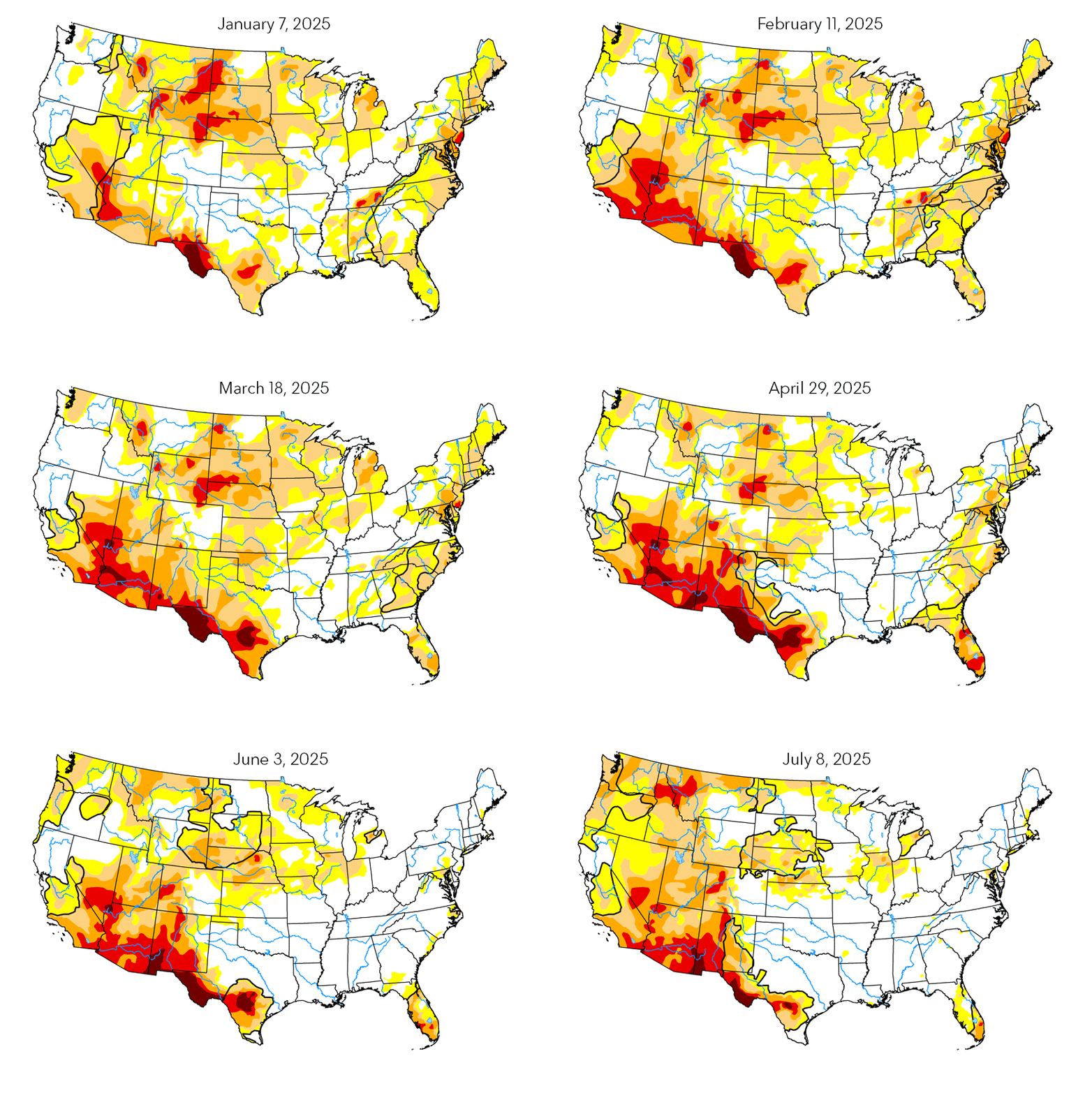
US Drought Monitor

Temperatures in the mid- to upper-80s were reported in central and southern Illinois and Indiana during the first days of May, with highs in northern Ohio reaching the mid-70s. The summer-like weather sparked a flurry of spring fieldwork and planting, though showers were in the weekend forecast for many locations.

Illinois growers had 25-26% of the corn and soybeans planted by April 28, compared with 8% in Indiana and 6-7% in Ohio. Planting progress in Michigan was estimated at 4% for corn and 7% for soybeans.

Western Cornbelt:

Strong storms hit eastern Nebraska and Iowa on the last day of April, producing large hail and brief but heavy rainfall. A stronger system pushed through southern Iowa and Missouri on May 2, spawning a tornado near Joplin, Mo., and unleashing 1-3 inches of rain in Iowa that prompted flash flood warnings in some areas.

Corn planting as of April 28 had progressed to 63% complete in Missouri, 39% in Iowa, and 22% in Nebraska, with soybean planting estimated at 25% complete in Iowa, 24% in Missouri, and 10% in Nebraska. While progress in Iowa and Missouri was tracking ahead of the five-year average, Nebraska’s pace was lagging slightly.

Missouri growers also had 68% of the rice and 10% of the cotton planted by that date, while oats planting had progressed to 82-90% complete in Nebraska and Iowa.

California:

After nearly a week of 80-degree temperatures, central and northern California were bracing for another wet weekend, with up to a three-quarters of an inch of rain expected across the Sacramento Valley.

The weather system is also expected to drop heavy snow in the Sierra, with many areas looking at a foot of accumulation but others expecting as much as 18-24 inches from the storm. The snowfall arrives after an active winter that pushed mountain snowpack in California to above-average levels and left several reservoirs near capacity, including Lake Shasta and Lake Oroville.

California growers had 40% of the cotton and 15% of the rice planted by April 28. Fully 75% of the state’s winter wheat crop was headed by that date, with 95% of the acreage rated as good or excellent.

Corn Wheat Soybean Index

Pacific Northwest:

Another round of heavy rain was expected in western Oregon and western Washington over the coming weekend, with 1-2 inches of rain likely in the valleys and 2-6 inches of snow in the Cascades. The moisture was welcome news for areas east of the Cascades, where an April drought contributed to dry field conditions.

Multiple systems brought rain and snow to parts of Idaho and Montana during the week, pushing temperatures down to the 20s, and leaving several inches of snow accumulation in the valleys and heavier amounts at higher elevations in the Rockies.

Idaho growers had 63% of the sugar beets planted by April 28, trailing the average pace. The planting of spring wheat and barley was tracking ahead of average, however, with progress estimated at 70-76% complete in Washington, 65-72% in Idaho, and 30-35% in Montana.

Western Canada:

Most of Western Canada was hit with rain or snow during the week, limiting spring fieldwork but alleviating drought conditions in some areas.

Southern Manitoba received 10-20 mm of rain as the week progressed, with slightly less reported across southern Saskatchewan. Colder temperatures were expected late in the week as skies begin to clear, with frost warnings in effect for parts of Saskatchewan by the weekend.

Special weather statements were posted for parts of Alberta during the week warning of rain, snow, and even tornado activity. The province’s first tornado of the season was reported on April 28 near Kathyrn, while snowfall hit the same area later that day. Some areas of the province saw 10-25 cm of snow accumulation by the end of the week.

“Seeding is well underway in our area,” said one Saskatchewan contact at midweek. “We had some rain over the last couple days so things are shut down for a while, but no one is complaining and everyone is liking the moisture.”

“Some of the southern prairies have a fair amount done,” added another regional contact. “A few stations are reporting that the farmers are done seeding their wheat already. But, of course, some areas haven’t even started yet at all.”

Transportation

US Gulf:

Emergency repairs at Port Allen Lock concluded on April 27, sources said, one day ahead of schedule, ending a full closure that stretched back to March 28. Midweek wait times were reported at the 17-hour mark. Lengthy delays continued at Algiers Lock, the primary alternate route for vessels detouring around Port Allen Lock, with waits topping out around 70 hours.

Sources reported long backups at Industrial Lock due to emergency repairs at Demopolis Lock, on the Warrior-Tombigbee Waterway, underway since January. Delays were quoted up to 4.5 days during the week, while Corps data showed 25 tows queued to lock through the site on May 1.

Repairs underway at Brazos Lock are projected to run into October, sources said, limiting weekday movements from 7 a.m. to 7 p.m. Intermittent 5-27 hour delays were reported at Brazos. Colorado Lock waits were noted up to 12 hours.

Guidewall work at Bayou Sorrel Lock limited weekday movements from 7 a.m. to 4 p.m., triggering delays up to 22 hours. Harvey Lock transits were quoted up to 24 hours during the week.

Repairs to the Houston-area’s San Jacinto River Bridge kicked off on April 22 and are expected to last 3-4 months. Marine traffic will be limited to a singlewide towing pattern through the western side of the channel for the project’s duration, and travel will be completely unavailable through the channel’s eastern side.

Mississippi River:

High water levels in the St. Louis area impacted tow sizes on the Mississippi River, forcing barge-count reductions of approximately 20% between St. Louis and Cape Girardeau, Miss. The reductions were likely to continue through at least the next seven days, sources noted.

Sources reported a full shutdown at Mile 127 of the upper river on May 1, with passage through the area anticipated to remain unavailable for a day or two. Intermittent Lock 19 shutdowns reported on April 29 were expected to continue through May 3.

The St. Louis river gauge was posted at an action-stage 28.8 feet and rising on May 1, with the area projected to crest at a minor-flood 30 feet on May 2-3. On the lower river, the gauge at Baton Rouge, La., was at an action-stage 30.6 feet at midweek. The Vicksburg, Miss., gauge fell below the 35-foot action stage on April 30, but was forecast to return to action stage on May 8.

Dredging reported at Mile 107 is expected to continue through May 26. Lock 27 delays were posted up to eight hours during the week.

Illinois River:

High water levels on the Illinois River restricted tow lengths by 50% above Starved Rock Lock, stretching transit times and increasing lock delays, sources said.

Maximum loading drafts continued at 10 feet in both the northbound and southbound directions below Mile 160. Drafts were reduced to 9.5 feet at Miles 160-231 and nine feet above Mile 231.

Wickets remained down at Peoria Lock and LaGrange Lock, allowing tows to pass both sites without locking.

Ohio River:

Water levels continued to decline on the Ohio River, pushing maximum drafts to the 10-11.5 foot range, depending on location and direction of travel, down from 10-12.5 feet at last report. Tow lengths were capped at 15 barges in both directions.

The land chamber at McAlpine Lock closed for maintenance on April 22, sources said, leaving tows to pass through the river chamber until May 3. Minimal delays were reported during the week.

The Willow Island Lock main chamber is offline through May 15 for repairs and maintenance, forcing detours through the auxiliary chamber. Wait times were posted in a wide 27-81 hour range.

Scheduled work underway at Cannelton Lock and Markland Lock was expected to slow movements through both locations until June 7. Markland Lock will see a more intensive shutdown on June 10-28 for miter gate repairs.

Machinery repairs are scheduled for June 1-July 11 at Racine Lock, while slowdowns are anticipated at Hannibal Lock between June 15 and Nov. 7 for dewatering and miter gate repairs. Belleville Lock will undergo alternating 30-day main and auxiliary chamber closures during the second half of the year.

Intermittent 4-7 hour waits were reported at Kentucky Lock on the Tennessee River, while tows needed up to 11 hours to pass Pickwick Landing Lock. The Cumberland River’s Old Hickory Lock is shut to navigation through May 9.

Arkansas River:

Travel through the Van Buren Bridge, at Mile 300.8 of the Arkansas River, will be unavailable on Aug. 16-Sept. 8 for repairs, sources said. Vessels will reportedly be allowed to pass the site following the ninth day of work.

Competition Bureau Sees “Substantial Anti-Competitive Effects” in Bunge/Viterra Deal

Canada’s Competition Bureau announced on April 23 that it has concluded that the proposed $8.2 billion acquisition of Viterra Ltd. by Bunge Ltd. (GM June 16, 2023) is likely to result in “substantial anti-competitive effects” and a “significant loss of rivalry” between Viterra and Bunge in agricultural markets in Canada.

The Bureau’s concerns are outlined in a report submitted to the Minister of Transport. The report will inform Transport Canada’s public interest review of the proposed transaction as it relates to national transportation, which must be completed by June 2, 2024. The final decision regarding the proposed transaction will be made by the Governor in Council based on advice from the Minister of Transport.

The Bureau determined that the transaction is likely to harm competition in markets for grain purchasing in Western Canada, as well as for the sale of canola oil in Eastern Canada.

The Bureau also found that Bunge could materially influence the economic behavior of G3 Global Holdings, a major competitor to Viterra. As a 25% minority shareholder of G3, Bunge has access to G3’s confidential competitively sensitive information. If the deal is allowed to go through, Bunge will have an incentive to “influence G3’s economic behavior to the detriment of competition,” the agency said in its report.

Combining Bunge and Viterra would create a trader big enough to take on industry elites Minneapolis-based Cargill Inc. and Chicago’s Archer-Daniels-Midland Co. The deal is the culmination of Bunge CEO Greg Heckman’s transformation of the once-troubled St. Louis-based crop trader into a cash-rich oilseeds champion.

Bunge said in an April 23 statement that the “localized concerns” are “misplaced” and that the company “looks forward to working with Transport Canada and the Bureau to provide further information addressing these points.” The agribusiness company said it still expects the transaction to close in the middle of this year.

Anglo Rejects BHP Takeover Bid; Deal Could Boost Potash Competition

Anglo American Plc on April 26 rejected a $39 billion takeover proposal from mining giant BHP Group, saying it significantly undervalues the company, Bloomberg reported.

Under the proposed all-share deal, Anglo would first spin off controlling stakes in South African platinum and iron ore companies to its shareholders before being acquired by BHP. The total per-share value of the nonbinding proposal was about £25.08, BHP reported on April 25.

Anglo’s rejection was widely expected. Analysts and some Anglo investors had seen BHP’s proposal as well below the sort of price that would bring the 107-year-old miner to the table. BHP will now have to improve its offer if it wants to start talks.

“The BHP proposal is opportunistic and fails to value Anglo American’s prospects,” Anglo Chairman Stuart Chambers said in a statement.

Just two years ago, Anglo was trading at almost £43 a share, but it has been battered by major operational and market setbacks. Anglo shares were steady in London after jumping 16% on April 25.

A tie-up with Anglo would give BHP roughly 10% of global copper mine supply ahead of an expected shortage that many market watchers predict will send prices soaring. If successful, the transaction would mark a return to large-scale dealmaking for BHP, while potentially flushing out other suitors aiming to boost their exposure to the metal that’s closely linked to the global energy transition.

Anglo has long been viewed as a potential target among the largest miners, particularly because it owns attractive South American copper operations at a time when most of the industry is eager to add reserves and production. Still, suitors have been put off by Anglo’s complicated structure and mix of other commodities, from platinum to diamonds, and especially its deep exposure to South Africa.

BHP had sought to navigate that challenge by insisting that Anglo separate its two South African units as a condition of a takeover. That suggestion was also dismissed by Anglo on April 26, with the company saying it was unappealing to its investors.

“The proposed structure is also highly unattractive, creating substantial uncertainty and execution risk borne almost entirely by Anglo American, its shareholders, and its other stakeholders,” Chambers said.

Within 24 hours of BHP’s pursuit coming to light, South Africa – as many have always expected in a deal involving Anglo – has started to move to center stage. South Africa’s state-owned pension fund is Anglo’s biggest shareholder and yesterday the country’s mines minster signaled his opposition to the deal.

Both BHP and Anglo have spent billions as they each move into the fertilizer business. BHP reported on April 18 that its Jansen Stage 1 potash project in Saskatchewan remains ahead of its initial schedule and is now 44% complete (GM April 19, 2024). The first production target is the end of calendar year 2026. Capital expenditures are expected to be $5.72 billion with capacity of 4.15 million mt/y. Stage 2 is expected up in fiscal year 2029 and would add another 4.36 million mt/y and $4.86 billion in capital expenditures.  

In the meantime, Anglo has been working hard to identify “the right partner, structure, and opportunity,” to help share the cost of its giant Woodsmith polyhalite project in North Yorkshire in northeast England (GM March 1, 2024). Operations are expected to initially be 5 million mt/y, with the company seeing a clear pathway to 13 million mt/y. First production is expected in 2027.

“If BHP’s bid for Anglo American results in a deal, it could boost competition in the potash market later this decade by creating a diversified player that can challenge the existing oligopoly,” said Alexis Maxwell, Green Markets Director of Research.

“Acquiring Anglo’s Woodsmith mine – now awaiting Board approval – could add 5 million mt of a specialty potash product to BHP’s book,” Maxwell added. “Additional capital spending on the unproven specialty potash blend, Poly4, remains unclear after a $1.7 billion writedown on the project in 4Q (GM Feb. 24, 2023), but it could be around $9 billion.”

OCP Considers Bond Sales, IPO of Chemicals Unit

Morocco’s state-owned phosphates giant, OCP Group SA, is teeing up bond sales and could potentially list its chemicals business as part of a plan to raise billions of dollars for decarbonization efforts, according to a Bloomberg report.

OCP aims to raise between $5-$7 billion through 2027 via bond sales as well as an initial public offering of its chemicals unit, a person with knowledge of the matter said. The firm could raise several hundred millions by listing its OCP Nutricrops unit, the person said, asking not to be identified discussing confidential information.

No final decisions have been made on valuation or timing. OCP didn’t respond to requests for comments.

The government owns more than 90% of the firm, which controls the world’s biggest known phosphate deposits and is the state’s most-prized asset. It is seeking money to finance 130 billion dirhams ($12.3 billion) in investments over the next three years, primarily in projects that will aid a transition to carbon neutrality and end its status as the world’s top ammonia importer.

The firm aims to produce 1 million mt of green ammonia by 2028, rising to 3 million mt by 2032. It kicked off its funding plans this week, mandating BNP Paribas SA, Citigroup Inc., and JPMorgan Chase & Co. to sell a dollar-denominated private bond.

Morocco has announced plans to sell down stakes in state entities as it navigates the economic shock waves from Russia’s war in Ukraine.

Casablanca-based OCP has been evaluating a listing of its Nutricrops business since its inception in 2022 (GM April 5, 2024; July 15, 2022). Those plans were accelerated after the unit obtained 30 billion dirhams in fertilizer production and marketing assets under a carve-out earlier this year and Morocco launched a national green hydrogen roadmap.

OCP has said the carve-out was essential to securing resources the group needs to achieve its ambitions. The assets transferred to Nutricrops include three fertilizer plants that are wholly owned by OCP, as well as its interests in two others it co-owns with Koch Ag, Energy Solutions, and local institutional investors.

Valudor Products Announces Acquisition of LidoChem

Valudor Products LLC, a California-based distributor of chemical raw materials in the agricultural and industrial sectors in the US, Canada, and Latin America, announced on April 22 that it has acquired the assets of LidoChem Inc., Hazlet, N.J., effective immediately.

LidoChem markets chemical raw materials, and through its Performance Nutrition® division, develops and distributes specialty fertilizers. The company sells bio pesticides, patented chelated micronutrient solutions, specialty performance fertilizers, lawn fertilizers, turf fertilizers, soil amendments, and surfactants.

Valudor said the newly created entity will operate under the Performance Nutrition® brand. The transaction was led by Monroe Capital LLC. The terms were not disclosed.

“This acquisition will bring positive synergies to all customers which will enjoy a more robust offer from a larger distribution network,” said Alberto Machado, CEO of Valudor. “It is part of our strategic plan and will accelerate the growth of Valudor Products by increasing our leadership position in the distribution of raw materials and brings an incredible opportunity to penetrate the attractive specialty fertilizers market.”

Headquartered in Encinitas, Calif., Valudor was founded in 2004 and has 22 employees. The company has a portfolio of more than 80 different chemicals sold from over 20 distribution centers across the US to customers in the fertilizer, animal feed, and industrial sectors.

 “Under Valudor’s stewardship, I am confident that the LidoChem team will have a tremendous opportunity for continued success and growth,” said Lisa Pucillo, President of LidoChem. “When we founded LidoChem over 40 years ago, my co-founder, the late Don Pucillo, and I agreed that our employees were the company’s most valuable assets.”

Yara 1Q Income Falls, Misses Estimates; Increased Deliveries Offset by Lower Prices

Yara International ASA reported first-quarter net income of $16 million on revenue of $3.31 billion, down from the year-ago $105 million and $4.16 billion, respectively. Yara did not come close to analyst projections (Bloomberg Consensus) of $162.5 million in net income and $3.76 billion in revenue.

First-quarter EBITDA was $435 million, down from the year-ago $489 million. Analysts had projected $508 million.

Yara shares dropped 6.4% after the news, the lowest intraday decline since May 2020, according to Bloomberg. Morgan Stanley said the miss, coupled with soft free cash flow and net working capital, implies consensus downgrades in 2024. Yara, however, said its financial situation is robust, with a clear capital allocation policy and overall objective to remain a mid-investment grade credit rating.

“This quarter’s results are down from same quarter last year as increased deliveries are offset by lower prices,” said Svein Tore Holsether, President and CEO. “Meanwhile, I am pleased to see that our effort to decarbonize is yielding results. This is crucial to future-proof our business and be able to meet growing demand for low-carbon solutions.”

Total deliveries were up 12%, to 7.27 million mt from the year-ago 6.55 million mt. The uptick was mainly driven by an increases in Europe, which were up 37%, and in Asia, partly offset by a decrease in Latin America, particularly Brazil.

Yara said that despite strong urea supply in 2023, prices are generally demand-driven with positive production margins for even swing producers. With farmer incentives at normal levels and 10-year consumption growth trending at 1.9% per year, it said demand fundamentals are supportive for upcoming seasons.

Yara said the peak of new urea capacity additions is over and supply is currently strong, primarily due to increased production in India and China. It added that industry consultant projections show significantly lower supply growth from 2024 onwards. Combined with strong demand fundamentals, it said this indicates a tightening supply-demand balance longer term.

“Total nitrogen imports to Europe are declining as European production is ramping up,” Holsether added. “However, Russian urea imports to Europe reached an all-time high last season and currently account for almost one third of total urea imports to the EU. While raw material sanctions and price pressure is taking a double toll on European industry, Russia is gaining market influence. That not only endangers European industry and the green transition, but it also makes European food production more vulnerable.”

Yara Production and Deliveries 000 mt 1Q-241Q-23
Production
Ammonia 1,741 1,380
Finished Fertilizers and Industrial 4,6114,043
Yara Deliveries
Ammonia Trade     433   401
Fertilizer   5,2534,643
Industrial 1,5821,500
Total Deliveries 7,268 6,554
Crop Nutrition Deliveries
Urea 1,4301,048
Nitrate1,103966
NPK 1,7211,757
CN 370 324
UAN 261185
DAP/MAP/SSP8666
MOP/SOP  8270
Other Products199  235
Total Crop Nutrition Deliveries5,2534,653
Europe Deliveries 2,2911,670
Americas Deliveries 1,8152,007
North America 746 726
Brazil 732 926
Latin America excluding Brazil     338356
Africa & Asia Deliveries  1,146 976
Asia 996718
Africa150 258
Industrial Deliveries   1,582 1,500