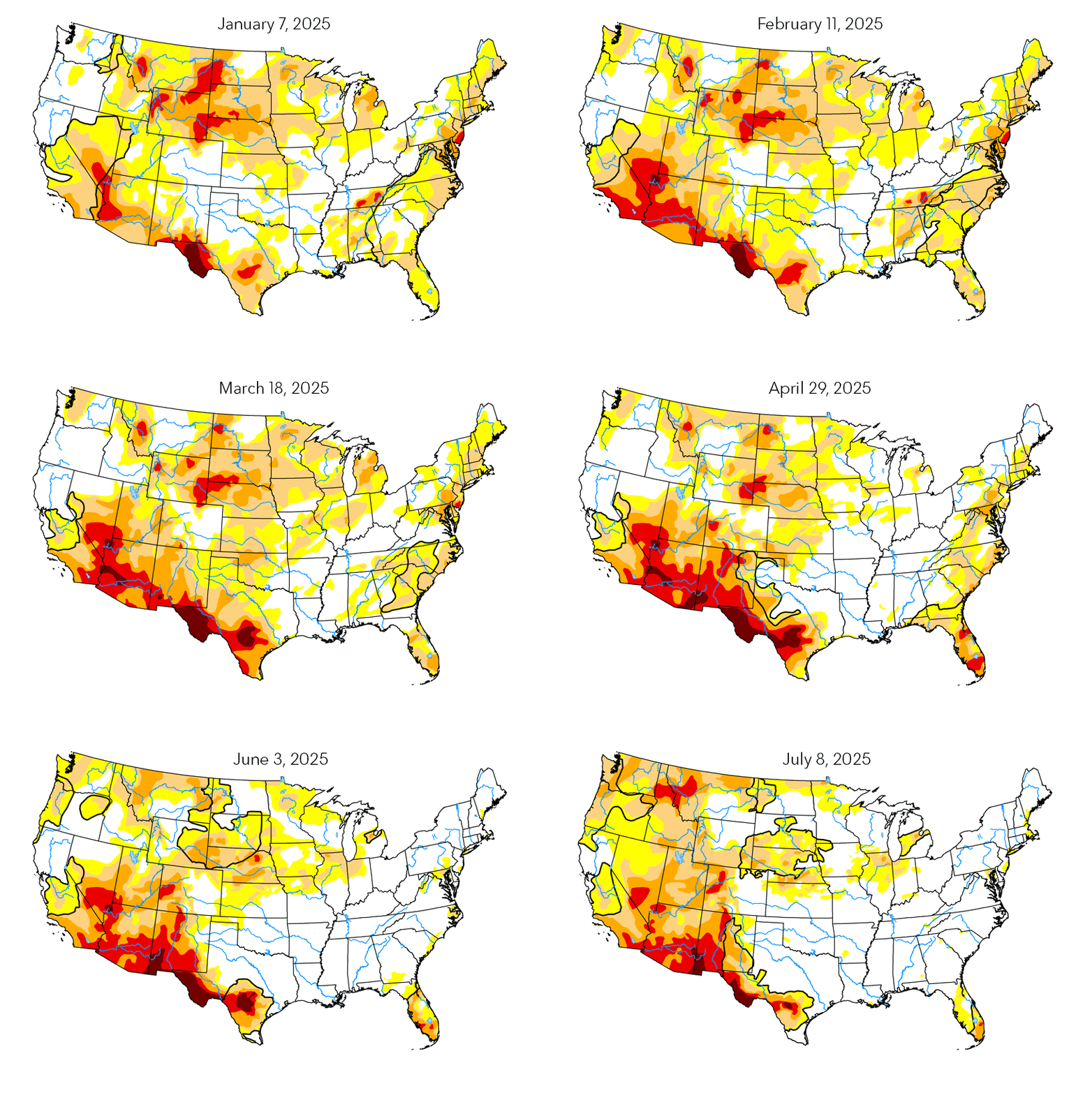
Eastern Cornbelt:
The
week started with temperatures in the 70s and sunny skies, creating ideal
harvest conditions in all three states. Colder weather moved in as the week
advanced, however, prompting a freeze warning for most of northern Illinois and
northwestern Indiana on Oct. 14. Lows were expected to fall to the upper-20s
and low-30s.
The
corn harvest had progressed to 27% complete in Illinois and Indiana by Oct. 9,
compared with 15% in Ohio, while the regional soybean harvest was estimated at
30-36% complete by that date. Good or excellent ratings were assigned to 70-72%
of the corn and soybeans in Illinois, 65% in Ohio, and 58-59% in Indiana.
Winter
wheat planting was also underway in the region, with progress estimated at 37%
complete in Ohio, 27% in Indiana, and 16% in Illinois.
Western Cornbelt:
Strong
winds, low humidity, and worsening drought conditions raised fire dangers
across Nebraska and western Iowa during the week, prompting red flag fire
warnings in both states.
Wind gusts up to 40-50 mph were reported
in Nebraska on Oct. 12-13, with a cold front dropping temperatures from the 70s
and 80s at midweek down to the 60s by the weekend. While scattered showers were
reported in southwestern Missouri early in the week, windy conditions resulted
in red flag fire warnings for some portions of the state later in the week.
Corn harvesting had progressed to 53%
complete in Missouri by Oct. 9, compared with 34% in Nebraska and 23% in Iowa.
The soybean harvest was 54-55% complete in Iowa and Nebraska by that date,
ahead of Missouri’s 22%. USDA placed 62-63% of Iowa’s corn and soybeans in the
good or excellent categories, compared with 49-50% in Missouri and 39-40% in
Nebraska.
Missouri’s rice was 78% harvested by Oct.
9, along with 14% of the state’s cotton crop, with 60% of the cotton rated as
good or excellent. With 16% of the sorghum crop harvested in Nebraska, fully
62% of the acreage was rated as poor or very poor due to severe-to-exceptional
drought conditions across most of the state.
Southern Plains:
Some needed moisture was reported in
parts of eastern Kansas as a cold front produced scattered showers at midweek.
Much of the Southern Plains remained extremely dry, however, causing drought
conditions to expand across central and northern Texas, most of Oklahoma, and a
wide swath of western and southern Kansas in early October.
“The
Southern Plains is dry, dry, and dry!” commented one source at midweek. Nearly
all of Oklahoma is now experiencing extreme-to-exceptional drought, as are the
southern and western halves of Kansas.
The
impact of drought conditions was plainly evident in USDA’s latest crop report.
With the corn harvest now at 85% complete in Texas, 61% in Kansas, and 19% in
Colorado, good or excellent ratings were assigned to just 17% of the acreage in
Texas, 22% in Kansas, and 30% in Colorado. Corn in the poor or very poor
categories totaled 52-54% of the acreage in Texas and Kansas, along with 31% in
Colorado.
The
Kansas soybean crop was 30% harvested, with 25% rated as good or excellent and
46% as poor or very poor. The sorghum crop was 95% harvested in Texas, compared
with 25-30% in the rest of the region, with good or excellent ratings assigned
to just 10% of Oklahoma’s crop, 17% in Texas, 21% in Kansas, and 42% in
Colorado. Sorghum rated as poor or very poor totaled 61% of the acreage in
Oklahoma, 54% in Kansas, 42% in Texas, and 19% in Colorado.
Cotton
conditions were even worse in the region. With the harvest reported at 35%
complete in Texas, 16% in Kansas, and just 1% in Oklahoma, poor or very poor
ratings were assigned to fully 72% of the acreage in Texas, compared with 58%
in Kansas and 48% in Oklahoma.
Winter
wheat planting was 85% complete in Colorado, 58% in Texas, 50% in Kansas, and
38% in Oklahoma by Oct. 9, with progress delayed by dry conditions. “This wheat
is being planted in some very poor conditions,” commented one regional source.
“Some will come up, some won’t. Without moisture to help it, there will be a
very poor demand for nitrogen on wheat.”
South Central:
Severe
thunderstorms brought rain and damaging winds to parts of Middle Tennessee at
midweek, prompting several tornado warnings and causing widespread power
outages from downed trees. Strong thunderstorms were also reported in central
and eastern Kentucky.
Spotty
rain and severe weather moved through Arkansas at midweek as well. Frost was
possible in parts of northern Arkansas by the weekend.
Moisture
left over from Hurricane Julia brought rainfall to southern Louisiana and
southern Mississippi during the week. Forecasts warned of damaging winds and
large hail in parts of Mississippi at midweek.
The
corn harvest was 67% complete in Kentucky and 82% in Tennessee by Oct. 9, with
27-37% of the acreage rated as good or excellent. The cotton crop was 75%
harvested in Louisiana, 54% in Mississippi, 34% in Arkansas, and 13% in
Tennessee, with good or excellent ratings assigned to 33% of the acreage in
Louisiana, 46% in Tennessee, and 67-73% in Mississippi and Arkansas.
Soybean
growers had 87% of the crop harvested in Louisiana, 63% in Mississippi, 47% in
Arkansas, 32% in Tennessee, and 31% in Kentucky, with good or excellent ratings
assigned to 68% of the acreage in Mississippi, 59% in Arkansas, 56% in
Kentucky, 47% in Tennessee, and just 20% in Louisiana. The rice harvest was
86-99% complete in the South Central region by Oct. 9.
Southeast:
Weather
conditions in Alabama and Georgia were mostly mild and dry through the first
half of the week, but a line of strong thunderstorms brought rain and gusty
winds to parts of both states at midweek.
Cooler
weather also moved into North Carolina as the week progressed, with an
increased chance of rain on Oct. 13-14. Showers and thunderstorms moved through
central Florida as well. The state continues to assess the significant damage
caused by Hurricane Ian. The deadly storm also brought heavy rainfall to the
Carolinas and parts of Virginia in late September.
Growers were harvesting corn, soybeans, cotton, tobacco, and peanuts in the Southeast. With 88% of the corn crop in the bin in North Carolina, just 29% of the acreage fell in the good or excellent categories on Oct. 9, with 46% rated as poor or very poor. The state’s soybean harvest was 23% complete, with 64% of the crop rated as good or excellent.
The cotton harvest was
17-24% complete in the region, with good or excellent ratings assigned to 59%
of the acreage in Georgia, 60% in South Carolina, 63% in North Carolina, 71% in
Alabama, and 78% in Virginia.
The peanut harvest was
58-61% complete in Virginia and Florida, 43-47% in Alabama and Georgia, and
28-34% in the Carolinas by Oct. 9. Fully 91% of Alabama’s peanut crop was rated
as good or excellent, compared with 80-82% in Virginia and South Carolina, 70%
in North Carolina, 61% in Georgia, and 57% in Florida.