

Eastern Cornbelt:
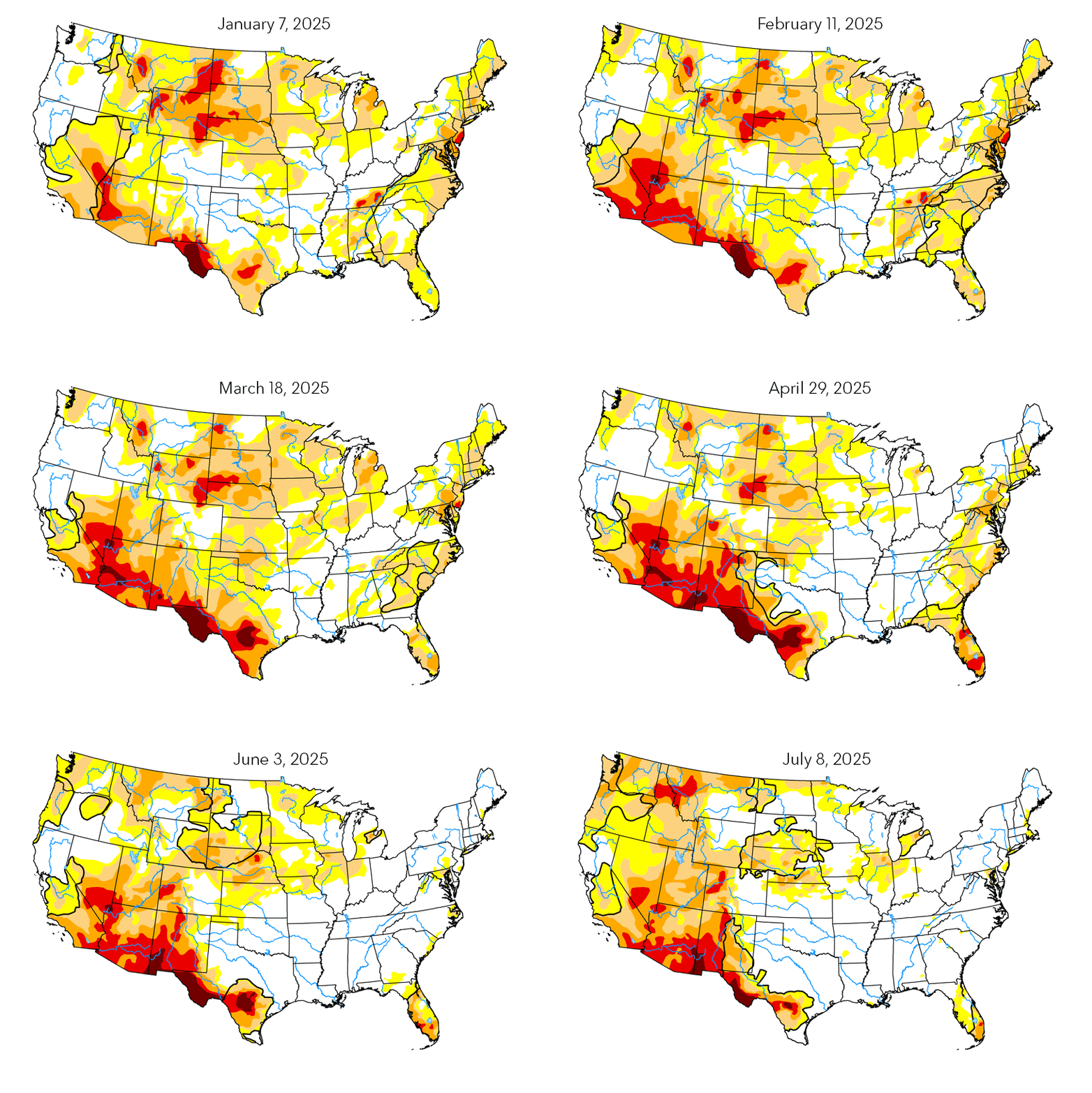
Highs in the mid-80s were reported across much of Illinois during the week. Strong storms moved through parts of northern Indiana, Ohio, and southern Michigan on Aug. 29-30, prompting several severe thunderstorm warnings and widespread power outages in Michigan.
With 2-3% of the regional corn crop rated as mature by Aug. 28, USDA assigned good or excellent ratings to 69% of the acreage in Illinois, 58% in Ohio, and 54% in Indiana. Some 86-92% of the regional soybean crop was setting pods by that date, with good or excellent ratings assigned to 66% of the acreage in Illinois, 59% in Ohio, and 54% in Indiana.
Western Cornbelt:
Heavy weekend rains were reported across a swath of central Iowa, with 2.75 inches reported in Waterloo and 2.15 inches in Fort Dodge. Most of the state stayed dry during the following week, however.
Temperatures in the 90s were common across the whole of Nebraska as the week progressed, with slightly cooler weather on tap for the Labor Day weekend. Drought conditions expanded across the state in late August, with areas of extreme-to-exceptional drought reported in southwestern and northeastern Nebraska on Sept. 1.

Springfield, Mo., was hit with heavy rain at the start of the week, with nearly a foot falling in some areas, prompting flash flood warnings. Temperatures in the mid- to upper-80s were common across Missouri for the balance of the week.
Good or excellent ratings were assigned to 63-64% of Iowa’s corn and soybeans on Aug. 28, with 3% of the corn crop described as mature. Nebraska’s corn was 8% mature, with good or excellent ratings assigned to 39-43% of the state’s corn and soybeans.
Missouri’s corn and soybeans were 52-54% good or excellent, with 15% of the corn mature. The state’s cotton crop was 52% good or excellent, while the Missouri rice crop was rated at 53% good or excellent. Nebraska’s sorghum remained at 20% good or excellent on Aug. 28, with 60% of the crop rated as poor or very poor.
Southern Plains:
High heat and humidity were reported across Kansas and Oklahoma during the week, with highs commonly approaching the 90s. Parts of Kansas were also hit with afternoon showers earlier in the week, although the spotty rains were “not drought-busting,” according to one source.
The Sept. 1 U.S. Drought Monitor showed major improvement for Central Texas after roughly 1-4 inches of rain fell across the area over the past week. Extreme-to-exceptional drought continued to be reported across a wide swath of the state, however, along with southern and western areas of Oklahoma and Kansas.
One Texas contact said the recent precipitation has been “great for the folks who were way behind on hay production, not so great for those who are beginning cotton harvest.” Just 15% of the Texas cotton crop was rated as good or excellent on Aug. 28, compared with 5% in Oklahoma. Poor or very poor ratings were assigned to 53-55% of the cotton in those two states.
The drought has also impacted corn and soybeans in the region. With 72% of the Texas corn crop described as mature, just 17% of the acreage fell in the good or excellent categories in late August, compared with 52% rated as poor or very poor. The Kansas corn crop was 24% mature, with 22% rated as good or excellent and 50% as poor or very poor. Colorado’s corn was 25% good or excellent and 40% poor or very poor.
The regional sorghum crop also showed significant drought damage. Good or excellent ratings were assigned to just 11% of the acreage in Oklahoma, 17% in Texas, 19% in Kansas, and 45% in Colorado in late August.
South Central:
Temperatures reached the low-90s across much of Arkansas and Tennessee early in the week, preceding a cold front that produced strong thunderstorms in both states on Aug. 29. Heavy rains and flash flooding were reported in some areas as the system pushed through the region.
High heat and humidity also blanketed Louisiana and Mississippi during the final days of August. The Pearl River in Mississippi crested at just over 35 feet on Aug. 29 after flooding portions of Jackson and other locations in Madison and Rankin counties.
The corn crop in Kentucky and Tennessee was 29-31% good or excellent as of Aug. 28, with 22-28% of the acreage rated as mature. Soybeans in the good or excellent categories totaled 62% of the crop in Mississippi, 59% in Arkansas, 55% in Louisiana, 47% in Tennessee, and 45% in Kentucky.
Cotton bolls were opening on 53% of Louisiana’s crop, 25% in Mississippi, 22% in Arkansas, and 13% in Tennessee, with good or excellent ratings assigned to 66% of the acreage in Arkansas, 56% in Louisiana and Mississippi, and 48% in Tennessee.
The regional rice harvest had progressed to 77% complete in Texas, 67% in Louisiana, 4% in Arkansas, and just 2% in Mississippi by Aug. 28, with good or excellent ratings assigned to fully 87% of the acreage in Louisiana, 67% in Arkansas, and 51-52% in Texas and Mississippi.
Southeast:
Spotty showers moved through parts of the Carolinas early in the week, with reports of heavy rain in Orangeburg, S.C., on Aug. 29 that prompted flash flood warnings. Heat and humidity moved in for the balance of the week, with highs in the upper-80s.
It was hot and humid in Virginia as well, with temperatures in central Virginia reaching highs in the mid-90s. Similar conditions were reported in Alabama, Georgia, and Florida along with scattered afternoon showers. More rain was in the Labor Day weekend forecast for all three states.
With 62% of North Carolina’s rated as mature by Aug. 28, just 35% of the crop registered as good or excellent on that date, compared with 63% of the state’s soybeans. Cotton bolls were opening on 34% of Virginia’s crop, 21% in Georgia, 19% in Alabama, and 14-17% in the Carolinas, with good or excellent ratings assigned to 63% of the acreage in North Carolina, 66% in Georgia, 68% in Alabama, 79% in South Carolina, and 84% in Virginia.
Peanuts were in even better condition, with good or excellent ratings assigned to 68% of the crop in Georgia, 72% in North Carolina, 86% in South Carolina, 87% in Florida, 89% in Alabama, and fully 90% in Virginia.
“Corn harvest is going on,” reported one regional contact at midweek. “Irrigated yields seem to be a little off from last year, but still pretty good. Dryland corn isn’t great this year; yield is down. The peanut harvest hasn’t started, but should in the next couple weeks. Cotton should start defoliating in a couple of weeks, but most are about a month out from defoliation. Cotton and peanuts look good in most areas, but more tomato spotted wilt is showing up in peanuts this year.”