

Eastern Cornbelt:
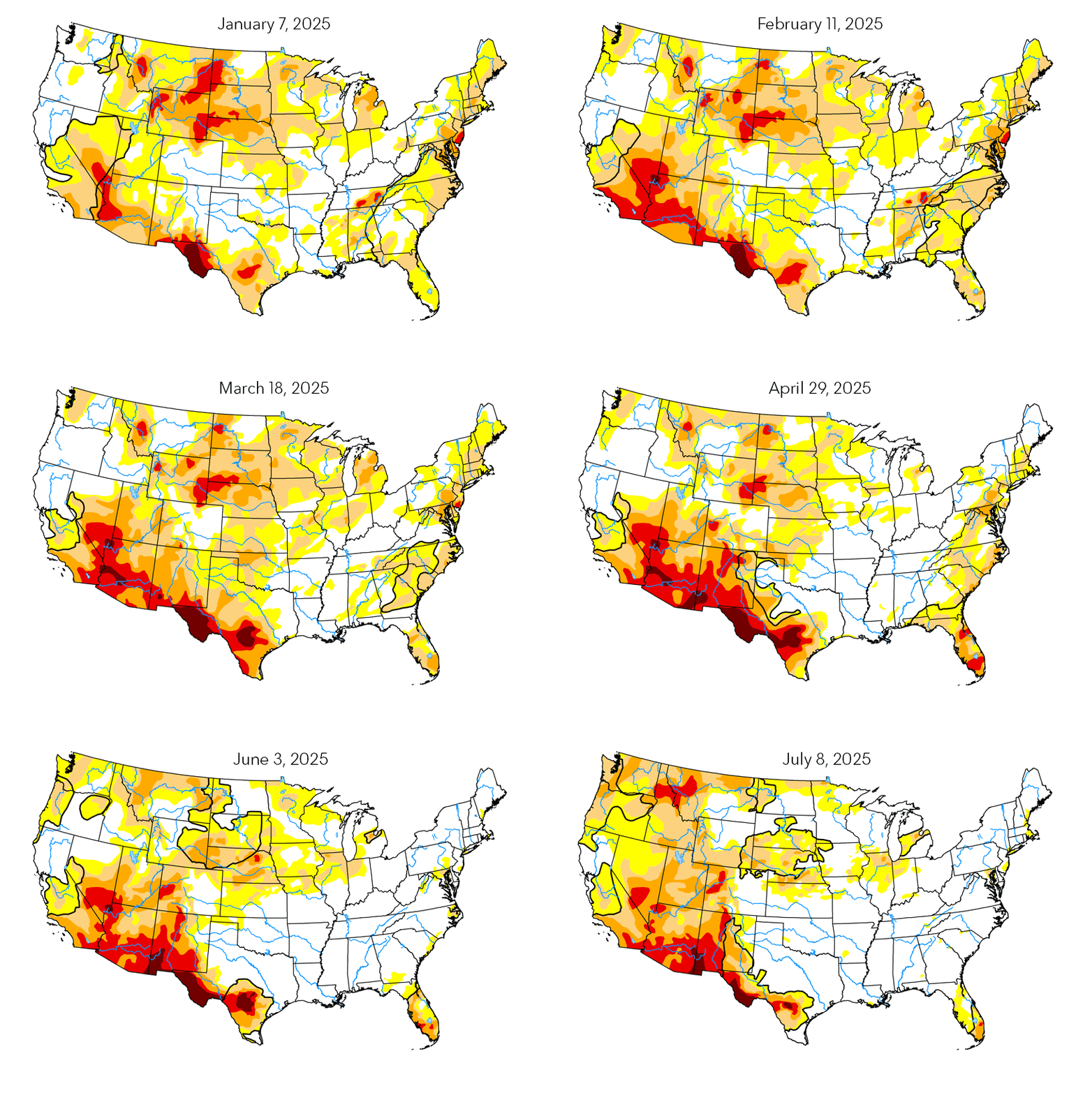
Warm, dry weather stretched across most of Illinois and Indiana during the week, with highs reaching the 80s. A cold front was expected to bring scattered showers and isolated thunderstorms to both states late in the week, however.
By contrast, frost advisories were in effect at midweek in parts of northern Ohio, with an increased chance of rain by the end of the week.
Planting progress continued to track ahead of the average pace in Illinois and Indiana, with corn planting estimated at 77-84% complete and soybeans at 52-56% in both states. Ohio was lagging slightly, with corn planting at 26% and soybeans at 28% by May 14.
“We are winding down on P and K movement and moving into the nitrogen run on corn,” reported one regional contact. “We’ve gotten several rains over the last week or so, and most terminals have gotten caught up on the supply side.”
Western Cornbelt:
Temperatures in the 70s and 80s were common across Iowa, Nebraska, and Missouri during the week, though spotty showers were expected by the end of the week, along with a smoky haze from numerous wildfires in western Canada.
The warm weather continued to push planting progress ahead of the five-year average for all three states. Corn planting as of May 14 was 96% complete in Missouri, 86% in Iowa, and 76% in Nebraska, with soybean planting estimated at 69% complete in Iowa and 62% in Nebraska and Missouri.
Missouri growers also had 92% of the rice and 69% of the cotton planted by May 14, while sorghum planting in Nebraska had progressed to 10% complete by that date.
“We’ve been getting some well-needed rain for the past few days,” said one Missouri source. “While spotty, I think most everyone has had a drink. Corn planting is practically done, but a lot of beans are left to go once it dries back out.”
Southern Plains:

Spotty thunderstorms moved through western Kansas as the week progressed, and more general rains were reported across the state over the prior weekend. The moisture will help the state’s ailing winter wheat crop in some areas.
“In most cases it is too late for the wheat, but it will help in northwestern Kansas where the wheat life cycle is later,” said one contact.
Scattered thunderstorms also hit northwestern Oklahoma and western Texas at midweek, while central Texas received a widespread 2-4 inches of rain from May 12-15. A strong system was expected to bring potentially severe weather to both states on May 18-19, including the threat of tornadoes. Showers and thunderstorms also tracked through New Mexico at midweek.
Planting progress in the region was generally on track with the average pace for most crops. Corn planting as of May 14 was 81% complete in Texas, 61% in Kansas, and 40% in Colorado, while soybean planting had progressed to 42% complete in Kansas by that date.
The cotton crop was 35% planted in Kansas, 30% in Texas, and 16% in Oklahoma, with sorghum planting rated at 76% complete in Texas, 23% in Oklahoma, 12% in Colorado, and 7% in Kansas.
Extreme-to-exceptional drought continued to cover most of Kansas and sizable chunks of western Oklahoma and northern Texas. The effect of drought on the winter wheat crop was readily apparent, with poor or very poor ratings assigned to 68% of the acreage in Kansas, 51-52% in Oklahoma and Texas, and 41% in Colorado.
South Central:
A cold front pushed into Arkansas late in the week, with forecasts warning of potentially severe weather across the state. Thunderstorms were also reported across Middle Tennessee and southern Kentucky earlier in the week, bringing large hail and damaging winds to some areas.
Spotty rains across Louisiana during the week were expected to alleviate emerging drought conditions in the state, with Mississippi also experiencing frequent showers in mid-May.
Planting progress was tracking ahead of the average pace for all crops in the region. Corn planting as of May 14 was 88% complete in Tennessee and 75% in Kentucky, with soybean planting estimated at 78% complete in Louisiana, 72% in Mississippi, 71% in Arkansas, 50% in Tennessee, and 48% in Kentucky.
Louisiana growers had 67% of the cotton planted by May 14, compared with 56% in Arkansas, 43% in Mississippi, and 42% in Tennessee. Rice planting was nearly complete in the region, with progress rated at 96% in Louisiana, 90% in Mississippi and Texas, and 89% in Arkansas.
Southeast:
Strong thunderstorms moved through parts of the Carolinas early in the week, with reports of hail, strong winds, and locally heavy rain in central Virginia as well.
Heavy rain and thunderstorm activity was also reported across Alabama and central and northern Georgia at midweek. Central Florida was also bracing for potentially strong storms on May 18.
Sources continued to report brisk fertilizer movement in mid-May, with one contact saying his spring volumes would be nearly double last year’s and ahead of the average rate.
Cotton planting as of May 14 was 66% complete in Virginia, 51% in Alabama, 32% in Georgia, and 25-26% in the Carolinas. North Carolina growers also had 32% of the soybeans and 95% of the corn seeded by that date, while peanut planting had progressed to 48% complete in Florida and Virginia, 41% in Alabama, 37% in Georgia, and 25-40% in the Carolinas.