Eastern Cornbelt:
Temperatures
in the 70s and 80s were reported in parts of central Illinois at midweek, but
sources said another round of showers slowed the planting pace as the week
progressed. A band of potentially strong thunderstorms was reported late on
April 29 in northern Illinois, with reports of 50 mph winds in some locations.
Thunderstorms were reported in central Indiana at midweek as well, with temperatures dropping to the upper-60s. Heavy rains also moved through Ohio as the week progressed, prompting the National Weather Service to issue a flood advisory for several counties on April 29. Ohio sources reported highs in the 50s late in the week, with a chance of below freezing temperatures by the weekend.
After
tracking ahead of the average pace in recent weeks, planting progress was
lagging slightly in the Eastern Cornbelt in late April. Corn planting as of
April 25 was estimated at 23 percent complete in Illinois, 14 percent in
Indiana, and 8 percent in Ohio, with soybean planting pegged at 18 percent in
Illinois and 8-9 percent in Indiana and Ohio. Only Ohio’s oat crop remained
ahead of the average pace, with planting estimated at 61 percent complete by
April 25.
Western Cornbelt:
Temperatures
surged to the low-80s in Iowa early in the week before a round of thunderstorms
pushed highs back down into the 60s and low-70s at midweek. Eastern Nebraska
also saw temperatures settle into the 60s as the week progressed.
In parts of Missouri, up to three inches
of rain in less than an hour prompted flash flood warnings on April 28 in the
Branson area. The same powerful weather system sparked at least 10 tornadoes in eastern Colorado, northwestern Texas, and southern
Oklahoma, along with baseball-sized hail in some locations.
Corn planting was
lagging slightly from the average pace in the region, with progress as of April
25 estimated at 20 percent in Iowa and Missouri and 6 percent in Nebraska. Iowa
growers also had 6 percent of the soybeans planted by that date, compared with
3 percent in Missouri and Nebraska, with rice planting rated at 44 percent
complete in Missouri.
Oat planting had
reportedly progressed to 83-86 percent complete in Iowa and Nebraska by April
25, with both states tracking ahead of their five-year averages.
California:
Rain and cooler temperatures were reported in the Sacramento area and across Northern California over the prior weekend. Parts of Southern California also enjoyed slightly cooler weather after highs in the 80s and 90s during the previous week.
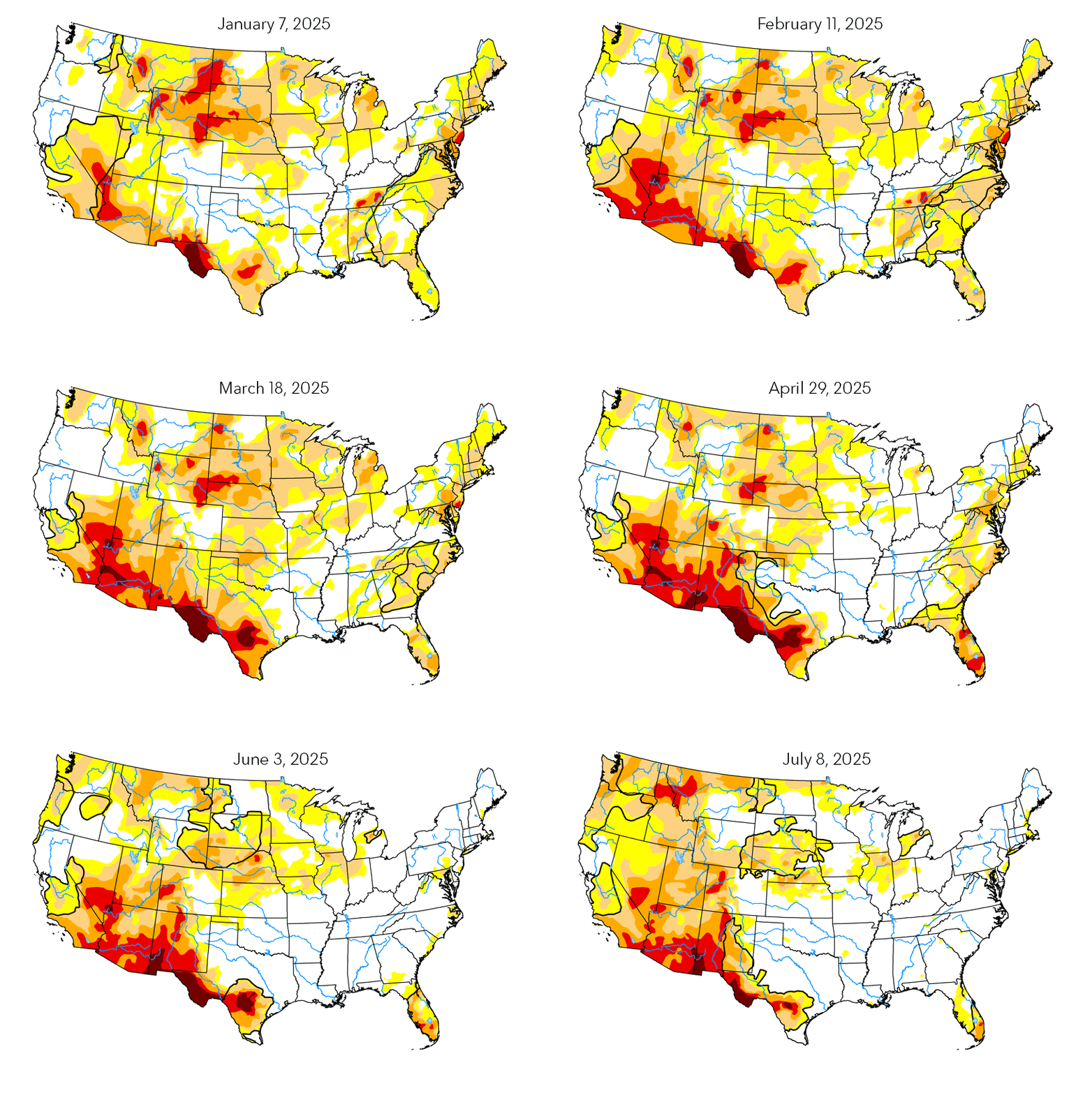
All of the state remained in some form of drought in late April, with extreme drought conditions reported across wide bands of Northern California and interior portions of Southern California. “The drought is having big impacts with a lot of acreage cutbacks,” said one contact. “Very little water is available in the San Joaquin Valley on either state or federal projects. The Klamath River Basis is also very restricted on water.”
California growers had 50 percent of the cotton and 12 percent of the rice planted as of April 25, with rice tracking slightly ahead of the five-year average. In nut-producing areas, sources said they have seen a tendency by growers to spend less and keep fertilizer applications “basic” due to low crop prices. “The best producers are no exception, though they are much more surgical on where they make the cuts,” said one contact.
Pacific Northwest:
Drought
conditions worsened across the Pacific Northwest in late April, with much of
central Oregon experiencing severe-to-exceptional drought conditions.
Severe-to-extreme drought was also evident across eastern Montana, and much of
the region was expecting unseasonably warm temperatures by the weekend.
Washington
experienced its 11th driest March on record, but plentiful winter
snowfall left mountain snow levels at 118-131 percent of normal as of early
April. Temperatures across southern Idaho were expected to reach the 80s by the
weekend, while highs in western Montana were likely to reach the 70s.
The
dry conditions allowed growers to get a jump on spring planting in April. Idaho
growers had 87 percent of the sugar beets planted by April 25, while spring
wheat and barley seeding had progressed to 20-28 percent in Montana, 61-64 percent
in Idaho, and fully 78-80 percent in Washington. Small grains planting in
Washington was tracking well ahead of the five-year average.
Western Canada:
Temperatures
in the teens C were reported across much of Saskatchewan and Manitoba as the
week progressed, while highs in the low-20s were reported in lower British
Columbia. After scattered snowfall and cold temperatures in Alberta over the
previous weekend, temperatures warmed across much of the province during the
final week of April.
Canadian
farmers expect to plant more canola, barley, soybeans, and corn for grain in 2021,
according to the annual planting intentions report released by Statistics
Canada on April 27. The crop area seeded to wheat, oats, dry peas, and lentils
is expected to decrease compared with the previous year, the report said.
The
report projects all wheat acreage in Canada at 23.3 million acres, down 6.9
percent from last year; canola at 21.5 million acres, up 3.6 percent; soybeans
at 5.3 million acres, up 5.5 percent; barley at 8.6 million acres, up 13.9
percent; oats at 3.6 million acres, down 6 percent; corn for grain at 3.6 million
acres, up 1.8 percent; lentils at 4.2 million acres, down just 0.3 percent; and
dry peas at 3.8 million acres, down 9.8 percent from last year.
“Spring
is going strong in most parts of the southern Prairies this week, and we expect
the rest of Western Canada to get going quickly,” said one regional contact.
Added another source at midweek: “Southern Alberta and southern Saskatchewan
are already actively seeding, which is about seven days ahead of average.”