All posts by mickeybarb@charter.net

Ammonium Thiosulfate

Eastern Cornbelt:

Ammonium thiosulfate supply continued to be described as very tight in the Eastern Cornbelt. Sources pegged the market at $295/st FOB Terra Haute, Ind., and up to $320-$325/st FOB Cincinnati, with May rail-DEL offers ranging from $300-$340/st, depending on location.

“Resupply is very limited,” said one contact. “I don’t think anyone has availability to sell April rail.”

Western Cornbelt:

The ammonium thiosulfate market was pegged at $290-$310/st FOB in the Western Cornbelt amid reports of extremely tight supply

California:

The ammonium thiosulfate market was quoted at $265-$280/st FOB and $280-$290/st DEL in California.

Pacific Northwest:

The ammonium thiosulfate market had reportedly edged up to $275/st DEL in the Pacific Northwest on reports of tight supply, with warehouse pricing pegged firmly at the $265/st FOB level on a spot basis.

NPSZ

Cornbelt:

The NPSZ market was quoted in a broad range at $620-$665/st FOB in the Cornbelt, reflecting another increase from last report, with the low reported out of river terminals and the high out of spot inland warehouses.

Pacific Northwest:

40-Rock postings ranged from $685-$705/st DEL in the Pacific Northwest, depending on location.

Sulfate of Potash

U.S. Imports:

February SOP imports were noted at 3,620 st, down 64.2 percent from 10,125 st in the prior year. July-February totals were 36.0 percent higher, however, to 81,890 st from the year-ago 60,220 st.

U.S. Exports:

Exports of SOP softened 49.5 percent in July-February, to 38,635 st from the year-ago 76,515 st. February exports firmed 8.6 percent, however, to 3,309 st, from the prior-year 3,048 st.

California:

The SOP market in California was steady at $615-$625/st FOB in early April.

Pacific Northwest:

The SOP market was quoted at $600-$610/st FOB in the Pacific Northwest, unchanged from last report.

Crops/Weather

Eastern Cornbelt:

Rain at midweek slowed fieldwork in many parts of the Eastern Cornbelt, but sources reported a brisk application pace before the precipitation.

Up to a quarter inch of rain was reported across central Illinois at midweek, along with 30 mph wind gusts. Highs in the 70s were reported in Illinois and Indiana during the week, but wet weather and cooler temperatures were in the weekend forecasts for many locations.

One Illinois source said the moisture at midweek allowed growers and retailers to “catch their breath” after a hectic pace during the first days of the month. “It’s a little early for corn and beans, but there has been some vegetable planting and alfalfa seeding,” he said. “Historically it’s April 15 before anyone gets too itchy about planting corn in this area.”

Record highs in the low-80s were reported in parts of Ohio during the week, which sparked a flurry of fieldwork. “It’s been crazy busy so far this spring,” said one Ohio contact at midweek. “I’ve never seen so much movement this early in my market area. I think the terminals are really starting to see some spot outages of product before resupply shows up.”

Western Cornbelt:

Highs in the 70s and 80s across Iowa during the week sparked a flurry of fieldwork in the state, although midweek thunderstorms were reported in the Cedar Rapids area. Local media said a tornado with 85 mph wind speeds touched down in Cedar Rapids late on April 7.

Rain showers were also reported across eastern Nebraska at midweek, along with cooler temperatures. Things were wet in central Missouri as well, with rainfall totals ranging from 1-2 inches on April 7-8. One Missouri source said highs only reached the low-50s in his location at midweek.

One Iowa source said early planting of corn and soybeans was already underway in some parts of the state.

California:

Highs in the 70s and 80s were reported across Southern California at midweek. Brief showers were reported early in the week in the Northern Sierra Nevada, but the light precipitation was followed by 70-degree temperatures and dry conditions in the northern counties for the remainder of the week.

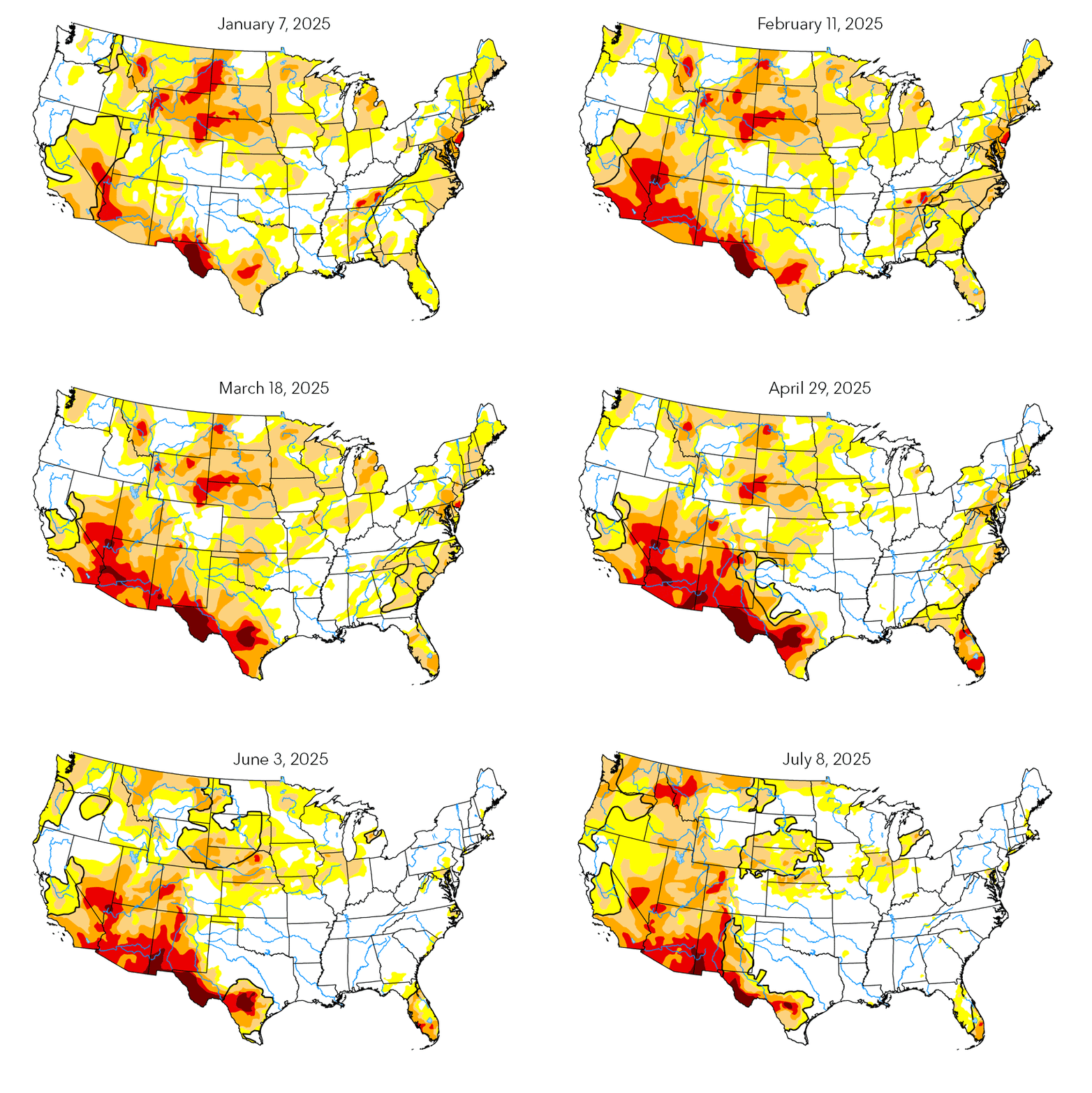
The dry weather contributed to worsening drought conditions in California. The State Water Resources Control Board warned in late March that near-term water shortages are possible in parts of the state as much of California is currently experiencing moderate to exceptional drought conditions.

“Drought continues to be a big concern, and water shortages are resulting in cuts in open field ground,” said one California source. “Growers in many cases are using available water to care for trees, and fallowing ground. Some growers are selling water.”

Fertilizer application was described as heavy in the state in early April, although some dealers said they were “certainly feeling the effects of unsatisfactory nut pricing.” One contact said growers are “sticking to the more conventional fertilizer and cutting back rates” as a result.

Pacific Northwest:

Strong winds were reported across central and eastern Washington at midweek, causing dust storms in some locations. Breezy weather was also reported in parts of northern Idaho and western Montana, with a chance of winter precipitation as temperatures late in the week.

Forecasts called for 2-4 inches of snow in western Montana at elevations above 3,500 feet as the week progressed, with 3-6 inches likely at 5,500 feet. Much of western Montana awoke to a dusting of snow earlier in the week after a stretch of balmy spring weather over the previous weekend.

Cooler temperatures and widespread rain were also reported in western Oregon and western Washington at midweek, with as much as four inches of snow expected in the Cascades and the higher foothills.

Spring fieldwork and planting were underway in the Columbia Basin and Willamette Valley in early April, with sources also reporting a wide range of field activities in southern Idaho. The pace is expected to pick up rapidly in eastern Montana in early April as well.

Western Canada:

Highs in the teens were reported across the Prairies during the week, with lows dropping to the single digits. Sources described Saskatchewan and Alberta weather conditions as sunny and warm, although rain and colder weather was in store for parts of Manitoba over the coming weekend.

Despite the favorable weather, sources said it was still a bit early for widespread spring fieldwork in the region, although preplant ammonia was reportedly moving in parts of southern Alberta in early April. One regional contact said most areas were “still a week or two from really ramping up.”

Commented another source: “Dry weather in southern Manitoba is now creating some early concerns about a potential drought.”

Transportation

U.S. Gulf:

Bayou Sorrel Lock was shut to daytime navigation for the week through April 7, sources said, blocking movements daily from 7:00 a.m. to 6:00 p.m. due to repairs. Additional daylight-hour shutdowns were scheduled for April 21 through May 15, with sources expecting delays in the 24-48 hour range.

Repairs to the Gross Tete Bridge, located at Mile 36 in the Port Allen Route, were noted blocking navigation daily from 12:00 a.m. to 10:00 a.m., and 12:00 p.m. to 10:00 p.m. The project is scheduled to run through May 15.

Harvey Lock closed to navigation on April 5 due to scheduled repairs to the nearby 4th Street Bridge. Traffic is expected to detour through Algiers Lock until May 21 while Harvey is shut, increasing travel times and delays at Algiers.

Maintenance and repairs at Colorado Lock were extended through April 9, sources said, prolonging a spate of daytime travel closures that began in late March. Intermittent delays were noted up to nine hours for the week, falling from 15 hours in the prior report.

Efforts to repair damage to the Leland Bowman Lock west gate blocked daytime traffic on April 5-7. Additional work necessary to complete the repairs will likely slow movements at the lock through the short-term, sources said.

Guidewall damage suffered at Port Allen Lock in a January barge collision continued to necessitate towing restrictions. Westbound vessels with tow-lengths greater than one barge were required to utilize an assist vessel, while west-moving boats with one or zero barges were allowed to pass unassisted. Tows traveling eastward with lengths greater than 650 feet were required to use an assist vessel. Waits were quoted up to 10.5 hours for the week.

Ongoing size restrictions remained in effect at Algiers Lock for the week. Unassisted tows above 60 feet wide were capped at 600-foot lengths, while tows with widths below 60 feet were permitted lengths up to 700 feet. The limitations capped unassisted tows at four standard barges or two 30,000 mt tankers per turn, although longer strings were possible with the use of an assist vessel. Wait times through the lock were posted up to 27.5 hours for the week, with 21 vessels counted in the queue on April 6.

High water conditions continued to restrict towing above New Orleans during the week, reducing barge counts by 5-10 units from the region’s typical 25-barge maximum.

Depths at Baton Rouge, La., were reported at a minor-flood 37.77 feet and rising on April 6. Forecasts called for the gauge to crest at a moderate-flood 38.0 feet on April 6-7 before slowly tapering off. A flood warning dated April 6 for the Mississippi River at Red River Landing was slated to remain in effect through April 24.

Most Industrial Lock waits were quoted in the 8-17 hour range for the week, although sources noted sporadic delays spiking above 25 hours. Bayou Boeuf crossings were noted up to 12 hours, while boats transiting Brazos Lock waited up to 47 hours to pass.

Mississippi River:

High water levels continued to trigger towing and travel restrictions on movements south of Cairo, Ill. Barge counts were capped at 15-20 barges, down from 25, while daylight-only travel restrictions were reported in place through bridges in the Vicksburg, Miss., and Baton Rouge areas.

Levels at Vicksburg were clocked at a minor-flood 44.85 feet and holding on April 7, with depths projected to remain above flood stage through at least April 15-16.

High water concerns on the lower Mississippi River led to a shortage of fleet space at Osceola, Ark., located at Miles 781-786. Requests for acceptance to the fleet would be considered, sources said, although many tows were expected to be turned away.

Transports remained cut by five barges between St. Louis and Cairo despite improving depths at St. Louis. Sources expected these restrictions to have a shorter shelf life than those farther downriver, although no date for a return to normal operation was reported as of April 7.

Lock 2 was projected to undergo a series of 4-12 hour daytime travel shutdowns in July for miter gate installation. Dates for the work were unavailable on April 7. Lock 25 is also expected to see daylight-hour closures in July and August for guidewall repairs.

Intermittent 5-6 delays were reported at Locks 14, 21, and 24 during the week.

Illinois River:

Sources said Brandon Road Lock was closed to navigation from 6:00 a.m. to 3:00 p.m. on April 6 for emergency repairs.

Wickets were reported down at both Peoria Lock and LaGrange Lock for the week, allowing vessels to pass the sites without locking. Wait times were noted up to six hours at Dresden Island Lock.

Ohio River:

The secondary chamber at Greenup Lock was scheduled to return from maintenance and repairs on April 11, ending an operation that began on March 24.

Meldahl Lock primary chamber is slated to shut from April 12 to June 11 for miter gate machinery repairs. Traffic is scheduled to pass through the 600-foot secondary chamber while work is underway, with delays predicted.

The Cannelton Lock primary chamber is set to close to navigation entirely from June 21 through Nov. 19. Tows will detour through the smaller auxiliary chamber, sources said, with extensive delays predicted.

Markland Lock’s auxiliary chamber was projected to remain offline through at least Oct. 29 due to miter gate structural damage. Tows were reported passing with minimal delay through the main chamber.

The New Cumberland Lock auxiliary chamber was closed to navigation on March 8. Work on the chamber is projected to run through June 10. Auxiliary chamber work concluded at Smithland Lock on April 1, normalizing travel through the site.

With wickets remaining in the lowered position at Olmsted Lock due to high water, tows passed the area via the nonlocking navigational pass.

Falling water levels on the Tennessee River were projected to allow a return to normal navigation as early as April 7-8, sources said. Shippers were running daylight-only in the prior week due to high water and fast flows. Intermittent Kentucky Lock waits were noted up to eight hours for the week.

The Cumberland River’s Cheatham Lock will halt main chamber navigation from April 12 through June 3 for bio-acoustic fish fence (BAFF) repair. The Corps will temporarily reopen the lock on April 23-26, May 7-10, and May 21-24 to pass any assembled backlog. Barkley Lock was noted concluding BAFF repairs on April 2.

Arkansas River:

High water continued to limit towing on the Arkansas River for the week, with sources noting maximum barge counts cut to nine units from the typical 12. Pickup and dropoff delays resulting from the restrictions were likely to persist into late April, sources said.

David D. Terry Lock was scheduled to shut for dewatering and repairs from Aug. 27 through Sept. 9. Travel will see sporadic interruptions in advance of the shutdown, on Aug. 16-26.

STB Adopts Final Rule on Demurrage Requirements

The Surface Transportation Board (STB) on April 6 announced the adoption of a final rule in Demurrage Billing Requirements, which establishes certain minimum information requirements for demurrage bills from Class I railroads, including billing cycle, shipment, car placement, and credit and debit information, among other things.

The STB said the new rule will allow rail users to review and verify the accuracy of demurrage charges and facilitate the resolution of disputes between railroads and their customers. In addition, it establishes a machine-readable data requirement to ensure that rail users have access to relevant demurrage data.

STB said the final rules followed two rounds of public notice and comment with substantial input from Class I railroads and rail users. In issuing the final rule, the STB said it expects all carriers to take “reasonable actions to ensure the accuracy of their invoicing processes and that their demurrage charges are warranted.”

“Today’s rule, which the Board members adopted unanimously, represents a significant step toward ensuring basic transparency in demurrage bills and thereby helps to eliminate a source of unnecessary conflict between railroads and their customers,” said STB Chairman Martin J. Oberman. “In this regard, I anticipate that the rule will reduce the need for litigation or further regulatory intervention related to what should be fairly straightforward and routine commercial interactions. I further expect that the new rule will promote more productive dialogue between Class I railroads and rail users to either avoid unnecessary disputes over demurrage charges or hasten their resolution.”

The new rule stems from a two-day oversight hearing conducted by the STB in May 2019 in which rail users expressed concerns about how Class I railroads assess demurrage and accessorial charges (GM May 3, 2019), and urged the STB to consider setting basic standards for invoices to promote uniformity and transparency. Both The Fertilizer Institute (TFI) and the Agricultural Retailers Association (ARA) provided testimony at the hearing.

“ARA has worked on this issue for quite some time, and we are pleased that the STB has finally released the final rule and that it is sensible and practical,” said ARA President and CEO Daren Coppock in an April 8 statement. “Assuring that rail service is dependable and provides consistent delivery to agricultural retail operations plays a critical role in an efficient and complex distribution system due to the large volume of product, the distance it must travel to get to a location, and the restricted seasonal time frame this must occur. We are pleased that STB took our testimony and comments seriously and are hopeful they will continue to move other issues in the right direction for ag retailers to continue to serve their customers.”

The final rule issued by the STB will provide fertilizer shippers with greater transparency and fairness regarding railroad demurrage charges,” said TFI President and CEO Corey Rosenbusch in an April 9 statement. “Demurrage charges have increased dramatically – and often unfairly – following rail industry implementation of so-called Precision Scheduled Railroading (PSR). Shippers are entitled to have the information they need to determine the justification of these charges.”