

Eastern Cornbelt:
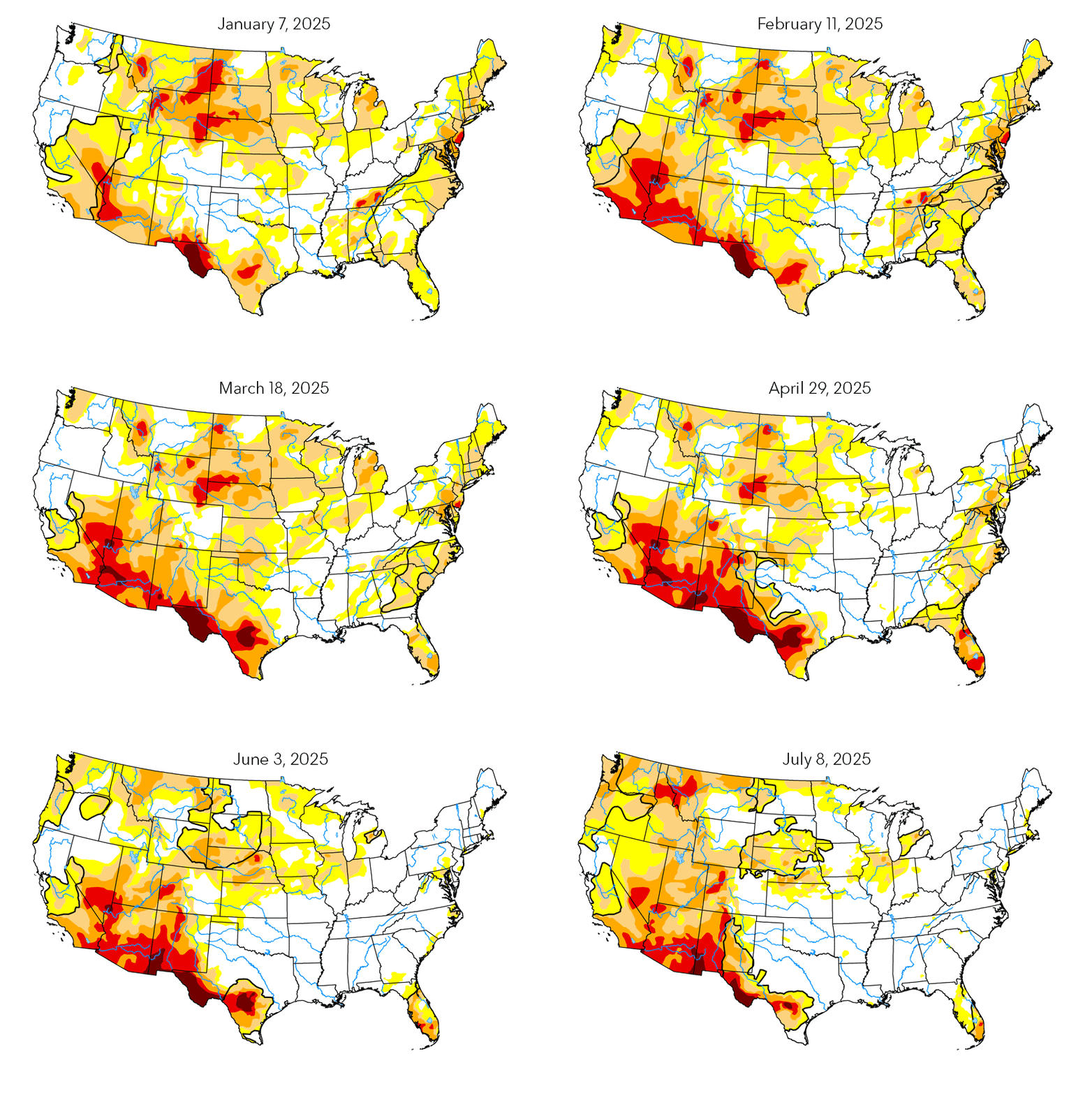
The week began with a strong storm system that spawned four tornadoes in central Illinois on May 3. The tornadoes were reported over farm fields and produced no structural damage, although there were reports of large hail up to two inches in diameter in some locations.
Strong thunderstorms also tracked through central Indiana and central Ohio on May 3-4, with reports of strong winds, locally heavy rain, and spotty hail. Conditions cleared at midweek and allowed some growers to return to the field, but isolated showers and thunderstorms returned to some parts of the region late on May 6.
Planting progress in the region once again inched ahead of the five-year average for corn and soybeans. Corn planting as of May 2 was estimated at 54 percent complete in Illinois, 32 percent in Indiana, and 22 percent in Ohio, with all three states tracking 4-5 percentage points ahead of the average pace.
Soybean planting was rated at 41 percent complete in Illinois, 24 percent in Indiana, and 17 percent in Ohio by that date, compared with 6-14 percent on average for this time of year. Ohio growers also had fully 81 percent of the oats planted by May 2, compared with 62 percent on average.
Western Cornbelt:

Isolated thunderstorms tracked through parts of the Western Cornbelt during the first week of May, including one that produced a tornado on May 5 near Hartington, Neb. A complex of strong storms also churned through central and southern Missouri early in the week, bringing heavy rain, high winds, and large hail to some locations.
Despite the weather delays, sources reported steady progress on spring planting in early May. Iowa growers had 69 percent of the corn and 43 percent of the soybeans planted by May 2, with both crops tracking 24 or more percentage points ahead of the five-year average. Nebraska growers had planted 42 percent of the corn and 20 percent of the soybeans by that date, some 6-8 points ahead of average.
Some crops were lagging in Missouri, however, with planting progress estimated at 50 percent complete for corn, 10 percent for soybeans, and only 3 percent for cotton. Missouri’s rice crop was 65 percent planted by May 2, slightly ahead of the average pace.
Northern Plains:
Extreme drought continued to cover most of North Dakota and a significant part of northern South Dakota in early May. While most of Minnesota was drought-free, a red flag warning was in effect on May 6 for much of central and northern Minnesota due to dry, windy conditions.
While the dry conditions have limited fertilizer movement in some areas, growers were able to move quickly on planting in late April and early May. Corn planting as of May 2 had progressed to 60 percent complete in Minnesota, 25 percent in South Dakota, and 14 percent in North Dakota, with all states at nearly double their five-year averages.
Soybean planting was also ahead of normal at 23 percent complete in Minnesota, 8 percent in South Dakota, and 2 percent in North Dakota. Sugar beet planting surged to 79 percent complete in Minnesota and 66 percent in North Dakota by May 2, well ahead of the five-year averages of 44 percent and 37 percent, respectively.
The planting of small grains was also moving quickly in the region. Spring wheat and barley seeding had progressed to 63-72 percent in Minnesota and 39-42 percent in North Dakota, while South Dakota growers had fully 81 percent of the spring wheat crop seeded by May 2, well ahead of the 54 percent five-year average. Oat planting was also ahead of schedule at 74 percent complete in South Dakota, 69 percent in Minnesota, and 20 percent in North Dakota.
Northeast:
The week began with highs in the mid-80 across central Pennsylvania and other parts of the Mid-Atlantic, but rain and cooler weather moved in quickly, slowing the planting pace in many locations.
More than an inch of rain fell from Connecticut to eastern Massachusetts on May 3-5, with lows dropping to a record low of 25 degrees in Presque Isle, Maine, early on May 4. Up to a half-inch of rain fell in central Maryland on May 4-5, with forecasts warning of damaging winds and hail in some locations on May 5.
Although progress was stalled in much of the state because of wet conditions in early May, Pennsylvania growers had 17 percent of the corn crop planted by May 2, ahead of the 13 percent five-year average.
Eastern Canada:
Cool, wet weather was reported across much of Eastern Canada during the first week of May, slowing planting activity and delaying fertilizer application.
Rainfall across northern Ontario ranged from 20-30 mm during the week, with 10-20 mm reported across southern Ontario and southern Quebec. Forecasts also warned of widespread frost and freeze conditions early on May 7 as the rains moved out and temperatures dropped.
Parts of New Brunswick and the Maritimes also reported steady rain and some scattered snow flurries at midweek, but a warmup was on the way late in the week. “Rain showers this last 4-5 days have slowed activity, but farmers are ready to go once the weather clears,” commented one regional source.
A source in Ontario said planting progress was well underway in his trade area, with most growers approaching the halfway mark. “Depending on where you are in the province, I would say down in the southwest it’s maybe 50 percent planted on corn and beans,” he said, adding that progress is further along on sandy soils, with harder ground only 20-25 percent planted.
Sources reported few logistics issues, with fertilizer application volumes described as good overall. “Volumes have been good as it appears that growers are planning to maximize yields,” said one contact. “The Montreal port strike affected the container traffic, but had little effect on bulk fertilizer movement.”