

Eastern Cornbelt:
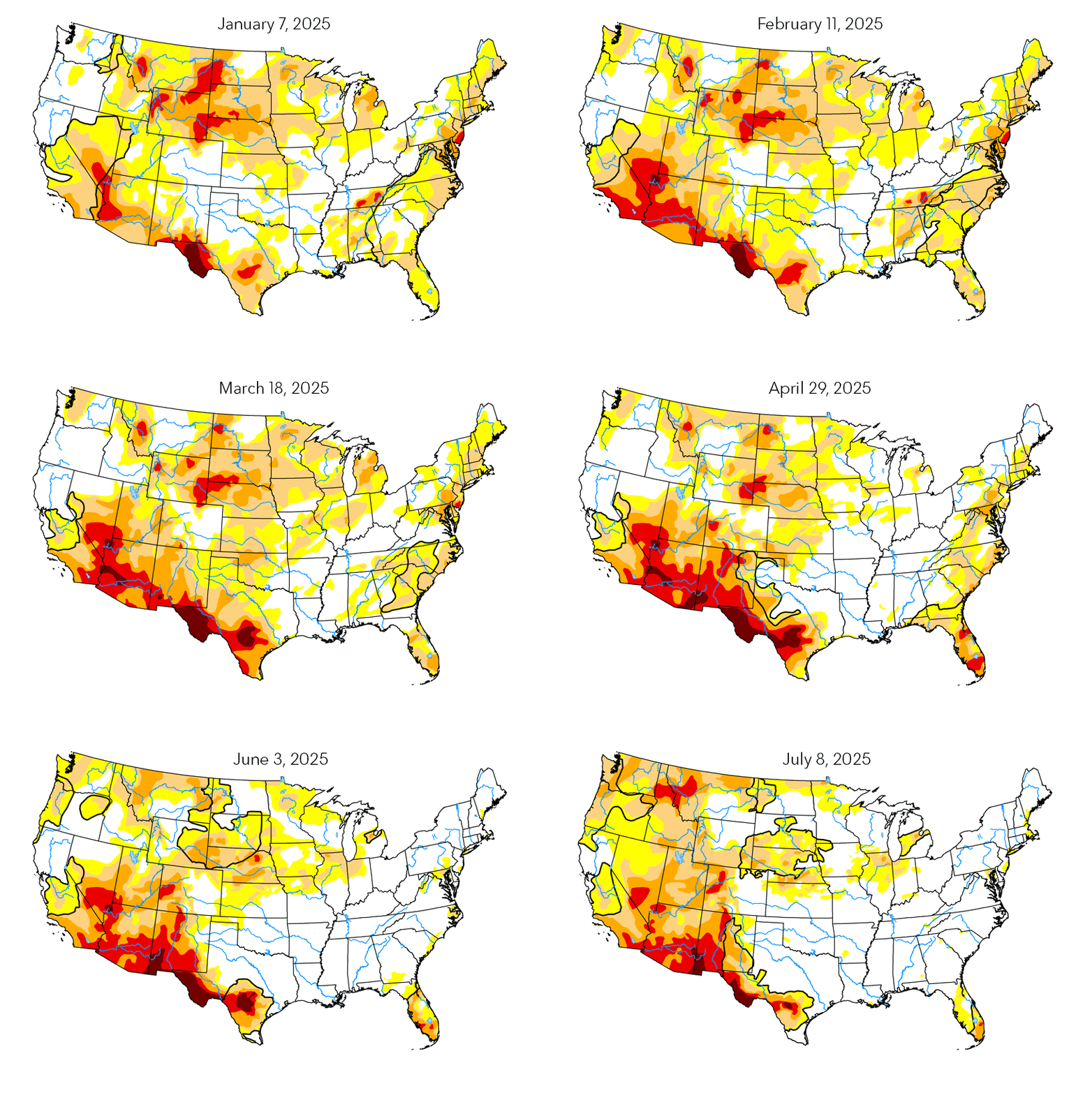
Much of the Eastern Cornbelt enjoyed a stretch of 80-degree days that extended through the previous weekend and into the start of the work week. The warm, dry weather helped fuel a strong push to wrap up planting in the region, with sidedress activity also ramping up in many locations.
Strong thunderstorms moved through central Illinois and into Indiana and Ohio at midweek, however, bringing heavy rain, hail, and damaging winds to some areas. Wet conditions were expected to linger late into the week, with cooler weather on tap for the Memorial Day weekend.
Illinois growers had fully 90 percent of the corn planted by May 23, compared with 76-82 percent in Ohio and Indiana. All three states were tracking 11-16 percent ahead of their five-year averages. Soybean planting was also well advanced, with progress estimated at 80 percent complete in Illinois, 69 percent in Indiana, and 66 percent in Ohio, compared with five-year averages ranging from 38-53 percent.
“We’ve been having very nice weather here,” said one Ohio contact. “I don’t think we’ve ever been through such a busy 13-day cycle as we have this year. Tonnage volumes have been very good, and we’re looking to add to them as we finish up the last little bit of planting and are now starting the sidedress wave, along with all the hay crop topdressing going on at the same time.”
Western Cornbelt:

Much of the Western Cornbelt experienced high temperatures in late May that helped newly planted crops emerge and allowed growers to move quickly to complete planting. The heat and humidity also sparked some severe storms, however, with reports of large hail and high winds from two separate storm systems in eastern Iowa on May 27.
Strong thunderstorms also hit parts of Missouri at midweek, with 40-50 mph winds and heavy rain reported in the Kansas City area on May 26-27. Residents in southwestern Nebraska and northwestern Kansas reported at least two tornadoes late on May 26, with the strong storms also producing 65 mph winds, heavy rain, and large hail.
Planting progress was tracking ahead of the average pace for most crops. The regional corn crop was 90-97 percent planted by May 23, compared with 88-90 percent on average. Soybean planting had progressed to 85-89 percent complete in Iowa and Nebraska, with both tracking roughly 20 percentage points ahead of normal.
Missouri growers had 44 percent of the soybeans planted by May 23, along with fully 85 percent of the cotton and 95 percent of the rice. Planting progress on all three crops was ahead of the five-year average.
Northern Plains:
Daytime highs in North Dakota dropped from the 70s to the high-40s as the week progressed, with a widespread frost expected on May 28. Rain was reported on May 27 across southern Minnesota, with forecasts warning of up to an inch of precipitation in some locations.
Strong thunderstorms were reported across southeastern South Dakota early in the week, with reports of hail and high winds in some locations.
The U.S. Drought Monitor on May 27 continued to show extreme-to-exceptional drought conditions across much of North Dakota. Most of South Dakota was under moderate-to-severe drought conditions in late May, with a wide area of extreme drought across northern areas of the state.
“It’s been very dry until this last week, when we started to get some rain,” said one North Dakota contact. “It is spotty, but over the weekend pretty much everyone got something for moisture. I hope we are starting to break the dry spell.”
The dry conditions allowed growers to move quickly on planting in May, with progress tracking ahead of the five-year average for all crops. Minnesota growers had 97-98 percent of the soybeans and corn planted by May 23, compared with 83-93 percent in South Dakota and 75-84 percent in North Dakota.
The planting of small grains was virtually complete in the region, with progress estimated at 93-95 percent complete on barley, 94-100 percent on spring wheat, and 88-98 percent on oats. Sunflower planting was estimated at 18-30 percent complete in the Dakotas by that date.
Great Lakes:
Unseasonably warm temperatures were reported across much of Michigan early in the week, with highs climbing into the 80s. Those conditions helped growers progress quickly on planting in late May, although cold, wet weather moved into the state late in the week.
Similar conditions were reported in Wisconsin, with summer temperatures replaced by cold, windy, and rainy weather as the week progressed. Forecasts warned of potentially severe storms in central and northern areas of the state at midweek.
Parts of the region were actually in need of moisture after the mid-May heatwave. Most of Michigan was experiencing moderate drought, with smaller patches of severe drought showing up in southwestern areas of the state. The first cutting of hay was already underway in parts of the state in late May.
Corn planting had progressed to 88-90 percent complete in Michigan and Wisconsin by May 23, some 20-30 points ahead of the five-year averages for both states. Soybean planting was fully 82-83 percent complete in the region by that date, nearly double the 40-48 percent five-year average.
Northeast:
Temperatures soared to an unseasonably hot 80-90 degrees in parts of southern New England during the second half of May. The high heat and humidity sparked a number of strong thunderstorms, with reports of heavy rain, powerful winds, and large hail from Connecticut to Maine at midweek.
Pennsylvania, New York, and much of the Mid-Atlantic region were also hit by severe thunderstorms at midweek after a stretch of hot weather and high humidity. More than 23,000 power outages were reported in Pennsylvania on May 26, along with 22,000 in New York, more than 19,600 in Vermont, nearly 14,000 in Virginia, and more than 10,000 in Maryland.
The hot, dry weather in May allowed growers to move quickly on planting. USDA reported that Pennsylvania growers had 77 percent of the corn crop planted by May 23, well ahead of the 54 percent five-year average and last year’s 42 percent progress by that date.