

Eastern Cornbelt:
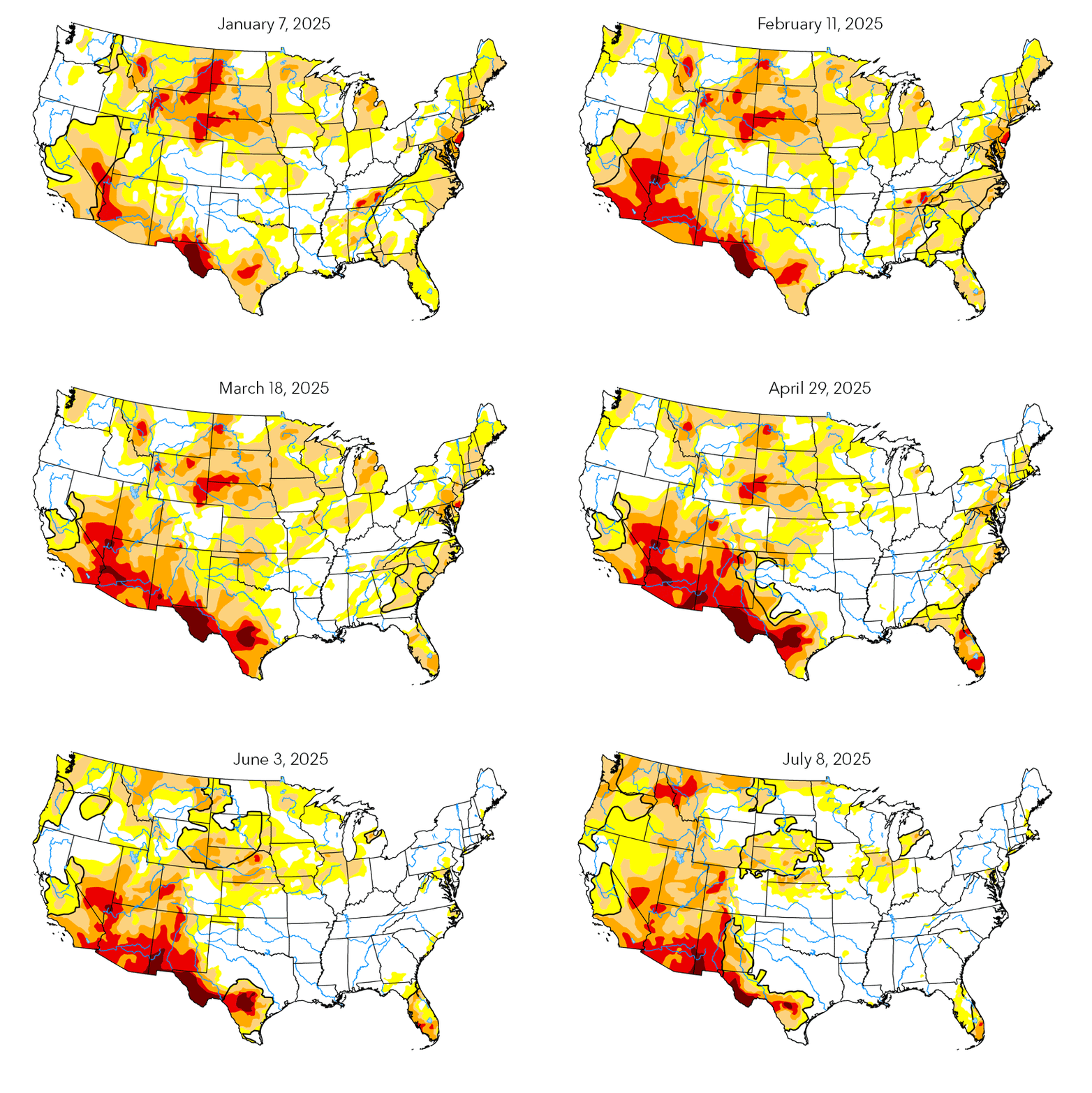
Extremely heavy rainfall was reported in Illinois and parts of Indiana in late June. Precipitation totals for June 24-28 included 2.6 inches in Peoria, Ill., 3.56 inches in Minonk, Ill., and up to 10 inches east of Bloomington, Ill. Additional rainfall in parts of south-central Indiana pushed the monthly total to more than eight inches in some areas.
The heavy moisture was accompanied by high temperatures, with highs in Indianapolis reaching the 90s at midweek. Forecasts warned of thunderstorms in Indiana as the week progressed, with another two or more inches of rain likely in some locations. Slightly cooler weather moved in late in the week, with highs topping out in the 70s in northern Ohio.
Crops continued to be described in favorable terms, with good or excellent ratings assigned to 70-73 percent of the corn and 67-71 percent of the soybeans in the region on June 27.
Western Cornbelt:

After two rounds of severe weather over the prior weekend, Iowa Gov. Kim Reynolds on July 1 issued a disaster proclamation for Davis and Van Buren counties in southern Iowa in response to heavy rain, large hail, and damaging winds.
Parts of southeastern Nebraska and northwestern Missouri were also hit by strong thunderstorms during the last weekend in June, with rainfall totals ranging from 3-6 inches. A Flash Flood Watch was in effect for parts of southeastern Nebraska, southwestern Iowa, and northwestern Missouri through the morning of June 26.
Nebraska continued to report very favorable crop conditions, with fully 82-83 percent of the corn and soybeans in the state rated as good or excellent on June 27, compared with 57-60 percent in Iowa and Missouri. Missouri’s cotton and rice were rated as 68 percent good or excellent on that date.
California:
Much of California was under excessive heat warnings as the week began. Multiple triple-digit high temperature readings were posted on June 27-28, including a record 121 degrees in Palm Springs, 113 in Indio, 109 in Palmdale, and 107 in Sandberg.
The high heat was accompanied by pervasive drought, with nearly all of the state experiencing extreme-to-exceptional drought conditions. Monsoonal thunderstorms were in the forecast as the week advanced, bringing the potential for lightning strikes and elevated fire conditions.
Fire crews in California were battling several blazes in late June, including the Lava Fire near the Oregon border, the Tennant Fire in Siskiyou County, the Shell Fire in Kern County, and the Peak Fire in San Bernardino County. In all, 48 large fires were burning more than 1,000 square miles across 12 states as of June 29, according to the National Interagency Fire Center.
Crop conditions remained favorable in late June, despite the heat and drought. “While we do have a few growers struggling with surface and pumped irrigation water, overall most should be okay to finish the season, if the wells hold,” said one Northern California source. USDA assigned good or excellent ratings to 75 percent of California’s cotton crop on June 27, along with 90 percent of the rice.
Pacific Northwest:
Much of the Pacific Northwest continued to wilt under record-high heat during the last days June. The Weather Channel said at least 63 heat-related deaths had been reported in Oregon as of June 29, with record highs on June 27-July 1 noted at 114 degrees in Portland, 113 in Salem, 111 in Eugene, 110 in Corvalis, and 109 in Bend.
Historic highs in Washington during the same period included 116 in Walla Walla, 114 in Wenatchee, 109 in Spokane, and 108 in Seattle. Scorching heat across most of Idaho prompted a heat advisory across the state that was expected to last through the July 4 weekend, with triple-digit readings posted in Boise for six consecutive days.
Montana was also baking under record high temperatures in late June as frequent dry thunderstorms contributed to worsening wildfire concerns in the region. Oregon Gov. Kate Brown on June 30 declared a state of emergency as the Wrentham Market Fire near Dufur – one of many wildfires in the region – exploded to 10,000 acres in just one day.
Drought conditions continued to cover virtually the entire Pacific Northwest in late June, with a wide band of extreme-to-exceptional drought extending across central Oregon and western Washington. This was taking a toll on crop conditions. As of June 27, just 7 percent of Washington’s barley crop and none of its spring wheat fell in the good or excellent categories, with poor or very poor ratings assigned to 61-70 percent of the acreage in the state.
Conditions were better in Idaho and Montana, where 21 percent of the spring wheat and 35-44 percent of the barley was rated as good or excellent in late June. Good or excellent ratings were also assigned to 44 percent of Montana’s winter wheat crop, compared with 37 percent in Idaho, 18 percent in Washington, and just 11 percent in Oregon.
Western Canada:
Sweltering temperatures continued to blanket much of Western Canada in late June, with numerous heat records posted for three consecutive days. Temperatures in Lytton, B.C., soared to 115.9 degrees on June 27 before climbing even higher, to 118.2 degrees on June 28 and 121.3 degrees on June 29.
Local reports said at least 37 other locations in British Columbia, Alberta, and the Northwest Territories tied or set new heat records during the week. Among these was 103.6 degrees in Victoria, B.C., and 100 degrees in Banff, Alta., on June 28.
The blistering heat also contributed to a rash of wildfires in British Columbia and Alberta in late June, and was starting to take a toll on small grains and canola crops in the region. Doubts about the quality and quantity of this year’s crop pushed canola and spring wheat prices to record highs during the week.
“Things are pretty spotty, but overall we need rain,” said one regional contact at midweek. “We are in the middle of a heatwave that won’t help crops. This certainly is not helping fertilizer movement.”