

Eastern Cornbelt:
Much of the Eastern Cornbelt got a break from the recent spate of extremely wet weather. Central Indiana posted its fifth wettest July on record as of mid-month, with more than six inches of rain falling so far in July.
While many areas enjoyed comfortable temperatures in the upper-70s and 80s at midweek, another round of hot, humid weather was on tap for the coming weekend. Highs in central Illinois and Indiana were expected to climb into the low- to mid-90s, with highs in the 80s likely in northern Ohio.
Many areas were also expecting another round of rain over the weekend, with forecasts warning of up to an inch possible in some locations.
The plentiful summer moisture has been mostly beneficial for crops in the region. USDA placed 75 percent of Ohio’s corn in the good or excellent categories on July 18, along with 73 percent of Indiana’s crop and 65 percent of the acreage in Illinois. As for soybeans, good or excellent ratings were assigned to 60-69 percent of the regional crop on July 18.
Western Cornbelt:

High heat and humidity were reported across much of Iowa and Nebraska during the week. Temperatures in the 80s were common across central and eastern Iowa, with highs climbing into the low-90s in parts of western Iowa. News reports said a smoky haze from wildfires in the Western U.S. helped keep temperatures from climbing even higher in Iowa.
Missouri was also bracing for hot, humid weather over the coming weekend. Temperatures in the low- to mid-90s were expected across much of central Missouri, with high humidity driving heat indices into the triple digits.
Crop conditions remained favorable in Nebraska, where 78-81 percent of the corn and soybeans were rated as good or excellent as of July 18, along with 81 percent of the sorghum. USDA placed 66-68 percent of Iowa’s corn and soybeans in the good or excellent categories on July 18, compared with 56-62 percent in Missouri. Cotton and rice crops in Missouri were 67-69 percent good or excellent on that date.
California:
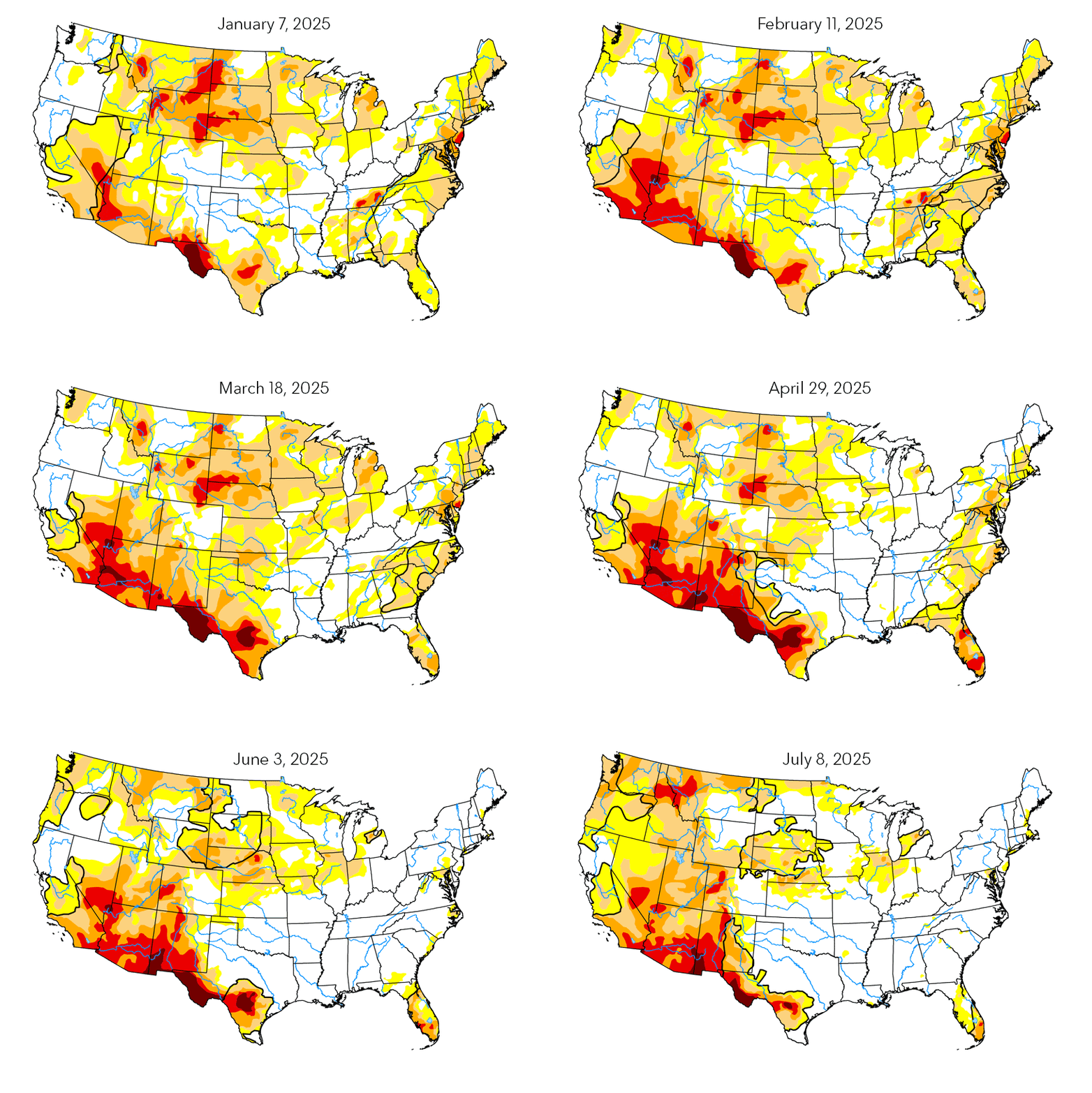
The July 22 U.S. Drought Monitor showed worsening conditions in California, with fully 86 percent of the state experiencing extreme drought and more than 33 percent in the exceptional drought category.
The tinder-dry conditions, coupled with intense heat, made matters worse for firefighters battling at least five major blazes across the state. Wildfires have so far consumed more than 273,000 acres in California this year, with the new Dixie fire in Butte and Plumas counties exploding to more than 85,000 acres since its ignition on July 14.
Crop conditions remained mostly favorably in California, although, as one source observed, “drought concerns are weighing heavy on the forward outlook.” USDA on July 18 rated 75-77 percent of the cotton acreage in Arizona and California as good or excellent, along with fully 90 percent of California’s rice crop.
Pacific Northwest:
Coastal areas of the Pacific Northwest enjoyed more seasonal temperatures in mid-July after the record-breaking heat that occurred in June and early July. Highs in Portland, Ore., topped out in the mid- to upper-70s at midweek, while light rains were reported in Seattle, Wash., during the week.
High heat continued in the Intermountain West, however, with Boise, Idaho, posting a high of 91 degrees on the morning of July 19. Highs across Montana were also in the low-90s for much of the week, with a wide band of extreme-to-exceptional drought now covering much of central and eastern Montana, as well as southern Idaho.
The entire state of Utah was also experiencing extreme-to-exceptional drought at mid-month, along with most of central Oregon and eastern Washington. Those conditions continued to fuel as many as 16 major wildfires across the region.
The dry conditions helped growers get a jump on the winter wheat harvest, with progress as of July 18 estimated at 39 percent complete in Oregon, 30 percent in Washington, 15 percent in Idaho, and 10 percent in Montana.
The drought has significantly damaged small grain crops across the region, however. USDA on July 18 rated fully 88 percent of Washington’s spring wheat as poor or very poor, along with 63 percent of the state’s barley. In Montana, 69 percent of the spring wheat and 50 percent of the barley were in the poor or very poor categories. Poor or very poor ratings were also assigned to 42 percent of Idaho’s spring wheat and 18 percent of the state’s barley crop.
Western Canada:
Dry, hot conditions continued to stress crops across much of Western Canada in mid-July. Temperatures across Manitoba once again rose to the low- to mid-30s C as the week began, with multiple locations postings daily records on July 18.
Crops in Saskatchewan were maturing well ahead of normal, with sources describing most crops as “short and thin” at mid-month. Fully 86 percent of Saskatchewan’s topsoil moisture was rated as short or very poor at mid-month.
The dry weather also fueled hundreds of wildfires in the region in mid-July. Firefighters in Saskatchewan were battling more than 100 separate fires, while nearly 300 wildfires were actively burning across western British Columbia at mid-month, prompting a July 20 state of emergency declaration from the provincial government.
“There is very bad smoke in a lot of areas,” commented one regional contact at midweek. “Drought conditions are bad and crops collectively are not looking strong.”