

Eastern Cornbelt:
Strong thunderstorms rolled through northern Illinois and northern Indiana at midweek, producing wind gusts in excess of 60 mph in the Chicago area. Sources also reported small hail and heavy rain in some locations as the storms passed through.
Scattered showers were also reported in northern Ohio during the week, with some areas reportedly picking up more than a half-inch of precipitation. Highs in the low-90s were reported in central Indiana during the week, with high humidity driving heat indices into the triple digits.
The plentiful summer moisture, along with plenty of heat units, continued to benefit crops in the region. Fully 76-78 percent of Ohio’s corn and soybeans were rated as good or excellent on July 25, along with 68-72 percent of the acreage in Indiana and 64-68 percent in Illinois.
Western Cornbelt:

Iowa was wilting under sweltering heat and humidity during the last days of July. Temperatures climbed to the low-90s across central and northern Iowa at midweek, with high humidity pushing the heat index to an astounding 132 degrees in Clarion and 141 degrees in Maurice.
Nebraska and Missouri were also enduring a heatwave, with highs hitting 100 degrees and heat indices climbing to 107-110 degrees near Lincoln, Neb., and Kansas City, Mo., at midweek.
Northerly winds were expected to cool things down a bit later in the week, but forecasts warned that the breezy weather would also push a smoky haze into the region from wildfires burning in the western U.S. and Canada.
USDA rated 61-66 percent of the corn and soybeans in Iowa and Nebraska as good or excellent on July 25, compared with 76-82 percent in Nebraska. Missouri’s cotton and rice were 67-69 percent good or excellent, with 40 percent of the rice crop headed by July 25. Nebraska’s sorghum crop was 20 percent headed and 75 percent good or excellent.
Northern Plains:
Hot, humid weather continued to blanket the Northern Plains in late July. Highs in the low- to mid-90s were reported across the Dakotas at midweek, while southern Minnesota posted highs in the low-90s and heat indices climbing well into the triple digits.
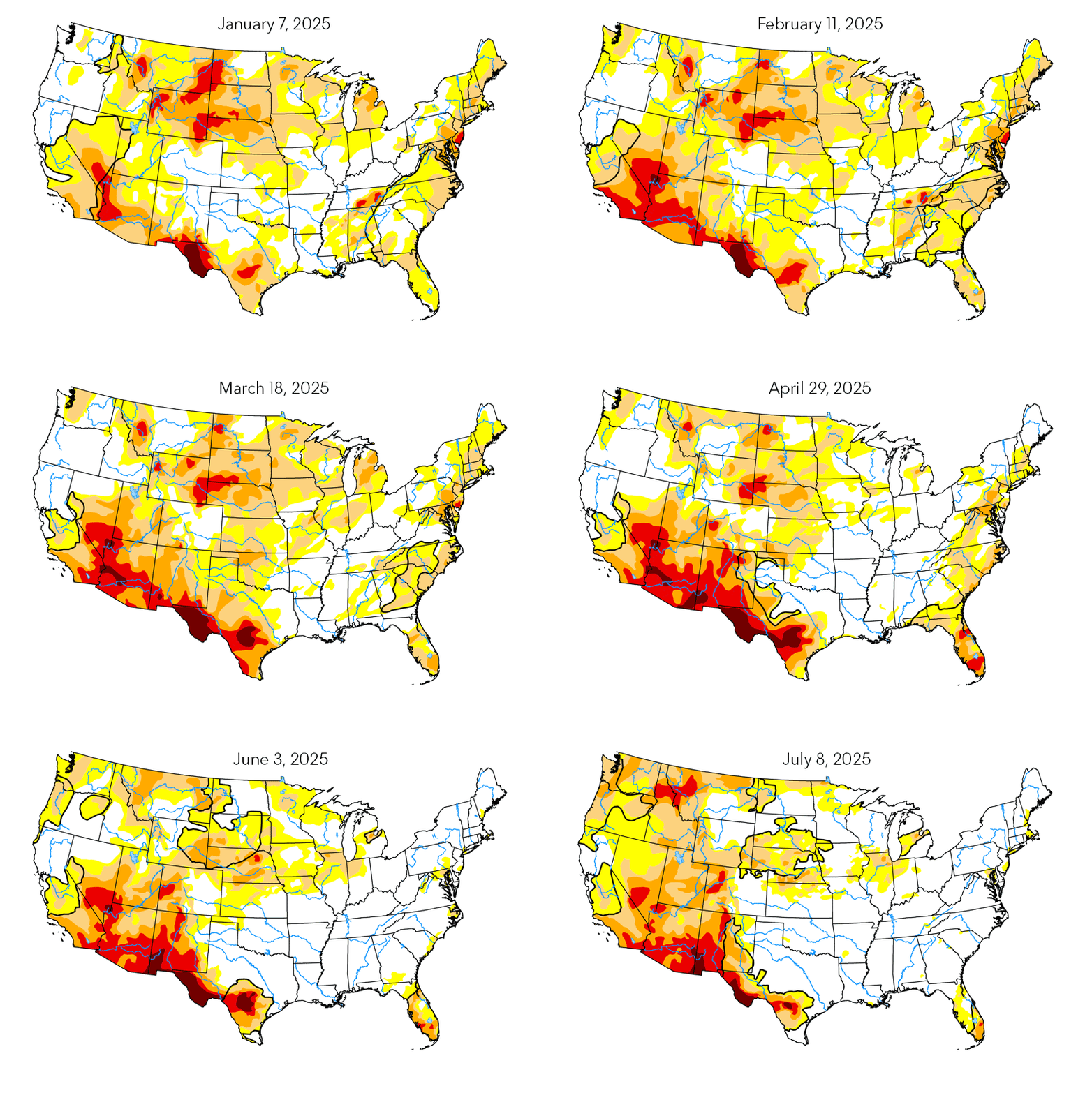
The July 29 U.S. Drought Monitor continued to show drought conditions covering virtually the entire Northern Plains, with a vast section of central North Dakota registering extreme-to-exceptional drought. Most of South Dakota and Minnesota reported severe-to-extreme drought conditions in late July.
Crop quality was suffering as a result. “It’s very dry, and a lot of crops are getting baled up for the cattle,” reported one North Dakota contact at midweek. “A lot of cattle are moving to market. With beans and corn, some are wait-and-see and some are not looking very well at all.”
Good or excellent ratings were assigned to just 17-21 percent of North Dakota’s corn and soybeans on July 25, compared with 26-30 percent in South Dakota and 36-38 percent in Minnesota. Corn and soybeans rated as poor or very poor totaled 39-41 percent of the acreage in North Dakota in late July.
Small grains crops were also parched. Only 16 percent of South Dakota’s sorghum crop fell in the good or excellent categories on July 25, compared with 31 percent in the poor or very poor categories. With the spring wheat and barley harvest just starting in the region, USDA rated 5-11 percent of the regional spring wheat as good or excellent, with fully 61-69 percent of the acreage in the Dakotas described as poor or very poor. The regional barley crop was 9-15 percent good or excellent and 36-63 percent poor or very poor.
Northeast:
Severe thunderstorms swept through parts of New England on July 27, leaving more than 10,000 customers without power. Maryland was also hit by strong thunderstorms on July 26, but high heat and humidity moved in as the week progressed, with highs reaching the mid-90s at midweek.
Smoke from wildfires in parched areas of Canada and the western U.S. continued to blanket much of the Northeast, but drought conditions in the Northeast were nearly nonexistent in late July. The only exception was a patch of moderate to severe drought across the northern edge of New York, New Hampshire, and Maine.
Crops continued to flourish in much of the Northeast. Fully 88 percent of Pennsylvania’s corn was rated as good or excellent on July 25, with 36 percent of the acreage at the silking stage and two percent in the dough.
Eastern Canada:
Eastern Canada weather in late July was dominated by heat and humidity, along with smoky conditions in some areas due to wildfires.
Forecasts warned of 30 C highs and strong thunderstorms across southern Ontario during the week, with reports of heavy rain, hail, and damaging winds in some locations. Despite the threat of hail and wind damage, most sources described Ontario crops as good in late July, although excessive moisture has taken a toll in some locations.
“There is lots of heat and lots of moisture, not at all dry,” said one contact at midweek. “In fact, it’s causing some issues with sprouting in the wheat that’s coming off. We have had flooding in some areas, which I’m sure will impact some of the crops in those areas.”
Added another source: “There has been lots of rain across Ontario, which has been bad for wheat harvest but great for corn and not bad for soys, either. Disease may rear its ugly head, but farmers are managing the crop for maximum yield.”
Dealers and growers are generally optimistic about the fall application season, although there is some concern that farmers will push back on higher fertilizer prices. “We’re expecting a normal application season for winter wheat planting, but resistance on fall applications of P and K on harvested corn and soybean cropland given the high prices,” said one contact.