

Eastern Cornbelt:
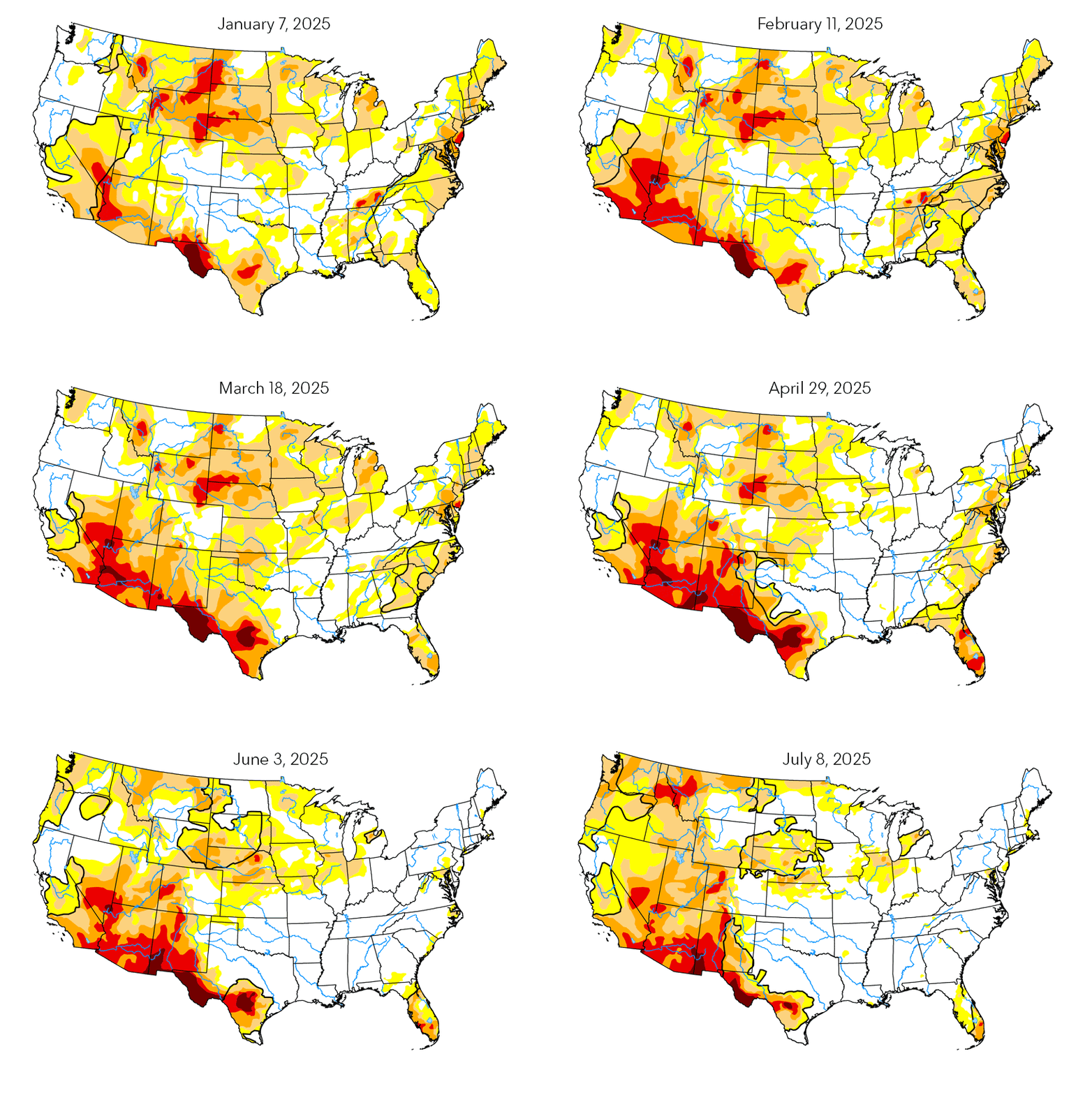
Strong storms tracked through Illinois during the week, leaving thousands without power in the Chicago area. The first round of thunderstorms hit northern Illinois on Aug. 10, followed by another strong band on Aug. 12.
The Aug. 11 thunderstorms also brought torrential rains to parts of central Illinois, with more than 9.5 inches falling in six hours in Gibson City. The town experienced widespread flooding as a result, prompting officials to launch water rescues for some residents.
Thunderstorms also brought rainfall to northern Indiana during the week, while south-central areas of the state picked up a half-inch or more on Aug. 9. High-heat warnings were in effect for central Indiana at midweek, with highs reaching the mid-90s in Indianapolis on Aug. 12. Heat advisories were also in effect for several counties in central Ohio, with heat index readings expected to hit 104 degrees in some areas on Aug. 12.
The combination of high heat and plentiful moisture continued to produce exceptional crops in the region. USDA on Aug. 8 rated 78-79 percent of the Illinois corn and soybean crops as good or excellent, compared with 70-74 percent in Indiana and 73-80 percent in Ohio.
Western Cornbelt:
Hot, humid weather continued across much of the Western Cornbelt during the week, with scattered thunderstorms reported in Iowa on Aug. 12.
The previous weekend brought intense storms to parts of eastern Nebraska, leading to flash flooding in Omaha on Aug. 7. The storms also produced 60 mph winds and quarter-sized hail, which left some 18,000 Omaha residents without power late on Aug. 7.
Heat advisories were in effect for portions of Missouri at midweek, with heat index values climbing to 107 degrees in central areas of the state. The high heat and humidity sparked a number of strong thunderstorms in the state on Aug. 12, leaving nearly 30,000 Evergy customers without power in the Kansas City area.
USDA rated 60-61 percent of the corn and soybeans in Iowa as good or excellent on Aug. 8, compared with 62-70 percent in Missouri and 70-76 percent in Nebraska. Missouri’s cotton was 56 percent good or excellent, while 70 percent of the state’s rice crop fell into those two categories. Nebraska’s sorghum crop slipped to 59 percent good or excellent, down from 64 percent in late July.
California:
Hot, windy weather returned to Northern California after a brief calm early in the week, hampering efforts to contain the rapidly growing Dixie Fire. The blaze is now the largest single fire in California’s history, consuming more than 765 square miles as of Aug. 8 and surpassing last year’s Creek Fire in the Central Valley.
The Aug. 12 U.S. Drought Monitor showed extreme-to-exceptional drought covering nearly all of California, with a small area of moderate-to-severe drought reported on the southern edge of the state. USDA rated 75 percent of California’s cotton crop as good or excellent on Aug. 8, with fully 90 percent of the state’s rice crop falling into those two categories.
“The smoke has been thick at times, and it has been sustained to the point of affecting crop maturity for at least a few days,” said one California contact at midweek. “With local domestic wells pumping dry, groundwater worries and debate has intensified. The lack of state groundwater leadership over the last 30 years has come to roost. Water policy is now dictating the winners and losers.”
Pacific Northwest:
Much of the Pacific Northwest enjoyed a stretch of cooler weather as the week began, but another round of intense heat was moving in.
Excessive heat warnings were in effect on Aug. 11-15 for western and northern areas of Oregon, much of Washington, and parts of Idaho. Forecasts warned of triple-digit temperatures and possible disruptions to the power grid across the region. Highs in western Oregon were predicted to hit 105-111 degrees on Aug. 13.
Temperatures in southern Idaho dropped to the mid-80s on Aug. 9-10 after hitting 105 degrees on Aug. 4. With the incoming heat wave, however, forecasts warned of a high of 102 degrees again on Aug. 12.
The intense summer heat and drought has taken a toll on small grains in the region. The regional winter wheat harvest was nearly complete by Aug. 8, well ahead of the average pace. Washington’s spring wheat and barley were 57-62 percent harvested by Aug. 8, with 66 percent of the barley and fully 93 percent of the spring wheat rated as poor or very poor.
Montana’s spring wheat and barley were 28-35 percent harvested by that date, with poor or very poor ratings assigned to 57 percent of the barley and 70 percent of the spring wheat. Idaho was the region’s garden spot in early August, with 37-40 percent of the spring wheat and barley harvested and good or excellent ratings assigned to 61 percent of the barley and 31 percent of the spring wheat.
Western Canada:
The week began with slightly cooler temperatures, scattered rains, and breezy weather across Alberta, Saskatchewan, and Manitoba, but a return of high heat and smoky conditions was expected as the week progressed.
British Columbia was already experiencing a significant heat wave at midweek, prompting heat warnings for several portions of the province that were in effect until Aug. 15. Daytime highs reached the mid-30s C across western and southern British Columbia during the week, with humidex values climbing to the upper-30s and low-40s C in some areas.
Crop conditions continued to show the effects of summer heat and drought. “Overall, crops are not looking great in Western Canada,” said one source. “Most of the Prairies got a bit of a break from the extreme hot temperatures this week, but it’s too late for some regions,” added another. “The harvest is starting in a few areas that were very dry all July.”
“The weather has been decent, but I wouldn’t mind some rain to get some pastures and grass greened up for livestock producers,” reported a Saskatchewan source at midweek. “Harvest is pretty much fully underway here now, with next to no yields, so fertilizer markets are not going to be high on demand on our end until prices decline some here. Nobody wants to put the cash out to purchase and store until spring at the current pricing.”