

Eastern Cornbelt:
The week began with reports of lake effect snow in northern Indiana and the Great Lakes region, while temperatures in southern Illinois warmed to the upper-50s. A second system was expected to bring rain and snow to parts of Indiana and northern Ohio later in the week, with highs in northern Ohio only reaching the mid-30s by Friday.
The corn harvest had progressed to 91-96 percent complete in Indiana and Ohio by Nov. 21, compared with 84 percent in Ohio. The regional soybean harvest was 90-95 percent complete by that date.
Western Cornbelt:
Mild, breezy weather helped growers move quickly on the remaining fall harvest in the region before Thanksgiving. The dry conditions prompted a red flag warning for the entire Nebraska Panhandle and central Nebraska at midweek, with winds gusting to 25-45 mph.
Much cooler weather was on tap for the end of the week, however, with highs expected to dip into the 30s in Iowa by Friday.
The regional corn harvest had progressed to 95-97 percent complete in the region by Nov. 21, with all three states tracking slightly ahead of their five-year averages. The soybean harvest was finished in Iowa and Nebraska and 90 percent complete in Missouri, with Missouri’s cotton harvest estimated at 94 percent complete by Nov. 21. Nebraska growers had 95 percent of the sorghum crop in the bin by that date.
California:
A brief storm earlier in November brought more rainfall to parts of Northern California and the Sacramento Valley, with 6-9 inches of additional snow reported in the Sierra Nevada. The system followed the “bomb cyclone” in late October that produced up to 10 inches of rain in Northern California and brought 3-5 feet of snow to the Cascades and Sierra Nevada.
Dry weather persisted for much of November across the state, however, with forecasts warning of Santa Ana winds in Southern California on Thanksgiving Day, along with potential power shutoffs and wildfires. A fire weather watch was in effect on Nov. 24-26 for large portions of Los Angeles, Orange, and Ventura counties, as well as the Inland Empire.
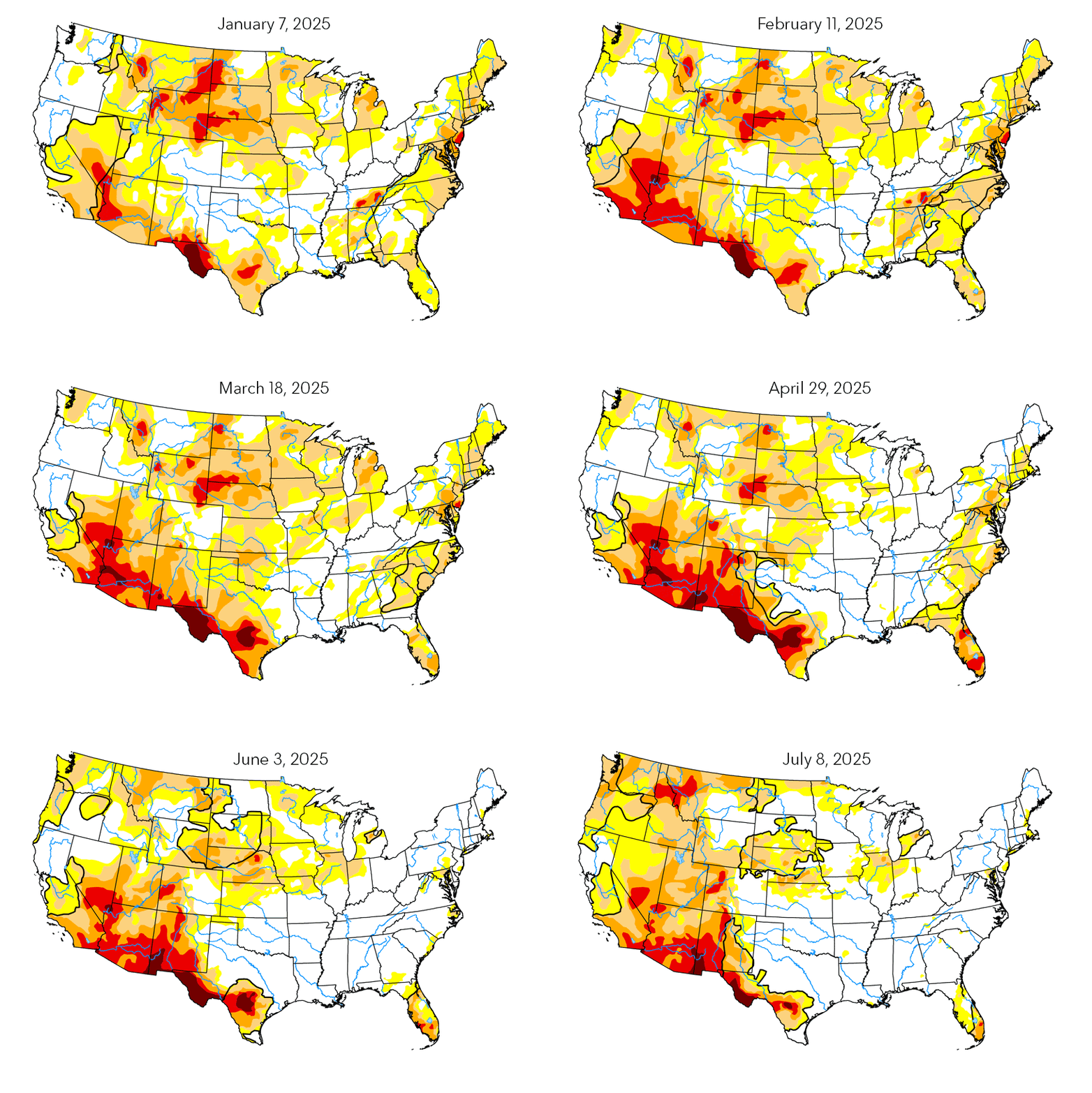
Despite the needed precipitation in late October and early November, a vast area of extreme-to-exceptional drought continued to cover the bulk of California, with small areas of moderate-to-severe drought reported on the southern and northern edges of the state.
Pacific Northwest:
Wet, winter weather conditions were reported in many areas of the Pacific Northwest during the week. After heavy rains and flooding across northwestern Washington during the previous week, another system was expected to bring additional moisture to the same location during the Thanksgiving week, with 3-6 inches of rain possible as November draws to a close.
Oregon was also bracing for a wet Thanksgiving, with 4-8 inches of snow expected in the Cascades and an additional 2-4 inches of accumulation over the Willamette Pass by the weekend. A quick shot of winter weather brought snow to southern Idaho and western Montana during the week as well, with 1-5 inches reported at higher elevations in Montana.
Most of the fall harvest and fieldwork was completed in the Pacific Northwest.
Western Canada:
A powerful storm was taking aim at parts of British Columbia during the week, with up to three inches of rainfall expected in Vancouver and as much as 10-20 inches of precipitation at higher elevations by the end of the month.
Weather conditions across the Prairies were much calmer after the prior week’s winter blast, however. The powerful mid-November storm hammered all three Prairie Provinces with heavy snow and strong winds on Nov. 16-17, prompting highway and rail line closures due to whiteout conditions and drifting snow.
Mid-month snowfall totals included as much as 26 cm in Fort Saskatchewan, Alta., and 20 cm in Edmonton, Alta., with 10 cm or more reported in Regina, Sask., along with 60-90 km/h winds. Manitoba’s Interlake Regional also collected up to 15 cm of snow during the storm.
The inclement weather put a stop to fall fertilizer application in many parts of the region. “Fall volumes have been strong lately, with tonnes likely pulled forward from Q1 due to demand and shortage concerns,” said one contact.
Others, however, said fall application volumes were lower than expected in their territories. “I think any fall application that was going to happen is done, but it seems acres are way down in our area for fall application,” reported one regional source.