

Eastern Cornbelt:
Heat and humidity sparked a number of strong thunderstorms across the Eastern Cornbelt as the week progressed. With temperatures pushing into the 80s, forecasts warned of severe thunderstorms on May 25-26 in all three states. Highs were expected to climb to the 80s and even 90s again over the Memorial Day weekend.
Sources reported a heavy planting pace during the week, as weather conditions allowed. Corn planting as of May 22 had progressed to 78% complete in Illinois, 64% in Indiana, and 52% in Ohio. Both Indiana and Ohio trailed their five-year averages slightly, but progress in Illinois is now equal to the average pace.
Soybean planting was reported at 62% complete in Illinois, 50% in Indiana, and 36% in Ohio. As with corn, Indiana and Ohio were only slightly behind their average pace, while Illinois was actually tracking ahead of the five-year average.
Western Cornbelt:

Highs across Iowa dropped to the mid- to upper-50s during the week. Conditions were mostly dry in the state, allowing rapid planting activity, although a line of showers moved through eastern Iowa on May 26. Much warmer weather was on tap for the Memorial Day weekend, with highs expected to reach the 80s and low-90s in Iowa.
Cool, rainy weather was also reported in Nebraska during the week, with a warm-up in the weekend forecast. Rainfall totals across central Missouri ranged from a half-inch to 1.5 inches during the first half of the week, while much drier weather moved in ahead of the holiday weekend.
Corn planting jumped to 84-85% complete in the region by May 22, just slightly behind the average pace, while soybean planting was also tracking on schedule at 69-72% complete in Iowa and Nebraska and 38% in Missouri. Missouri’s cotton crop was 85% planted by that date, well ahead of the 63% five-year average, with rice planting rated at 80% complete in the state.
One Iowa source said growers are “looking for a big sidedress” run after Memorial Day. “Crops look good, but spring tonnage was cut short this spring,” he added.
California:
Temperatures soared into the triple digits in California during the week, from Redding to Palm Springs, with multiple locations notching record daily highs.
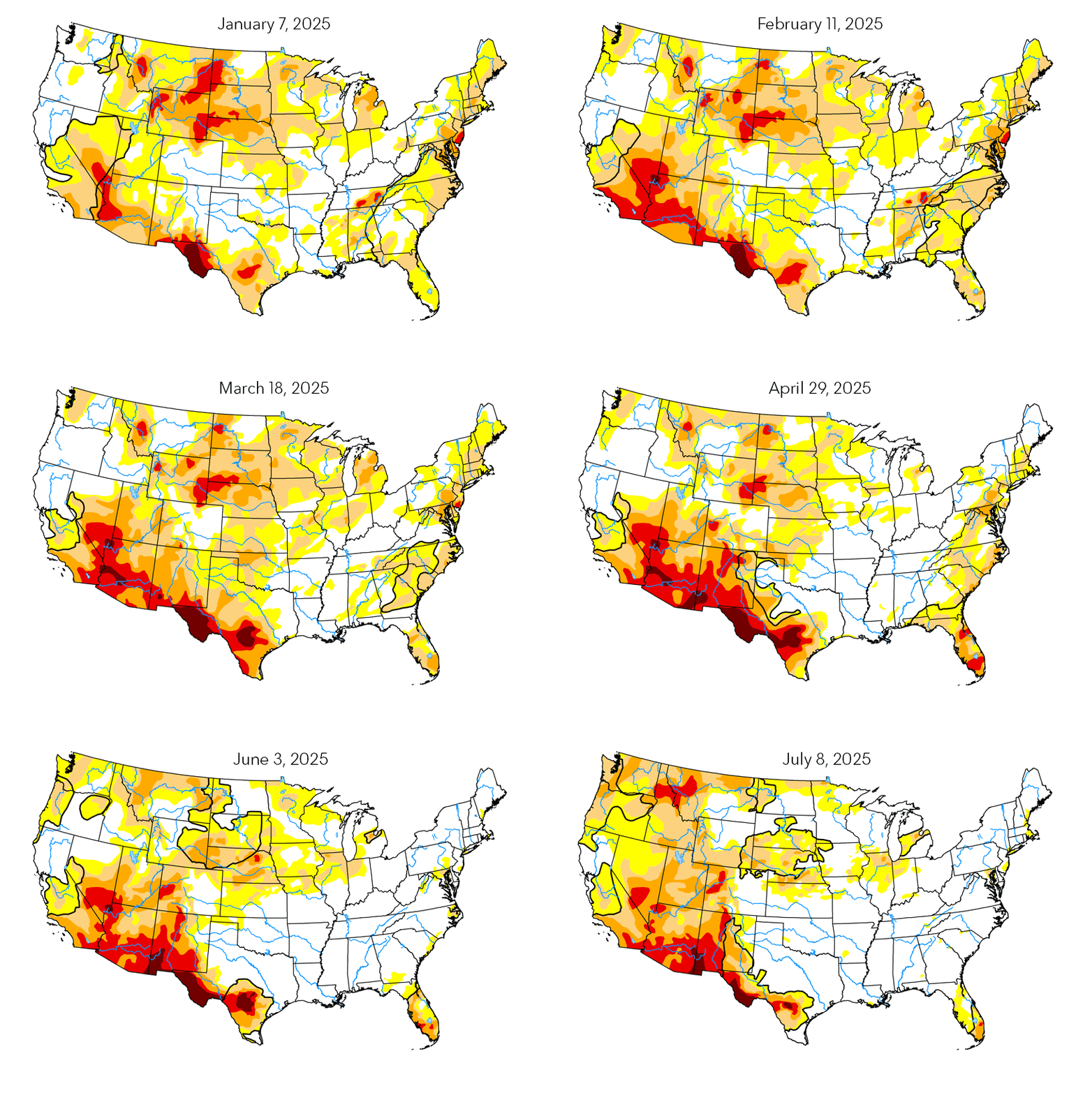
The high heat exacerbated worsening drought conditions across the state. As of May 26, a wide band of extreme-to-exceptional drought intersected the state from north to south, with smaller patches of severe drought at the edges. Long Beach has registered just 1.14 inches of rain so far this year, 14% of the average 8.33 inches, while statewide snowpack has shrunk to just 12% of normal.
State officials imposed sweeping new water use restrictions on May 24, requiring local water agencies to reduce water use by up to 20%. “Drought has had a significant impact for California, with huge reductions in rice acres,” said one contact. “I have not seen any official data, but expect acres of row and field crops impacted as well due to major surface water cuts. Growers need access to good well water or they can see big reduction in acres.”
Other sources said the drought has impacted fertilizer demand and pressured prices. “There is a decent amount of reduced applications and demand destruction that we are contending with,” reported one contact. “The mild spring has also caused growers to back off on applications, because their trees have not had the normal stresses that show up deficiencies.”
“Surface water cuts, frost damage, and expected low grower nets are having their effect,” added another source. “Where the first-quarter fertilizer movement was down less than 10%, as of yesterday we are down more than 20%.”
Pacific Northwest:
Rain and cooler weather were reported in western Oregon and Washington as the week progressed. Parts of Idaho were also bracing for wet weekend conditions after posting highs in the 80s on May 26. The cooler Memorial Day weekend was also expected to bring several inches of snow to higher elevations in Idaho and Montana.
Most of the Pacific Northwest was experiencing some form of drought in late May, with the most significant extreme-to-exceptional drought conditions reported across most of Oregon and in north-central Montana.
Planting was wrapping up quickly in the region in late May. USDA reported that 85-90% of the spring wheat and barley was seeded in Montana as of May 22, compared with 88-90% in Idaho and 94-96% in Washington. Idaho’s sugar beet crop was fully 99% planted by that date.
Western Canada:
Warm air over the Prairies was expected to spark strong thunderstorms as the week progressed. Forecasts warned of 30-50 mm of rain across portions of northern Alberta and northeastern British Columbia in late May, and 10-20 mm across a wide swath of Saskatchewan and Manitoba.
Spring planting was 52% complete across Saskatchewan, according to provincial reports, well behind the 78% five-year average. Sources said planting in southwestern Saskatchewan and southern Alberta was nearly finished, and progress was well advanced in central and northern Alberta and central Saskatchewan.
Planting progress in Manitoba, however, remained critically delayed due to wet weather. “The Peace Country, eastern Saskatchewan, and all of Manitoba have just begun seeding. Many are switching out of soybeans and corn to canola,” commented one source at midweek. “Additional rain in Manitoba is not needed. They will seed canola in Manitoba until June 20, but after that its barley and oats and a lot less fertilizer being used.”