

Eastern Cornbelt:
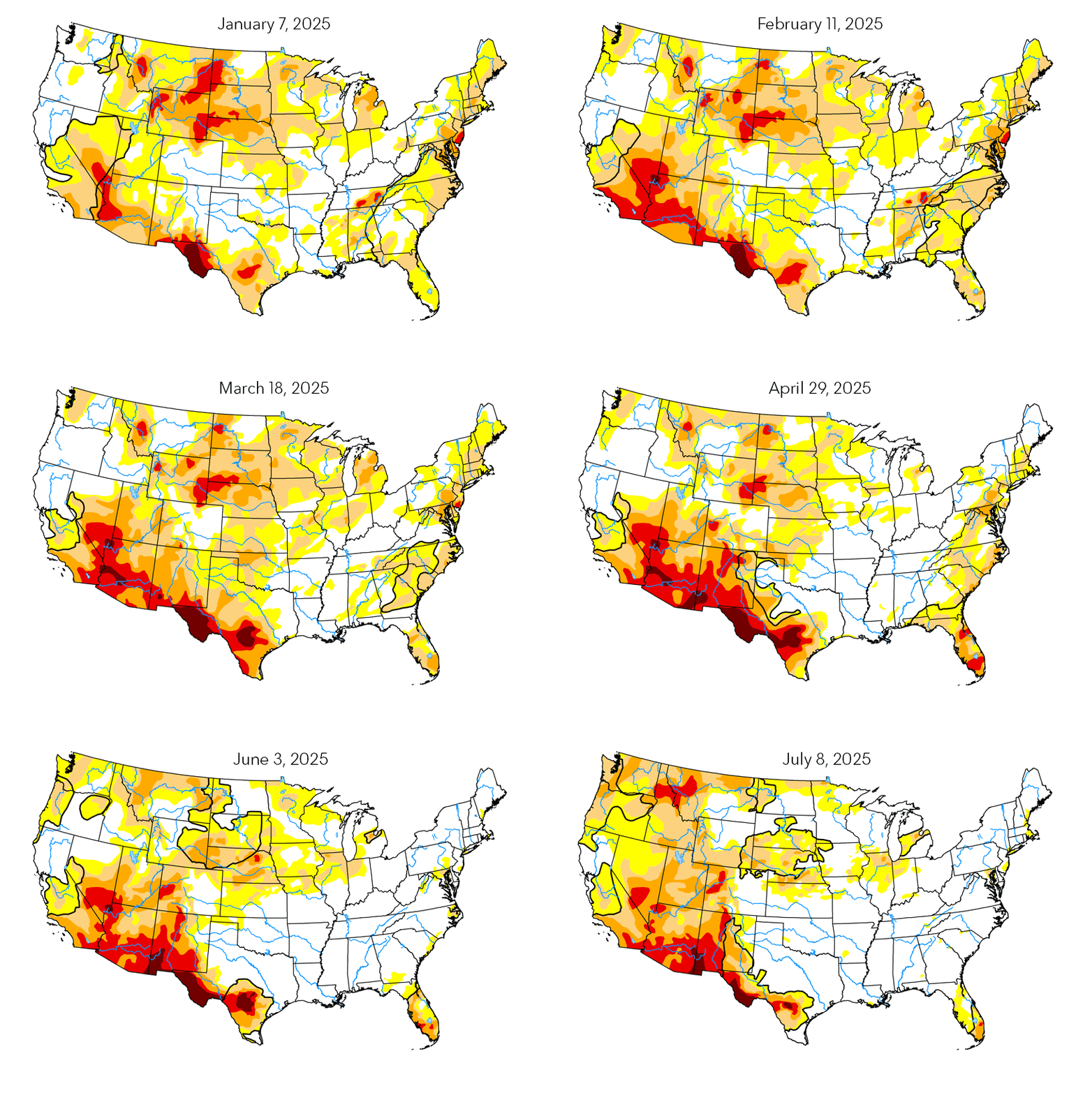
Strong thunderstorms churned through northern Ohio at midweek, producing damaging winds, heavy rain, and large hail in some locations. A flood advisory was in effect for several counties in the wake of the storms.
Much of the Eastern Cornbelt enjoyed calmer weather during the week, however, which benefited growers trying to wrap up spring planting. Highs in the mid-80s were reported in central Indiana at midweek, with scattered showers expected across the state as the week progressed.
Similar conditions were reported in Illinois, where highs topped out in the 70s and low-80s during the second half of the week. A greater chance of rain was in the weekend forecast for much of the state. In Michigan, the week began with highs well into the 80s before cooler weather settled in for the balance of the week.
Fully 81-89% of the corn crop was planted in Indiana and Illinois by May 29, along with 70-75% of the soybeans. Both states were tracking ahead of their five-year averages, while Ohio was essentially equal to its average pace with 72% of the corn and 56% of the soybeans seeded by that date.
In the Great Lakes region, corn planting had progressed to 80% complete in both Michigan and Wisconsin, with soybean planting estimated at 73% complete in Wisconsin and 69% in Michigan. Both states were either ahead of or equal to the five-year average pace.
Western Cornbelt:

After a band of strong thunderstorms in parts of Iowa on Memorial Day, sources reported seasonal temperatures in the upper-70s and low-80s across much of the state during the balance of the week, along with generally dry weather. Forecasts warned of cooler, wetter weather for much of Iowa during the second week of June, however.
Highs in the 70s and 80s were also common across Missouri and Nebraska as the week advanced, although some thunderstorms were reported across northwestern Missouri on May 31. The Nebraska Panhandle was also bracing for potentially strong thunderstorms on June 3.
A busy planting pace in late May allowed growers to equal or exceed the five-year averages for all crops in the region. Corn planting as of May 29 was 91-95% complete in the Western Cornbelt, while soybean planting had progressed to 85-87% complete in Iowa and Nebraska and 52% in Missouri.
Missouri growers also had 90-93% of the rice and cotton planted by May 29. Sorghum planting in Nebraska was reported at 55% complete by that date, also tracking slightly ahead of the average pace.
Northern Plains:
Unseasonably cool, wet weather continued to delay spring planting across much of North Dakota and Minnesota. Although highs in central and southern Minnesota pushed up to the mid-70s during the week, rain and colder weather was once again on tap for the coming weekend. Most of Minnesota was also under a Level 2 or 3 risk of severe weather on Memorial Day.
Highs in the mid- to upper-60s were common across the Dakotas during the week as the region continued to dry out from another round of late May showers. Unfortunately, more rain was in the forecast for the weekend and into the following week, further delaying spring planting across the region.
Although corn planting had progressed to 82-86% complete in Minnesota and South Dakota by May 29, just 56% of the crop in North Dakota was seeded, well behind the 56% five-year average. Soybean planting lagged even more at 61% complete in South Dakota, 55% in Minnesota, and only 23% in North Dakota.
Just 60-65% of the region’s sugar beets and 22-23% of the sunflowers were seeded by May 29. While the planting of spring wheat was on track in South Dakota, progress in Minnesota and North Dakota was rated at only 53-59% complete, well behind the 91-95% average. Barley planting also lagged at 62% complete in North Dakota and 48% in Minnesota, compared with 91-95% on average.
Northeast:
Cooler temperatures and scattered thunderstorms dominated the weekly weather forecast for much of New England.
High heat and humidity blanketed much of Pennsylvania and Maryland early in the week, with highs climbing to the upper-80s and low-90s in some locations. Cooler weather was on tap for both states as the week progressed, however, along with frequent showers.
The favorable weather allowed growers to make significant strides on planting. Pennsylvania growers had 63% of the corn crop planted by May 29, USDA reported, still lagging the average pace, but a significant jump from the prior week’s 43% progress.
Eastern Canada:
The week began with high heat and humidity across much of southern Ontario, prompting a weather statement from Environment Canada. The unseasonably hot weather sparked a band of strong thunderstorms at midweek that caused widespread power outages, with much cooler temperatures moving in after the storms.
The last days of May brought unseasonably hot weather to parts of Quebec as well, while most of the Maritimes stayed breezy and cool.
Sources reported a burst of planting activity in late May. “Things are starting to wind down a bit,” commented one source on June 1. “I would say most of the corn is in, with a few spots to finish off. We’re hard at the beans now, and if weather holds we should be over the hump by the weekend.”
Sources talked of slightly softer fertilizer pricing in Eastern Canada, fueled in part by the weakness in NOLA and Midwest prices and by a reduction in spring application volumes. No fill programs are expected until later in June.
“We are still fairly insulated from the price shocks in NOLA/Midwest,” said one contact. “Some bleed through across the border, but very limited. We have heard some U.S. wholesalers are limiting access because product is of Russian origin.”
“Movement is down 25-30% this year in the area in general,” added another source. “If we get rain there may be some UAN demand, however, it’s not looking too promising on that either.”