

Eastern Cornbelt:
Hot, humid weather remained in place over much of the Eastern Cornbelt during the final week of June, although scattered showers and thunderstorms were possible in all three states late in the week. Highs reached the low- to mid-90s across much of Illinois, Indiana, and Ohio during the week.
With soybean planting now virtually complete in the region, USDA on June 26 rated 66-70% of the corn and soybeans in Illinois as good or excellent, compared with 59-61% in Indiana and 49% in Ohio.
Western Cornbelt:
With highs pushing into the upper-80s and low-90s across much of the Western Cornbelt during the last days of June, forecasts warned of an increased chance of strong thunderstorms as the week advanced. Some parts of Missouri were bracing for up to an inch of rain over the Independence Day weekend.
Spotty rains and strong winds were reported across the northwestern half of Iowa on June 30, with showers and thunderstorms likely in southeastern Iowa on July 1. Thunderstorm activity was also confirmed in Nebraska on June 30, with reports of 60-mph winds and penny-sized hail in some locations.
Good or excellent ratings were assigned to fully 80% of Iowa’s corn and soybeans on June 26, compared with 62-64% of the acreage in Nebraska and 59-69% in Missouri. Nebraska’s sorghum crop was 62% good or excellent on that date, while Missouri’s cotton and rice crops were reported at 60% and 67% good or excellent, respectively.

Southern Plains:
Hot weather was reported across much of the Southern Plains in late June, with highs reaching the mid- to upper-90s in many locations.
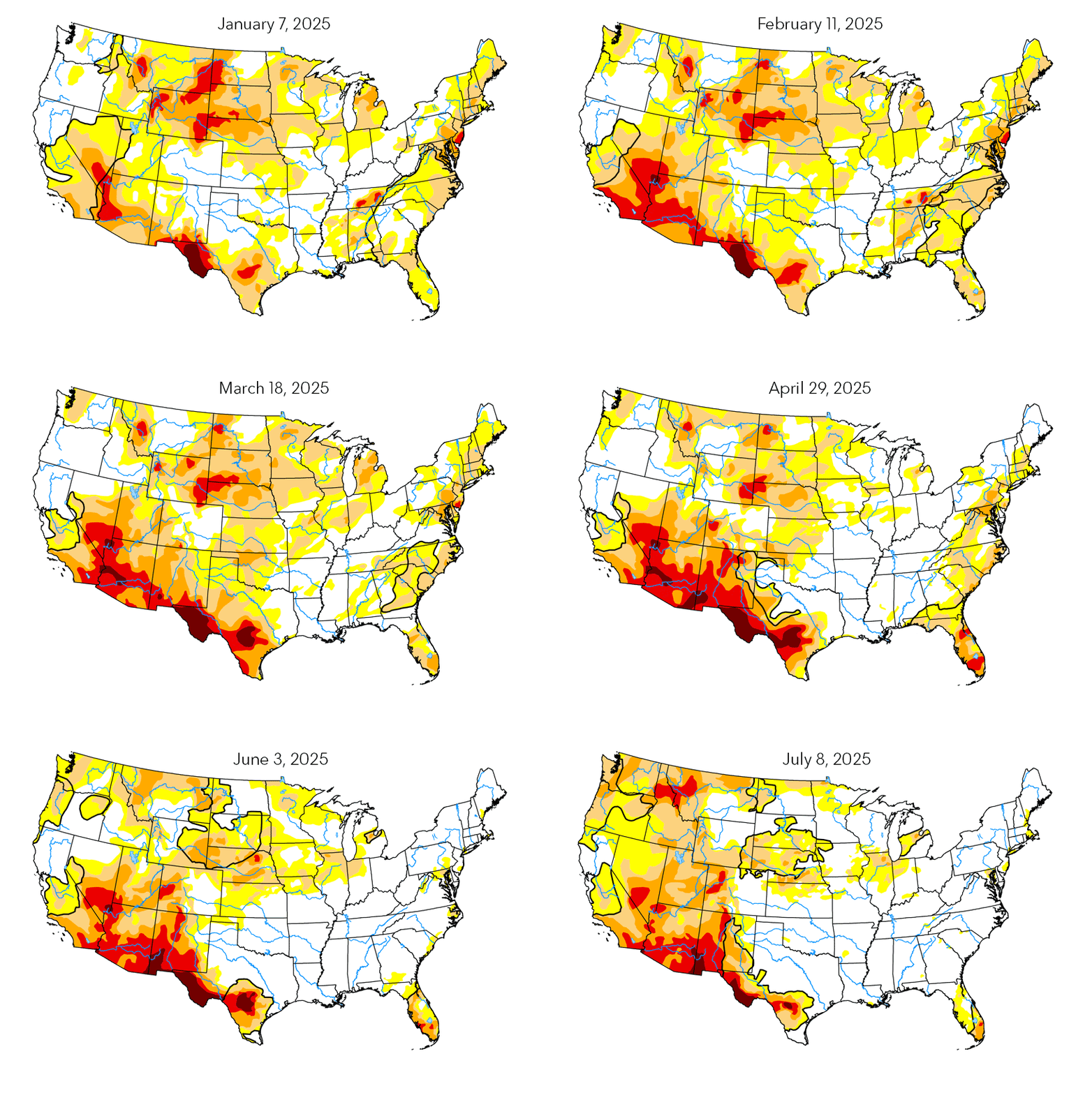
While vast areas of extreme-to-exceptional drought persisted across eastern New Mexico and central and western Texas, some areas of the region enjoyed much-needed rainfall during the week. Monsoon rains brought 1-3 inches of precipitation to parts of the Jemez and Sangre de Cristo Mountains in New Mexico over the previous weekend, and Santa Fe picked up more than three inches, along with much cooler temperatures.
A tropical disturbance in the Gulf of Mexico was also expected to bring heavy precipitation to parts of southern Texas late in the week. One Texas source said some acres planted to cotton were lost due to drought, but then double-cropped with corn or milo. “The corn was planted just three weeks ago, and then we got rain this week, so it could do alright,” he said.
Double-crop corn, soybeans, and milo planting was also underway on wheat ground in the Kansas market in late June. “In my neighborhood about every wheat field you drive by has had a planter or air seeder run across it,” said one contact.
The Texas corn crop was just 24% good or excellent as of June 26, with 38% of the acreage rated as poor or very poor. By contrast, good or excellent ratings were assigned to 59% of the corn in Kansas and 47% in Colorado.
Cotton conditions showed a similar spread, with good or excellent ratings assigned to 53% of the acreage in Oklahoma, 40% in Kansas, and just 17% in Texas. USDA placed 46% of the Texas cotton crop in the poor or very poor categories in late June.
Sorghum planting had progressed to 99% complete in Texas, 86-87% in Colorado and Kansas, and 76% in Oklahoma. The sunflower crop was 76-77% planted in Colorado and Kansas, while soybean planting was estimated at 92% complete in Kansas by June 26.
South Central:
High heat and humidity continued across much of the South Central region during the week, although southwestern Louisiana and southeastern Texas were bracing for some potentially heavy rain late in the week due to a tropical disturbance in the Gulf of Mexico.
Worsening drought prompted officials to impose burning bans in a number of Middle Tennessee communities in late June. Hot, dry weather across much of Kentucky during the second half of June also caused an expansion of moderate drought conditions in the region.
Good or excellent ratings were assigned to 57-58% of the corn in Kentucky and Tennessee on June 26, while soybeans in those two categories totaled 77% of the acreage in Arkansas, 73% in Louisiana, 65% in Mississippi, 58% in Kentucky, and 56% in Tennessee. The cotton crop in Louisiana and Arkansas was 77-78% good or excellent, compared with 63% in Mississippi.
Southeast:
Hot, dry weather was reported through much of the Southeast in late June. Although scattered showers were in the weekend forecast for parts of Alabama and Georgia, drought conditions were intensifying in the Carolinas.
According to the June 30 U.S. Drought Monitor, nearly all of the Carolinas and much of Georgia are experiencing abnormally dry to moderate drought conditions, with patches of severe drought now covering the eastern Carolinas.
Good or excellent ratings were assigned on June 26 to 39-40% of North Carolina’s corn and soybeans. Cotton in the good or excellent categories totaled 82% of the acreage in Virginia, 76% in Alabama, 56% in Georgia, and 52-59% in the Carolinas.
Fully 80-84% of the peanuts in Alabama and Virginia were rated as good or excellent on June 26, compared with 65% in Florida and North Carolina, 59% in South Carolina, and 57% in Georgia.