

Eastern Cornbelt:
Soaring temperatures prompted a number of heat advisories, thunderstorm warnings and watches, and some flood watches in the Eastern Cornbelt during the week.
Temperatures surged into the 90s in Illinois during the week, with frequent thunderstorms observed across central and northern Illinois. Indianapolis, Ind., reached 99 degrees on July 5, the highest temperature posted since July 25, 2012. Forecasts warned of thunderstorms and showers across central and northern Indiana as the week progressed.
Several counties in central Ohio were under a flood watch at midweek after severe thunderstorms and torrential rains moved through the region. A severe thunderstorm watch was also in effect in southern Ohio at midweek.
Some 62-65% of the corn and soybeans in Illinois were rated as good or excellent on July 3, compared with 48-50% in Indiana and Ohio. The winter wheat harvest had progressed to 87% complete in Illinois, 62% in Indiana, and 47% in Ohio by that date, with good or excellent ratings assigned to 57-70% of the regional acreage.
Western Cornbelt:
A derecho swept through northern Iowa on July 5, producing 68 mph winds in Mason City and leaving thousands of Iowans without power until the morning of July 6. The same weather system also brought severe thunderstorms to southern South Dakota and parts of eastern Nebraska, where temperatures reached the upper 90s and low triple digits on July 5.

Highs in the 80s and 90s across much of Missouri sparked a round of thunderstorms on July 7, with reports of 1-2 inches of rain, 60-mph winds, and one-inch hail in some locations.
Good or excellent ratings were assigned to fully 77% of Iowa’s corn and soybeans on July 3, compared with 61-62% of the acreage in Nebraska and 56-65% in Missouri. Nebraska’s sorghum crop was 63% good or excellent on that date, while Missouri’s cotton and rice were reported at 63% and 71% good or excellent, respectively.
California:
Southern Californians were bracing for hot weather over the coming weekend. Forecasts warned of temperatures spiking to the mid-80s in Los Angeles, with the Inland Empire, San Fernando, Antelope, and Santa Clarity valleys expected to hit triple digits on July 10-11.
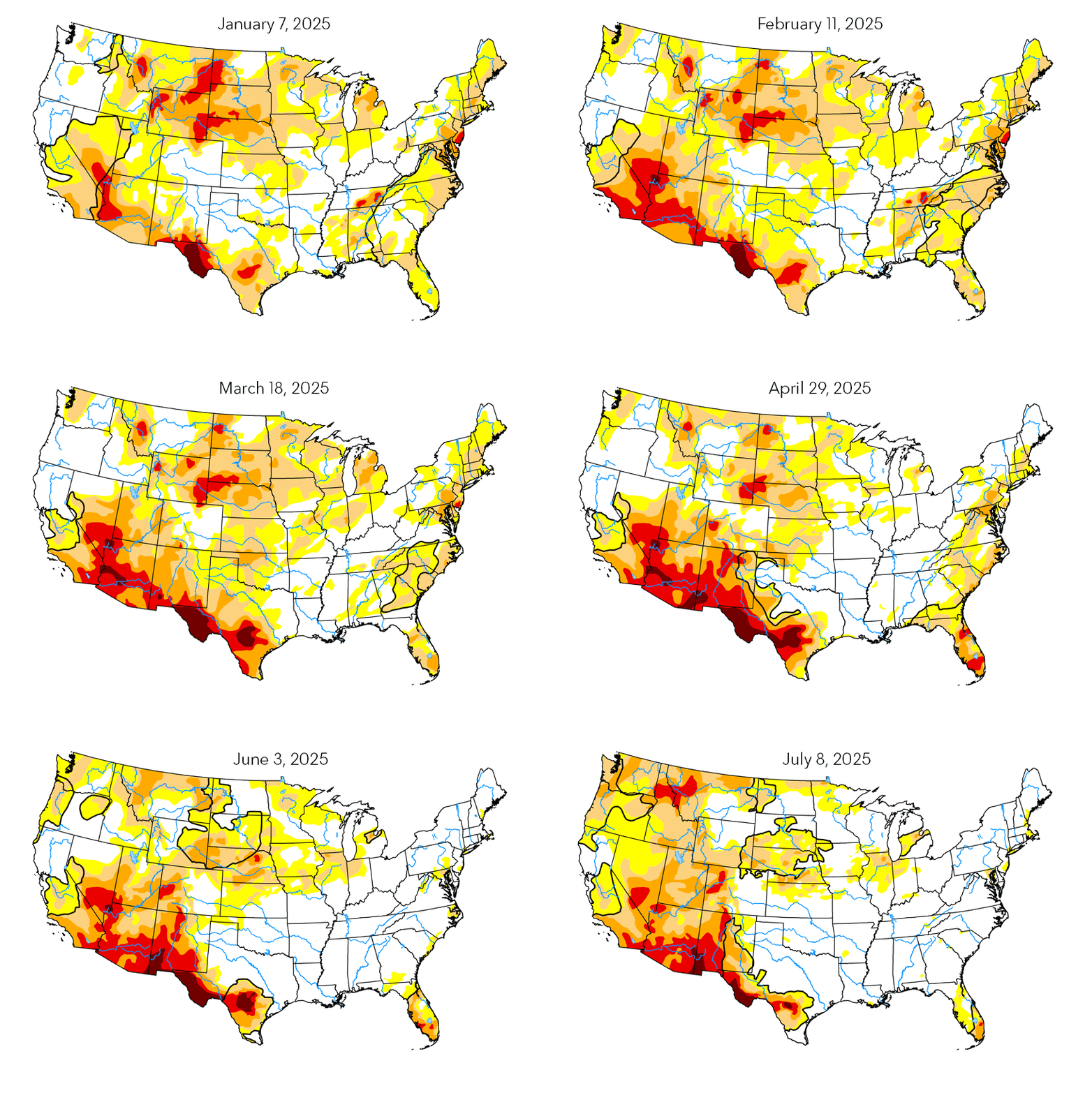
The entire state remained under drought conditions ranging from moderate to exceptional in early July, with a wide, uninterrupted swath of extreme-to-exceptional drought stretching from the southern border to the northern. Water use restrictions implemented in June remained in effect for most of the state.
California’s rice crop was 10% headed as of July 3, with 90% of the acreage rated as good or excellent. Roughly 10% of the California cotton crop was setting bolls by that date, compared with 36% in Arizona. USDA assigned good or excellent ratings to fully 95% of California cotton in early July, compared with 86% in Arizona.
Pacific Northwest:
Cool, cloudy weather persisted across Oregon and western Washington for most of the week, with highs in the 70s. Highs climbed into the 80s in the lower Columbia Basin as the week progressed.
Isolated thunderstorms were tracking through western Washington and northern Idaho on July 7, with the weekend forecast calling for widespread thunderstorm activity across eastern Idaho. Scattered thunderstorms were also reported in Montana, with highs reaching the 70s and 80s across much of the state during the week.
A wet June across much of the region benefited spring grains. Good or excellent ratings were assigned on July 3 to fully 95-97% of Washington’s spring wheat and barley, compared with 65-73% in Idaho and 35-36% in Montana. Winter wheat in the good or excellent categories totaled 80% of the acreage in Oregon, 70% in Washington, 64% in Idaho, and 32% in Montana.
Western Canada:
Strong storms continued to hammer parts of Western Canada in late June and early July. The week began with a severe thunderstorm watch for southern British Columbia, with reports of strong winds, large hail, and heavy rain in some locations.
At least three tornadoes touched down in Saskatchewan on June 29 as a powerful system churned through central and southern areas of the province. On July 4, weather warnings were issued for multiple Manitoba communities, with reports of up to an inch-and-a-half of rain in some locations.
By July 7, another system was expected to trigger severe thunderstorms across Alberta, with forecasts warning of tornado risks and “tennis ball-sized” hail. The risk areas included the cities of Calgary, Edmonton, and Red Deer.
Crops across the region benefitted from a wetter-than-normal June. Fully 75% of Alberta’s crops were rated as good or excellent, while soil moisture levels in Saskatchewan were improving significantly. In Manitoba, crop development in northwestern areas of the province was lagging, but spring wheat and canola crops were beginning to flower across the province.