

Eastern Cornbelt:
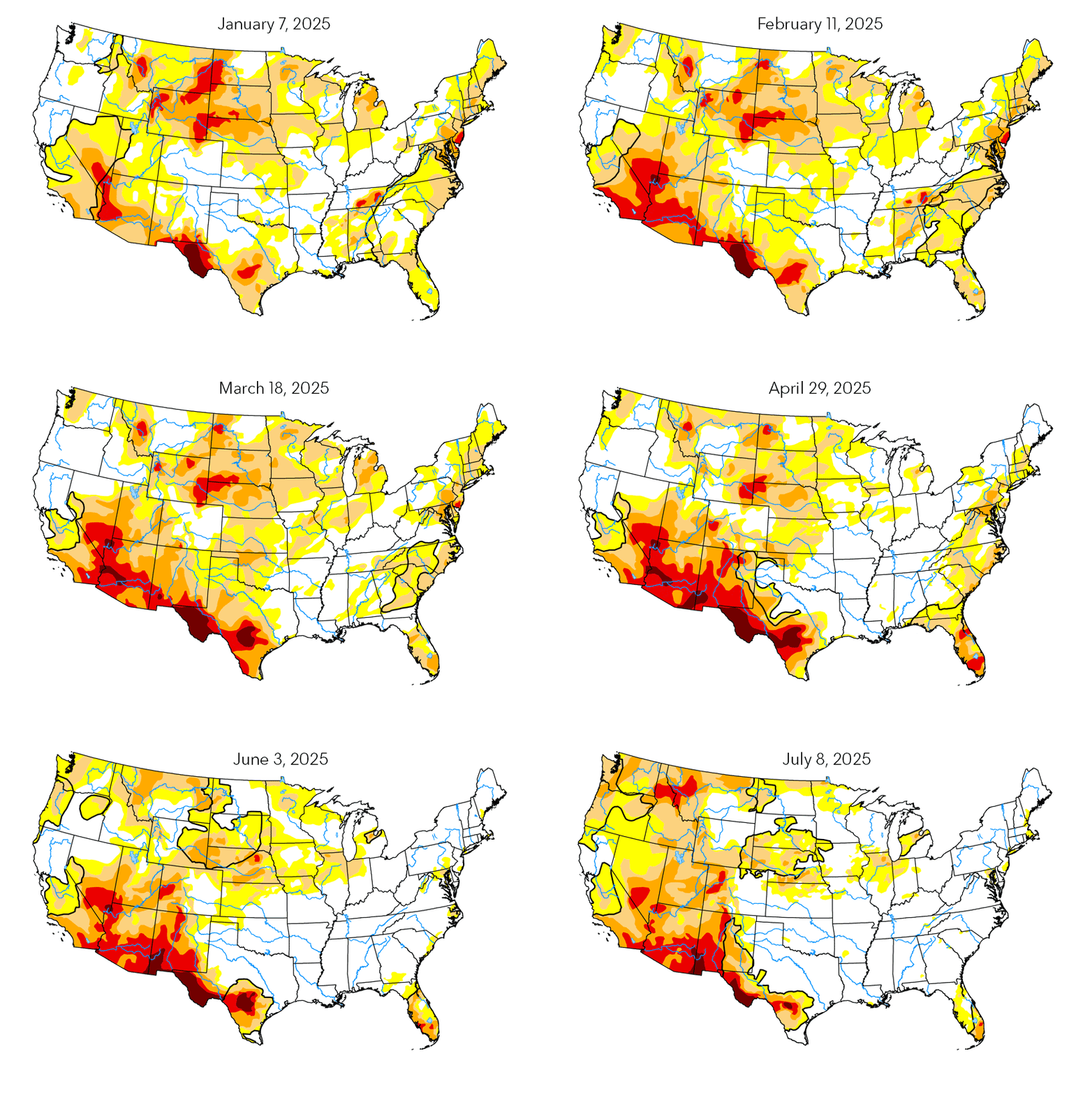
Dry, hot weather continued across central Illinois during the week, but cooler weather settled over Indiana and Ohio, with midweek highs reported in the upper-70s and low-80s. Spotty showers were reported across northern Ohio early in the week.
With 8-12% of the regional corn crop at the dented stage by Aug. 14, USDA assigned good or excellent ratings to 73% of the acreage in Illinois, 58% in Ohio, and 54% in Indiana. Some 71-74% of the regional soybean crop was setting pods by that date, with good or excellent ratings assigned to 69% of the acreage in Illinois, 59% in Ohio, and 54% in Indiana.
Western Cornbelt:
Heat and humidity sparked an increased chance of thunderstorms across parts of Iowa and Nebraska as the week progressed.
Forecasts warned of possible severe thunderstorms in southeastern Nebraska late on Aug. 18. The threat was expected to move into Iowa on Aug. 19, carrying a risk of strong winds, large hail, and tornadoes.

Corn and soybean conditions were down from the previous week, with good or excellent ratings assigned on Aug. 14 to 63-66% of Iowa’s crop and 46-48% of the acreage in Missouri and Nebraska. Nebraska’s sorghum crop slipped to 21% good or excellent, with 46% of the crop rated as poor or very poor.
Missouri’s cotton and rice were reported at 48% and 53% good or excellent, respectively, with 71% of the rice crop headed.
California:
Temperatures soared to the upper-90s and triple digits across much of California during the week, prompting a statewide Flex Alert on Aug. 17 asking residents to conserve electricity. Highs in the low-triple digits were reported across the Central Valley, with temperatures in the San Joaquin Valley reaching 104-108 degrees.
The entire state remained under drought conditions ranging from severe to exceptional, with a wide band of extreme-to-exceptional drought extending from Central California up to the Oregon border.
Good or excellent ratings were assigned to fully 95% of California’s cotton crop on Aug. 14, along with 80% of the acreage in Arizona. California’s rice crop was 80% headed by that date, with 75% of the acreage rated as good or excellent.
Pacific Northwest:
High heat was reported across much of the Pacific Northwest in mid-August, along with smoky conditions in some areas from a number of wildfires burning in the region.
A heat advisory was in effect at midweek for Portland, Ore., and the Willamette Valley, with highs in the mid- to upper-90s. Heat advisories were also posted for southern Idaho, with highs pushing into the triple-digits in some locations.
A Red Flag fire warning was also in effect for southern Oregon and much of western Washington, with drought conditions ranging from moderate to exceptional reported across central and southern Oregon and portions of southern Idaho. A patch of extreme-to-exceptional drought was also present in north-central Montana in mid-August.
The regional winter wheat harvest had progressed to 71-82% complete in Montana and Oregon by Aug. 14, compared with 28% in Idaho and 45% in Washington. The spring wheat harvest was rated at 26% complete in Montana and 14% in Idaho and Washington, while the barley harvest had progressed to 40% in Montana and 24-29% in Idaho and Washington.
Good or excellent ratings were assigned to fully 97% of Washington’s spring wheat and barley on Aug. 14, compared with 68-75% in Idaho and 37-38% in Montana.
Western Canada:
High temperatures and spotty thunderstorms were reported across Western Canada during the week. Southern Manitoba was hit with severe thunderstorms on Aug. 15 that produced strong winds and heavy rain, with some areas collecting nearly four inches of rain.
A heatwave in British Columbia pushed temperatures to record-level highs in multiple locations during the week. While many areas saw temperatures hit the low-30s C, both Pemberton and Lillooet notched highs in the 37-38 C range on Aug. 17. Heat warnings were also in effect for nearly all of Alberta at midweek.
Harvest activities were kicking off in some parts of the Prairies at mid-month. Harvest progress was estimated at 5% complete in Saskatchewan on Aug. 18, just behind the five-year average of 8%, with southwestern areas of the province leading at 17% complete at mid-month.