

Eastern Cornbelt:
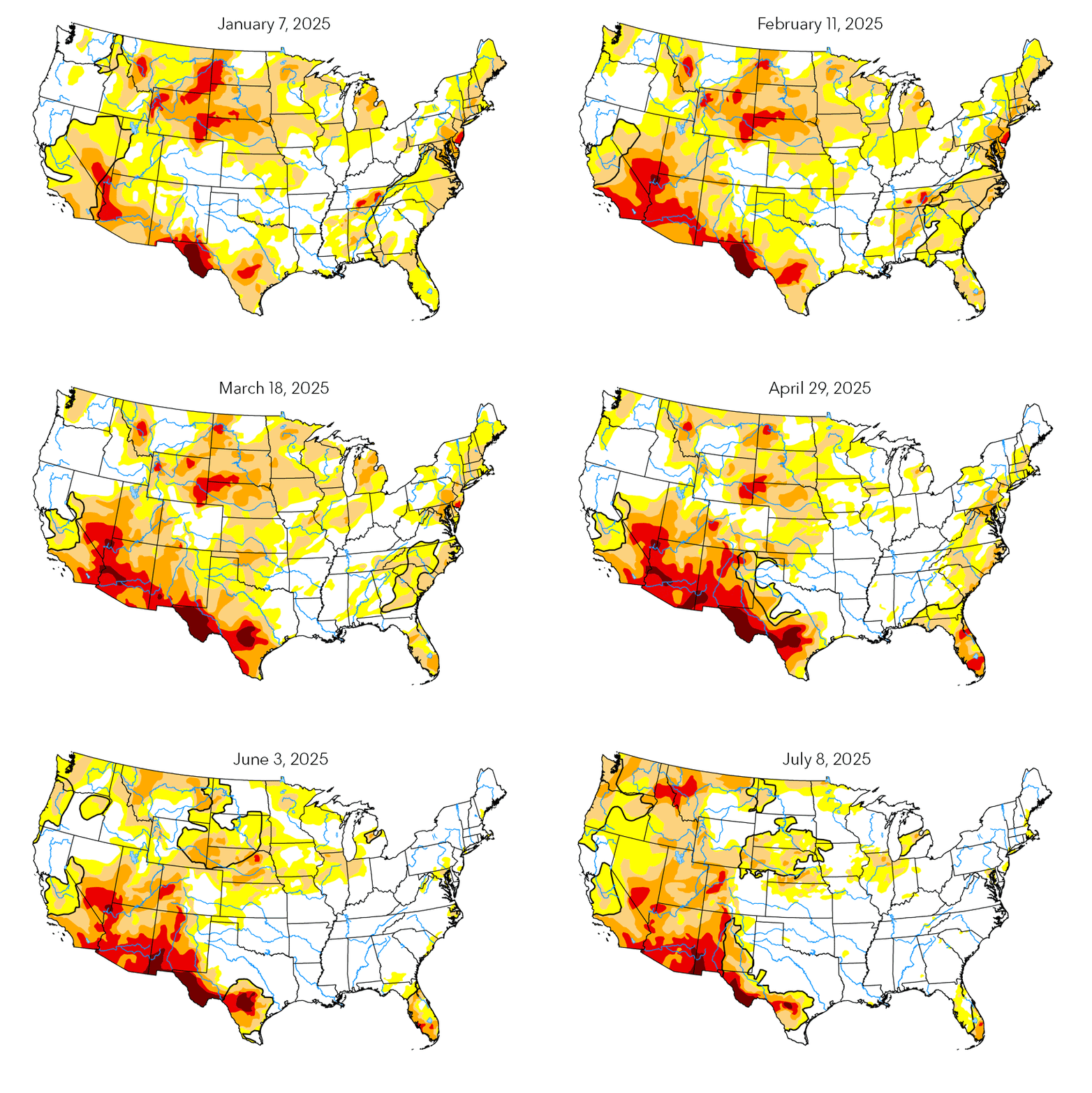
The Eastern Cornbelt experienced slightly cooler temperatures and a drop in humidity during the first full week of September, with an increased chance of precipitation expected by the coming weekend. Parts of Ohio were hit with heavy rain over the Labor Day weekend.
Highs in the low- to mid-80s were reported in central Illinois and Indiana at midweek, but temperatures were expected to drop to the mid-70s by Sept. 11, with showers likely over the weekend in both states. The week began with light showers over much of northern Ohio, but temperatures climbed to the high-70s and low-80s as the week progressed.
The corn crop was 9-11% mature in Illinois and Indiana as of Sept. 4, compared with 5% in Ohio. Corn maturation was trailing the average pace in all three states, and soybeans were also slightly behind the average, with 4-10% of the regional crop dropping leaves by that date.
Some 67-71% of the corn and soybeans in Illinois were rated as good or excellent on Sept. 4, compared with 57-58% in Ohio and 54-56% in Indiana.
“Our crops for the most part are looking really good, we just need some more heat units and sunshine now after 3-5 inches of rain fell over this past weekend and even more rain forecasted again this weekend,” said one Ohio source. “But overall, I think we are looking at some good yields down the road for our crops in my area.”
Western Cornbelt:

Highs in the upper-80s were reported in central Iowa during the week, with forecasts warning of a smoky haze across parts of the state coming from wildfires in the Western US.
Highs across Nebraska soared into the low- to mid-90s as the week progressed, with all of the state experiencing drought conditions ranging from moderate to exceptional. Missouri continued to register temperatures in the upper-80s for most of the week, but rain was in the weekend forecast as a cold front moved into the region.
Good or excellent ratings were assigned to 66% of Iowa’s corn and soybeans on Sept. 4, with 10% of the corn crop described as mature. Nebraska’s corn was 19% mature, with good or excellent ratings assigned to 39-41% of the state’s corn and soybeans. Nebraska’s sorghum remained at 20% good or excellent on Sept. 4, with 62% of the crop rated as poor or very poor.
Missouri’s corn and soybeans were 50% good or excellent, with 31% of the corn described as mature. The state’s cotton crop was 52% good or excellent, while the Missouri rice crop was rated at 55% good or excellent.
California:
Record-setting heat continued to bake much of California during the week, contributing to the spread of nine active wildfires that had consumed 41,600 acres as of Sept. 7. Daily temperature records during the week included 103 in Anaheim, 109 in San Jose, 115 in Stockton, 116 in Sacramento, 117 in Ukiah, and 127 in Death Valley.
Excessive heat warnings were in effect for much of Southern California, along with a high-wind watch for parts of San Bernardino and Riverside counties. A Flex Alert was issued on Sept. 8, marking another request for Californians to conserve power during the extended heat wave. So far, the state’s power grid operator has not resorted to rotating power outages.
Some relief from heat and drought was in the forecast for parts of Southern California late in the week, with rain expected from Tropical Storm Kay as it moves up the coast of Baja California. A flood watch was issued for parts of Riverside and San Bernardino counties, and continues on Sept. 9, with up to 2 inches of rain possible for some mountain communities.
California’s cotton crop was 90% good or excellent as of Sept. 4, with bolls opening on 10% of the acreage. The rice crop was 75% good or excellent on that date.
Pacific Northwest:
Hot, dry weather was reported across the Pacific Northwest in early September, with gusty winds fueling a number of wildfires in the region. Fire weather watches and red flag warnings were posted for much of western Oregon and southwestern Washington on Sept. 9.
The scorching temperatures produced numerous daily heat records during the week, including 90 degrees in Everett, Wash.; 100 in Great Falls, Mont., Idaho Falls, Idaho, and Casper, Wyo.; 108 in Hardin, Mont.; and 112 in St. George, Utah.
Growers were wrapping up the small grains harvest and gearing up for potatoes in the region. As of Sept. 4, the harvest of spring wheat and barley was estimated at 74-78% complete in Idaho, 76-77% in Washington, and 80-87% in Montana.
Western Canada:
Hot weather continued to blanket much of Western Canada, with multiple daily heat records set in Saskatchewan during the first days of the month.
A cold front was in the forecast for parts of Alberta and British Columbia as the week progressed, with temperatures expected to drop into the single digits for the Rockies and foothills late on Sept. 9. Another blast of heat was in store for the coming weekend for southern areas of both provinces, however.
Saskatchewan’s latest crop report pegged the harvest at 42% complete overall, slightly ahead of the 40% five-year average, with average yields estimated at 43 bushels/acre for hard red spring wheat, 30 bushels/acre for durum, 34 bushels/acre for canola and field peas, and 1,174 pounds/acre for lentils.
“Harvest is pretty much wrapped up here, and most yields are mid-level, better than last year but not as good as normal,” commented one source in southern Saskatchewan.
Harvest progress in Manitoba was lagging, however, with just 15% completed overall, well behind the 51% five-year average. The slow progress was attributed to delayed spring seeding, high humidity, and frequent rains, with the precipitation contributing to favorable crop conditions across most of the province.