

Eastern Cornbelt:
Strong thunderstorms tracked across the Eastern Cornbelt on April 4-5, less than a week after a powerful storm system produced more than 20 tornadoes in the region on March 31.
A tornado plowed through Lewistown, Table Grove, and Bryant, Ill., early on April 5, with multiple injuries reported. On April 4, thunderstorms in northern Illinois caused wind and hail damage in the Quad Cities area, with a wind gust of 90 mph reported in Moline, Ill.
Severe thunderstorms also left thousands of residents without power in central Indiana on April 4-5, with the same system producing high winds and torrential rains in parts of central Ohio. Storms in western Michigan on April 4 dropped hail stones as large as tennis balls in some locations.
Despite the severe weather, sources said growers were able to get some fieldwork done before the precipitation. “We’re starting to get some movement of fertilizer, with wheat topdress and preplant applications going down currently, but we are going to get stopped by weather again tomorrow,” said one Ohio contact at midweek.
Western Cornbelt:

Strong storms in Iowa on April 4 sparked reports of multiple tornadoes, including one that caused damage in Pleasantville and another near Lacona. Gov. Kim Reynolds issued a disaster proclamation on April 5 for Marion and Warren counties in response to the severe weather.
Missouri also experienced several storms on April 4-5, including reports of a tornado in Bollinger County that caused injuries and fatalities.
Nebraska saw a mix of rain and snow during the first half of the week, with rain reported in southern areas of the state and snow in northwestern Nebraska. Temperatures in the teens and 20s followed the precipitation, with snowfall totals of nearly 10 inches reported in the far northwestern corner of the state.
Southern Plains:
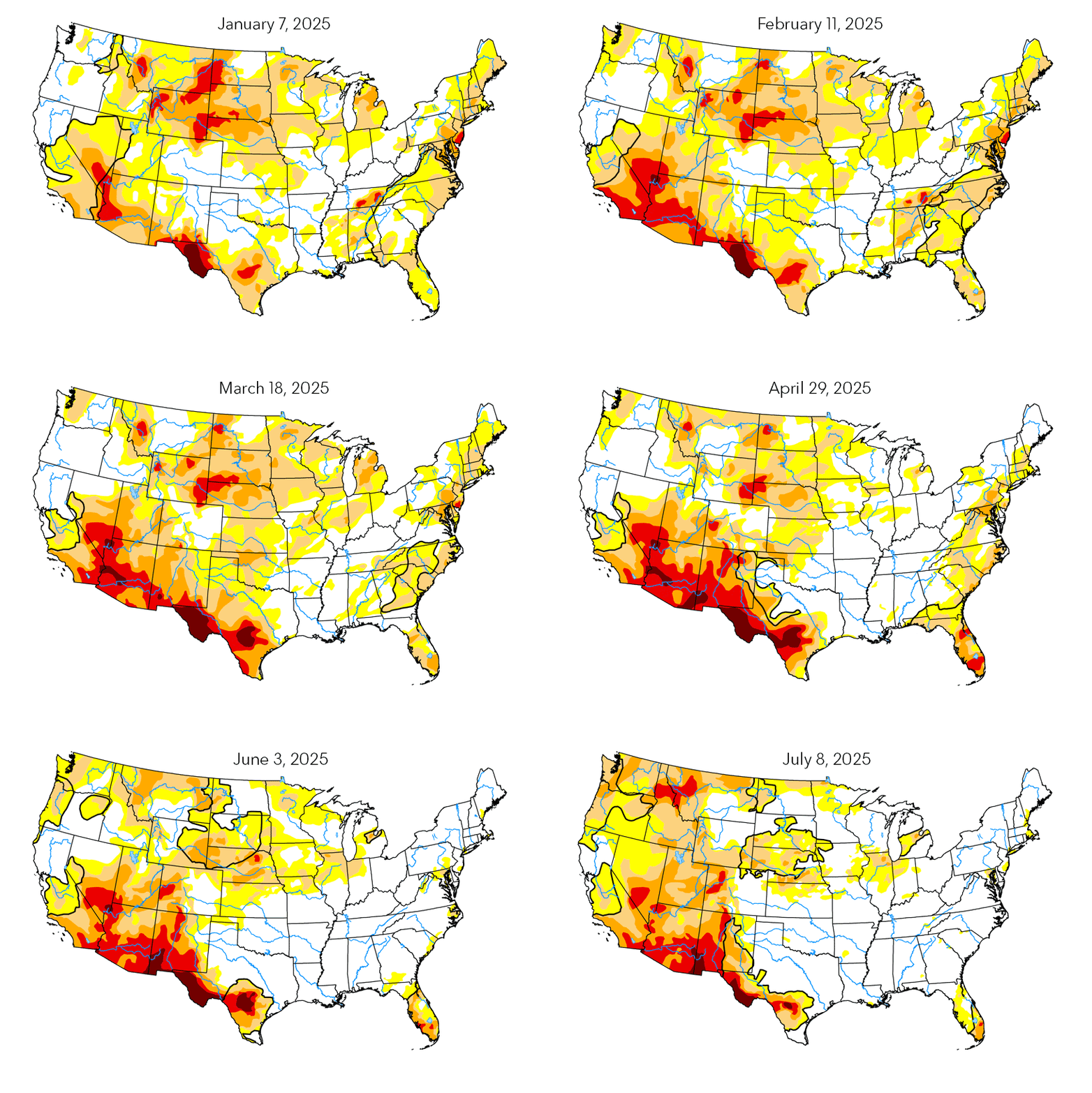
Strong winds were reported across Kansas on April 4, with extreme-to-exceptional drought now covering most of the western half of the state, along with much of northern Oklahoma. Strong thunderstorms churned through parts of eastern Oklahoma on April 4-5, with reports of damaging winds, hail, and spotty tornado activity.
Smaller patches of extreme-to-exceptional drought also covered western Texas in early April, though eastern areas of both Texas and Oklahoma were largely drought-free. Southeastern Texas was bracing for more rain late in the week, with 2-6 inches expected in some locations.
High wind warnings were also in effect for much of New Mexico at midweek, with temperatures expected to reach the 80s by the end of the week.
Corn planting was underway in the region, with USDA estimating progress as of April 2 at 1% complete in Kansas and 57% in Texas. Growers in Texas also had 7% of the cotton and 46% of the sorghum crop planted by that date.
“Corn looks pretty good,” said one Texas contact at midweek. “We are expecting some general rains over the next few days, and those are needed. A few dryland cotton fields have been planted, but the full season irrigated fields are just getting underway. Field conditions are decent, but we are counting on this rain.”
South Central:
Multiple thunderstorms tracked through Arkansas at midweek, bringing heavy rain and gusty winds to some locations. Both the Black River and White River in eastern Arkansas were experiencing minor to moderate flooding during the week.
Steady rains across Middle Tennessee and southern Kentucky prompted a flood watch for several counties in early April. A band of strong thunderstorms also moved through Louisiana during the week, with reports of 2-4 inches of rainfall and wind advisories in effect for some locations.
A State of Emergency was issued for the Mississippi counties of Pontotoc, DeSoto, Tishomingo, Lee, and Tunica on April 4 following the destructive storms that pushed through the state on March 31 and April 1. Jackson, Miss., has reportedly received nearly five inches of rain since mid-March.
Growers in Tennessee and Kentucky had 1-2% of the corn crop planted by April 2, USDA reported, while rice planting in the region had progressed to 1% complete in Mississippi, 5% in Arkansas, 35% in Texas, and 68% in Louisiana.
Southeast:
North Carolina was bracing for potentially severe thunderstorms late in the week, with forecasts warning of damaging winds, hail, and heavy rain on April 6-7 for parts of the state. Heavy rain was also tracking through parts of Georgia. Atlanta reported a total of 3.74 inches since mid-March, 121% of its historical average for that time period.
Weekend thunderstorms were also expected in Virginia, South Carolina, and Alabama, where highs in the 80s were posted at midweek. Strong-to-severe storms were in the April 6-7 forecast for much of the Mid-Atlantic region as well, with much cooler temperatures expected behind the precipitation.
Drought conditions were worsening in Florida in early April, though some parts of the state were expecting showers over the Easter weekend.
Sources reported brisk movement of preplant fertilizer on corn in the region, with one source estimating corn planting at 35-40% complete in his trade area. “Cotton has fallen in price, so corn is the crop of choice,” said one regional contact. Growers will start on tobacco and soybeans soon.