

Eastern Cornbelt:
High heat and humidity continued to blanket much of Illinois and Indiana at the start of the week, with highs in the low- to mid-90s. Temperatures moderated to the upper-70s and 80s as the week progressed, however, with air quality alerts posted in both states due to a smoky haze from wildfires in Canada.
Dry and hazy weather was reported in Ohio as well, with highs staying in the upper-60s and 70s during the week. A chance of rain was in the weekend forecast for parts of Ohio and Michigan.
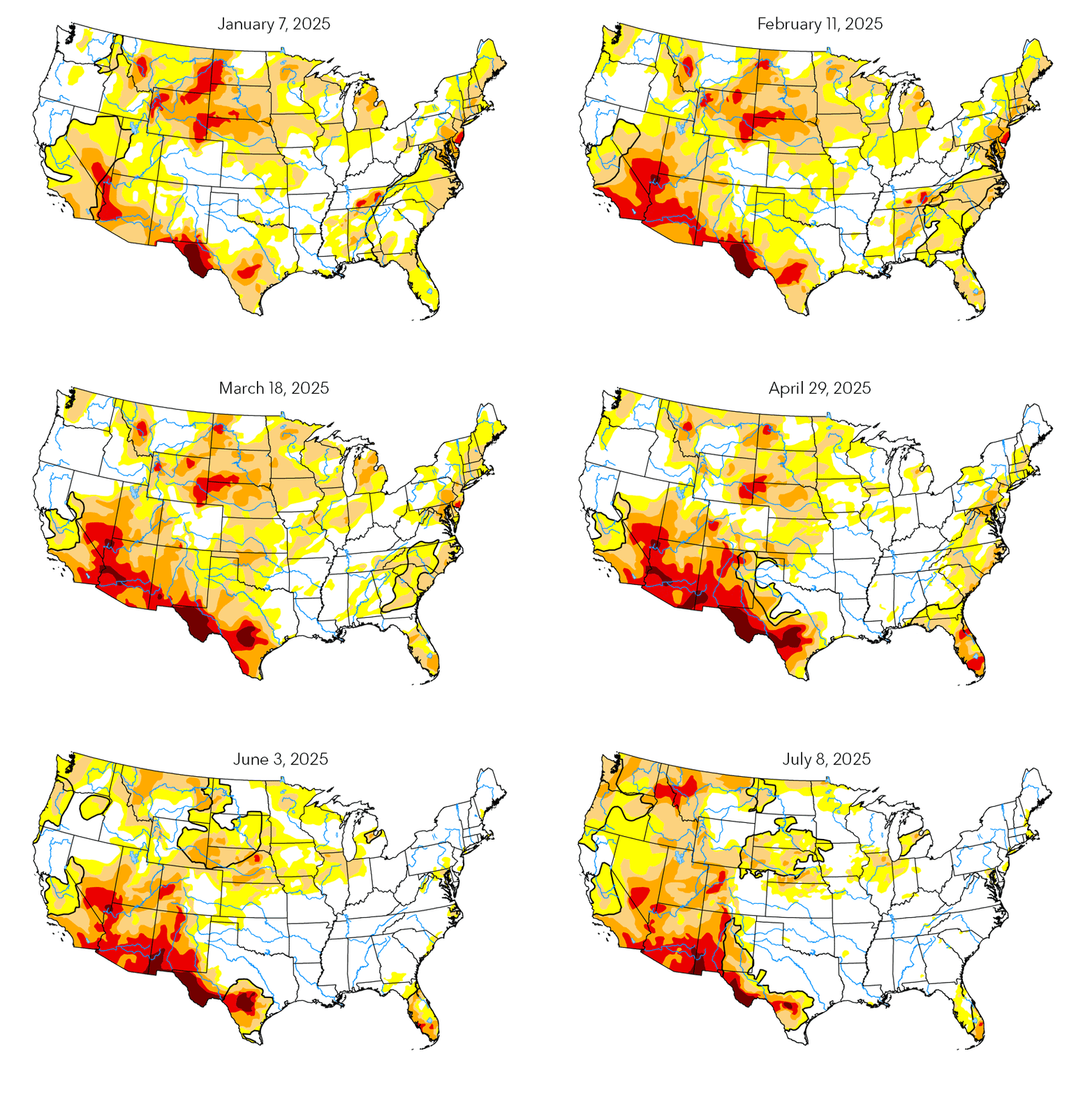
Nearly all of the Eastern Cornbelt is now experiencing some form of drought, with conditions ranging from abnormally dry to moderate as of June 8. “We have had no measurable rain since May 20,” said one Ohio contact. “We are going to need rain real soon or we are looking at yield damage starting.”
Planting of corn and soybeans continued to track ahead of the average pace in the Eastern Cornbelt and Great Lakes region. Corn planting as of June 4 was 97% complete in Indiana, 96% in Illinois, 95% in Ohio, and 91% in Michigan, while soybean planting had progressed to 96% complete in Illinois, 95% in Indiana, 94% in Ohio, and 92% in Michigan.
Western Cornbelt:

Scattered showers and cooler temperatures were reported across Iowa during the week, with highs topping out at around 80 degrees. A cold front also brought showers and thunderstorms to Nebraska as the week progressed, with highs ranging from the mid-70s to low-80s across the state.
Drought remained entrenched throughout Nebraska in early June, with conditions worsening in Missouri as well. Most of central and eastern Nebraska was experiencing drought conditions ranging from severe to exceptional, with the northern half of Missouri labeled as a moderate-to-extreme drought area.
Planting continued to track ahead of the average pace for corn, soybeans, and cotton in the Western Cornbelt. Corn planting as of June 4 was 97-100% in the region, with soybeans rated at 91% in Missouri, 96% in Nebraska, and 98% in Iowa. Missouri had 96% of the cotton crop planted by that date, while sorghum planting in Nebraska lagged at 51% complete.
Southern Plains:
Despite sporadic afternoon showers and an increased chance of precipitation over the coming weekend, a broad swath of southeastern, central, and northwestern Kansas remained in extreme-to-exceptional drought in early June.
The western half of Oklahoma was also locked in drought ranging from moderate to extreme, with similar conditions reported across much of western Texas and eastern New Mexico. Most of eastern Texas, by contrast, continued to experience frequent showers and remained drought-free during the week.
Corn planting as of June 4 was 91-94% complete in Colorado, Kansas, and Texas, with soybeans estimated at 80% planted in Kansas. The cotton crop was 69% planted in Kansas by that date, compared with 60% in Texas and 46% in Oklahoma, while sorghum planting had progressed to 85% complete in Texas, 32% in Oklahoma, 38% in Colorado, and 21% in Kansas.
Winter wheat conditions across the region continued to show the effects of drought, with poor or very poor ratings assigned to 65% of the acreage in Kansas, 37% in Texas, 30% in Colorado, and 26% in Oklahoma. Wheat rated as good or excellent totaled 43% of Colorado’s crop, 37% in Oklahoma, 29% in Texas, and just 12% in Kansas.
South Central:
Dry weather and temperatures in the 80s were common across Arkansas and Tennessee during the week, but forecasts warned of potentially severe thunderstorms across northern Arkansas by the weekend. Scattered showers at midweek pushed highs down to the 60s and 70s in southern Kentucky.
Heavy rain on June 6 prompted a flash flood warning across parts of southeastern Louisiana, with some areas reporting more than two inches of precipitation per hour.
Corn planting as of June 4 was 97-98% complete in Tennessee and Kentucky, with soybean planting estimated at 96% complete in Louisiana, 94% in Arkansas, 93% in Mississippi, 80% in Kentucky, and 76% in Tennessee. Arkansas growers had all of the cotton planted by June 4, compared with 98% in Louisiana, 96% in Tennessee, and 89% in Mississippi.
Southeast:
A smoky haze from wildfires in eastern Canada affected air quality as far south as Virginia and North Carolina during the week. The smoke also drifted into Alabama, though isolated showers at midweek helped clear the air in some locations.
Spotty showers and temperatures in the 80s were common across Georgia. Central Florida saw wild storms at midweek, with an EF-1 tornado confirmed late on June 7 in Brevard County. Some 40-50 homes were damaged by the tornado, with power outages reported as well.
Cotton planting as of June 4 was 94% complete in Virginia, 90% in Alabama, 83% in Georgia, and 81% in the Carolinas. North Carolina growers also had 73% of the soybeans and 100% of the corn seeded by that date, while peanut planting had progressed to 91-92% complete in Florida and Virginia, 89-90% in the Carolinas, 88% in Georgia, and 85% in Alabama.