

Eastern Cornbelt:
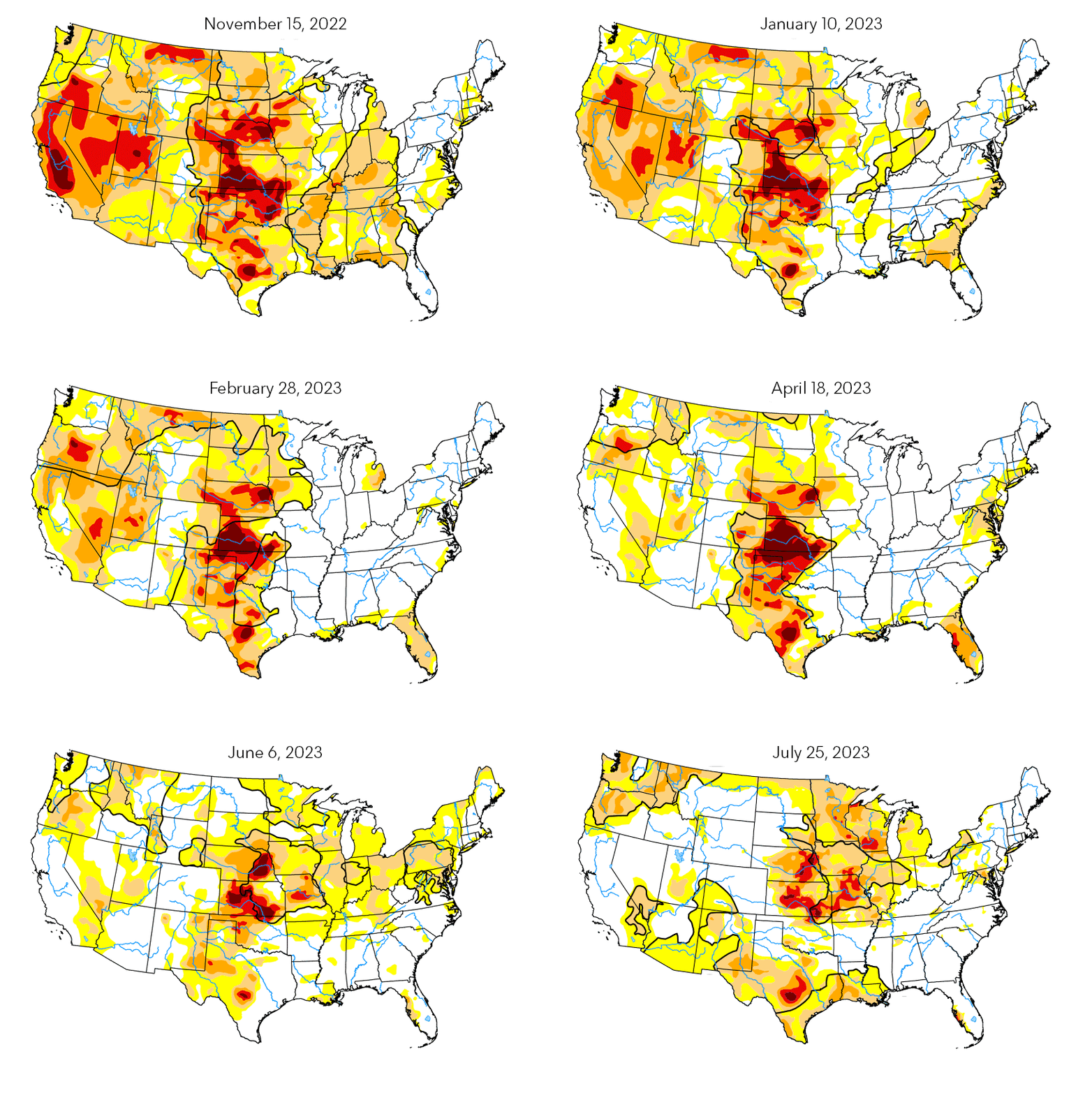
A heat wave blanketed much of the Eastern Cornbelt during the week, prompting heat advisories in all three states.
Highs in central Illinois and central Indiana climbed to the mid-90s as the week progressed, with high humidity pushing the heat index to 100-115. Sweltering temperatures in Ohio and southern Michigan sparked severe thunderstorms at midweek, leaving 200,000 Michigan customers without power due to strong winds and locally heavy rainfall.
In terms of crop quality, Ohio remained the region’s garden spot in late July, with 63-68% of the state’s corn and soybeans rated as good or excellent, compared with 59-61% in Indiana and 44-45% in drought-stressed Illinois. Drought has also taken a toll in Michigan, where good or excellent ratings were assigned to just 33-39% of the state’s corn and soybeans.
Western Cornbelt:
Excessive heat was reported across the entire Western Cornbelt region during the week. All of Iowa was under a heat advisory as the week progressed, with temperatures reaching the upper-90s and heat index values soaring to 110 in many locations.
Similar conditions were reported in Nebraska, with most of the state seeing highs around 100 and heat index readings in the 105-113 range. Heat advisories were in effect for most of central and northern Missouri as well, with heat index values climbing to 108 on July 26-28.
Crop conditions continued to deteriorate in Missouri due to drought, with just 27% of the state’s corn and soybeans rated as good or excellent on July 23, compared with 56-63% in Iowa and Nebraska. Cotton and rice crops in Missouri were much better at 76-79% good or excellent, while 63% of Nebraska’s sorghum fell into those two categories.
California:
Extreme heat continued to grip parts of Southern California and the Southwest in late July, with highs in Death Valley climbing above 122 for several days. Phoenix, Ariz., also notched a record with 19 consecutive days above 110 degrees. Milder temperatures moved into Northern California for the week, with highs topping out in the low-90s.
California’s cotton was 95% good or excellent on July 23, with 25% of the crop setting bolls, well behind the 38% five-year average. California’s rice crop was 20% headed by that date, with fully 100% of the acreage rated as good or excellent.
Pacific Northwest:
Red flag fire warnings were in effect across the Pacific Northwest in late July due to dry conditions, high heat, and afternoon winds. Washington on July 24 declared a drought emergency in parts of 12 counties. Highs in the upper-90s were reported in southern Idaho as the week progressed.
The winter wheat harvest had progressed to 44% complete in Oregon by July 23, compared with 20% in Washington, 12% in Idaho, and 2% in Montana. USDA placed 63-77% of Idaho’s spring wheat and barley crops in the good or excellent categories, well ahead of Washington’s 40-50% and Montana’s 35-38%.
Western Canada:
High heat sparked several strong storms across Western Canada during the week, including one that dropped 1-2 inches of rain in parts of southern Manitoba on July 24. Tornado watches were in effect for a swath of Manitoba again on July 26, while parts of central Alberta were hit with heavy rain, lightning, and damaging winds on July 24.
Record-high temperatures were notched in several Saskatchewan communities at midweek, with highs reaching the mid-30s C.
The week’s spotty precipitation helped crop conditions in some areas, though drought continued to take a toll in southern and central Alberta and western Saskatchewan. Conditions were better in eastern Saskatchewan and Manitoba, but growers expect yields to take a hit even in those areas, particularly for durum and lentils.