All posts by hlancey@bloomberg.net

Ammonium Polyphosphate

Eastern Cornbelt:

10-34-0 remained at $525-$545/st FOB in the Eastern Cornbelt, with the low for prompt tons and the high for prepay offers.

Western Cornbelt:

The 10-34-0 market was steady at $520-$550/st FOB in the Western Cornbelt, depending on location and time of shipment, with the high confirmed in Iowa.

Northern Plains:

The 10-34-0 market firmed to $525-$530/st FOB in the Northern Plains.

Great Lakes:

10-34-0 pricing remained at $525-$545/st FOB in the Great Lakes region.

Northeast:

The 10-34-0 market was unchanged at $530/st FOB in New York in late January.

Muriate of Potash

US Gulf:

The NOLA potash market slipped slightly, to $315-$325/st FOB from last week’s $320-$325/st FOB range, with the low reported for prompt trades of imported tons.

Eastern Cornbelt:

Potash was quoted at $365-$395/st FOB in the Eastern Cornbelt, depending on location and time of shipment, with the low confirmed for 60% red MOP out of spot Illinois River terminals for January-February tons. The Cincinnati market was pegged at the $375-$380/st FOB level for January-February.

The order period for 1Q potash fill tons at the $385/st FOB level in the Midwest reportedly closed on Jan. 19-23, depending on supplier, with new postings up $30/st for 2Q shipments.

Western Cornbelt:

Potash was steady at $360-$390/st FOB in the Western Cornbelt, with the St. Louis market quoted at $360-$370/st FOB.

Northern Plains:

Potash was steady at $385-$410/st FOB in the Northern Plains, with delivered tons reported at the $400/st level. The latest prices FOB Saskatchewan mines were quoted at $363-$367/st FOB, depending on grade.

Great Lakes:

Potash pricing in the Great Lakes region ranged broadly at $380-$423/st FOB, depending on location, with most Michigan warehouses quoted at the $415/st FOB level for red and $423/st FOB for white MOP.

Northeast:

Potash pricing in the Northeast was pegged at $355-$380/st FOB, up $20/st from last report, with the low confirmed at Baltimore and the high at East Liverpool. No current prices were reported at Fairless Hills in late January.

Eastern Canada:

After slipping to the C$580/mt FOB level for 1Q fill offers at mid-month, potash prices in Eastern Canada were reportedly up C$45/mt, moving to C$625/mt FOB for 2Q business. “There was quite a bit of business done on this program,” reported one regional contact.

China:

China imported 11.7 million mtof potash in 2023, Trade Data Monitor reported, a 46% increase on the year-ago 8 million mt. Belarus sent 29% of the tonnage with 3.4 million mt, while Russia sent 3 million mt and Canada added 2 million mt. December imports nearly doubled, to 1.3 million mt from 644,000 mt in December 2022. Russia, Belarus, and Canada were each responsible for about 25% of the month’s imports.

Brazil:

Potash prices in Brazil continued their retreat, softening $5/mt at the bottom of the range to $285-$300/mt CFR, while lower pricing was reported inland. Despite reports of healthy demand and steady deliveries, oversized inventories are keeping pressure on the market, sources said.

Increased aggressiveness from potash producers dragged Rondonópolis levels as low as $405-$410/mt FOB this week, while unconfirmed small-lot trades rumored below that level hinted at further softening ahead. Prices at the top end remained unchanged at $435-$440/mt FOB, however, leaving the market at a wide $405-$440/mt FOB ex-warehouse for the week.

Sulfur

Tampa:

First-quarter Tampa molten sulfur contracts settled at $69/lt CFR, a $33/lt drop from $102/lt CFR in the fourth quarter.

US Gulf:

The US Gulf export market remained at $60-$65/mt FOB for the week, with players noting fresh length in the market due to fertilizer production issues.

Brazil:

Brazil sulfur prices continued at $91-$95/mt CFR, unchanged from last week.

Vancouver:   

Vancouver solid sulfur pricing held steady at the week-ago $62-$66/mt FOB level.

Alberta:

Alberta netbacks continued at (-)$46-(-)$1/mt FOB, with both molten sulfur cargoes contracted into the US market and solid tons sold through the Vancouver export market represented in the wide range.

West Coast:

West Coast prills continued in line with Vancouver at $62-$66/mt FOB. Fourth-quarter molten contracts were reported at $50-$55/lt FOB.

China:

Sulfur cargoes imported to China continued in the $90-$95/mt CFR range, players said, steady from the prior report.

ADNOC:

Abu Dhabi National Oil Co. (ADNOC) sulfur was posted at $77/mt FOB Ruwais for January loading, an 11.5% decline from $87/mt FOB in December.

Qatar:

Muntajat offers for January were reported at $74/mt FOB Ras Laffan, down 12.9% from December’s $85/mt FOB offer.

Ammoium Thiosulfate

Eastern Cornbelt:

The ammonium thiosulfate market was unchanged at $255-$270/st FOB in the Eastern Cornbelt, with the low confirmed at Cincinnati and the high at Terre Haute, Ind.

Western Cornbelt:

Ammonium thiosulfate remained at $250-$260/st FOB in the Western Cornbelt, with the low reported at Waterloo, Iowa.

Great Lakes:

The ammonium thiosulfate market remained at $285-$300/st FOB for the last offers in the Great Lakes region.

Eastern Canada:

The ammonium thiosulfate market remained in a broad range at C$455-$545/mt FOB in Eastern Canada, down C$10/mt from last report at the low end of the range.

Crops/Weather

Eastern Cornbelt:

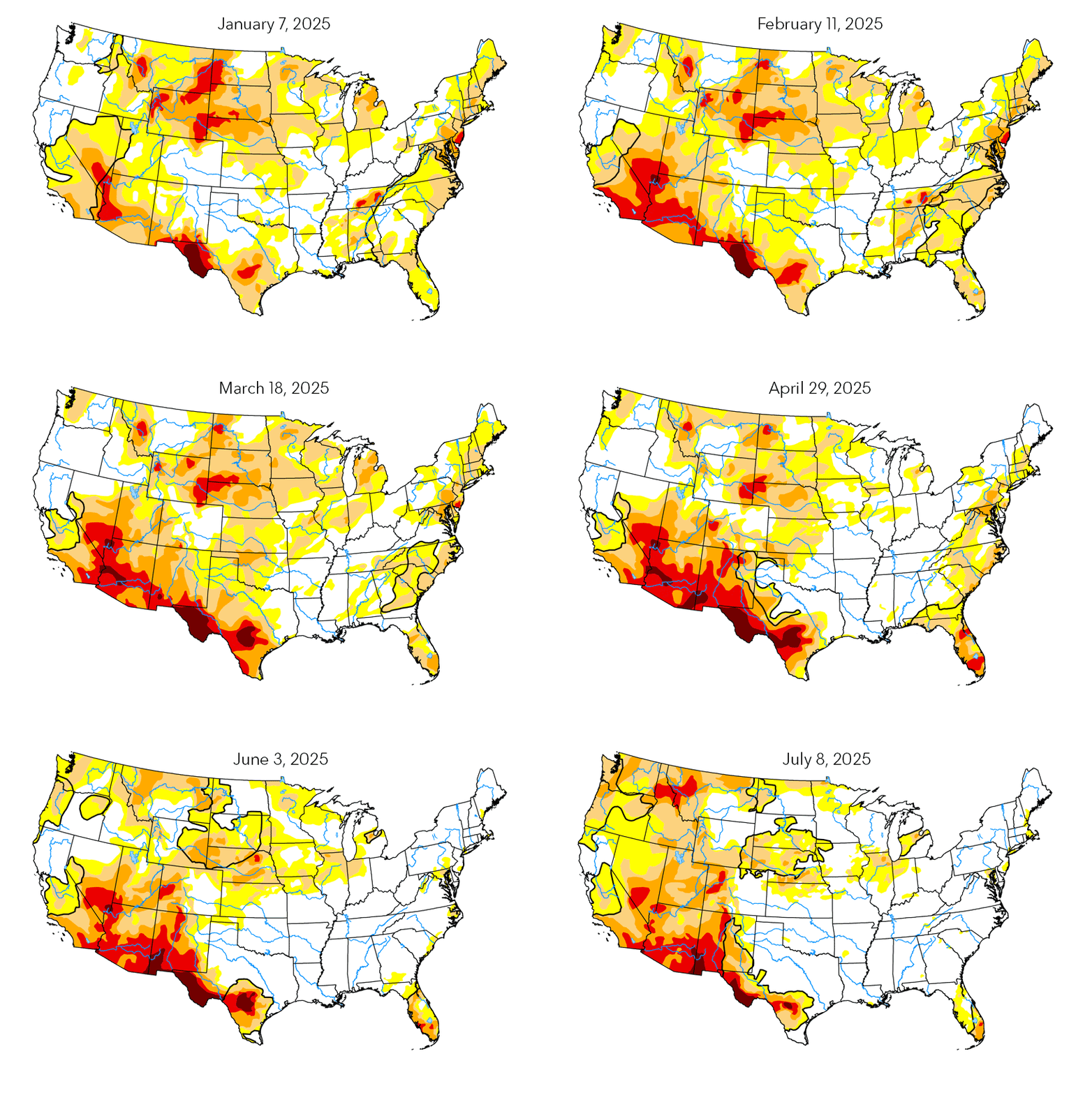
US Drought Monitor

Warmer temperatures brought freezing rain to central and northern Illinois during the week, with multiple road accidents and school closures reported across central Illinois on Jan. 22. Freezing rain and dense fog were also reported in northern Ohio early in the week.

Similar conditions were reported in central and northern Indiana, with periods of freezing rain and fog early in the week and high temperatures tracking in the upper-40s and 50s by the end of the week, about 20 degrees above average for this time of year. Scattered showers were expected across southern Indiana as the week progressed.

Western Cornbelt:

Temperatures rose above the freezing mark across much of Iowa and Nebraska during the week, a stark contrast to the prior week’s arctic blast. Temperatures in the mid- to upper-30s were common in both states at midweek, but highs were expected to reach the 40s and even 50s in some locations by the weekend.

The mild weather was accompanied by rain and fog as the week progressed, with some areas seeing moderate-to-heavy rainfall, particularly in northern areas of both states.

Mild temperatures were also reported in central and northern Missouri during the week, along with freezing rain that created treacherous road conditions, particularly in the Kansas City area on Jan. 22.

Northern Plains:

Corn Wheat Soybean Index

Dense fog advisories were posted for central and eastern South Dakota at midweek as warmer temperatures moved into the Northern Plains. Icy roads and fog were also reported across central and southern Minnesota during the week, with highs reaching the upper-20s in northern Minnesota and mid-30s in central and southern areas of the state.

Great Lakes:

A winter weather advisory was in effect for 38 Michigan counties early in the week, with forecasts warning of a wintry mix of snow and freezing rain across the southern half of Lower Michigan. A winter weather advisory was also posted for most of southeastern Wisconsin on Jan. 23 due to a mix of snow, freezing rain, and fog.

Northeast:

A mix of rain, freezing rain, and snow was reported across New England as the week progressed. While parts of Vermont were bracing for up to a quarter-inch of ice by Jan. 26, northern Maine was expecting 4-6 inches of snowfall, with southern New England experiencing mostly rain and temperatures in the mid-30s to low-40s.

Temperatures across Pennsylvania and much of the Mid-Atlantic were expected to reach the mid-50s by the weekend, with up to an inch of rain possible in some locations. Flood advisories were in effect for certain rivers and streams in Pennsylvania as the week progressed.

Eastern Canada:

Multiple rounds of freezing rain were reported in eastern Ontario and southern Quebec during the week, with 5-15 cm of snowfall expected in Trois-Rivieres and Quebec City. The Maritimes also experienced a mix of winter precipitation, with 10-30 mm of rain and up to 15-25 cm of snow reported in some locations.