All posts by hlancey@bloomberg.net

Sulfur

Tampa:

Second-quarter Tampa molten sulfur contracts were noted at $81/lt CFR, a 17.4% increase from $69/lt CFR in the first quarter.

US Gulf:

The US Gulf sulfur market firmed to $90-$95/mt FOB on new business into Brazil, players said.

Brazil:

Sulfur prices lifted to $118-$120/mt CFR in Brazil, an $8-$9/mt increase from last week’s $110-$111/mt CFR range.

Vancouver:   

The Vancouver prilled market continued at $74-$77/mt FOB, unchanged from one week earlier.

Alberta:

Alberta sulfur netbacks were estimated at (-)$34-$11/mt FOB. Molten cargoes contracted into the US market set both the high and low, while solid tons sold through the Vancouver export market tracked toward the higher side of the range.

West Coast:

West Coast prills remained in step with Vancouver at $74-$77/mt FOB. Second-quarter molten contracts were valued at $60-$62/lt FOB, up from $50-$55/lt FOB in the first quarter.

China:

China solid sulfur prices were unchanged at the week-ago $105-$107/mt CFR level, with sources attributing the market’s continued weakness to a mix of reduced phosphate production rates and high sulfur inventories at ports.

ADNOC:

Abu Dhabi National Oil Co. (ADNOC) sulfur was posted at $87/mt FOB Ruwais for May lifting, a 2.4% increase from $85/mt FOB in April.

Qatar:

Muntajat offers for May were reported at $86/mt FOB Ras Laffan, up 3.6% from April’s $83/mt FOB posting.

Ammonium Thiosulfate

Eastern Cornbelt:

The ammonium thiosulfate market in the Eastern Cornbelt was steady at $285-$310/st FOB, with the low in Illinois and the high at Cincinnati.

Western Cornbelt:

Ammonium thiosulfate remained at $285-$300/st FOB in the Western Cornbelt, depending on location.

Southern Plains:

Ammonium thiosulfate prices were quoted at $245-$250/st FOB for the latest prompt offers in the Southern Plains.

South Central:

Ammonium thiosulfate was pegged at $280-$285/st FOB Memphis in mid-May.

CAN

Germany:

Yara on May 13 issued a new CAN price for Germany at €250/mt CIF for June. Offers at €255/mt CIF were still circulating from other domestic suppliers, however, resulting in a weekly range of €250-€255/mt CIF. Demand remains limited to truckloads.

Crops/Weather

Eastern Cornbelt:

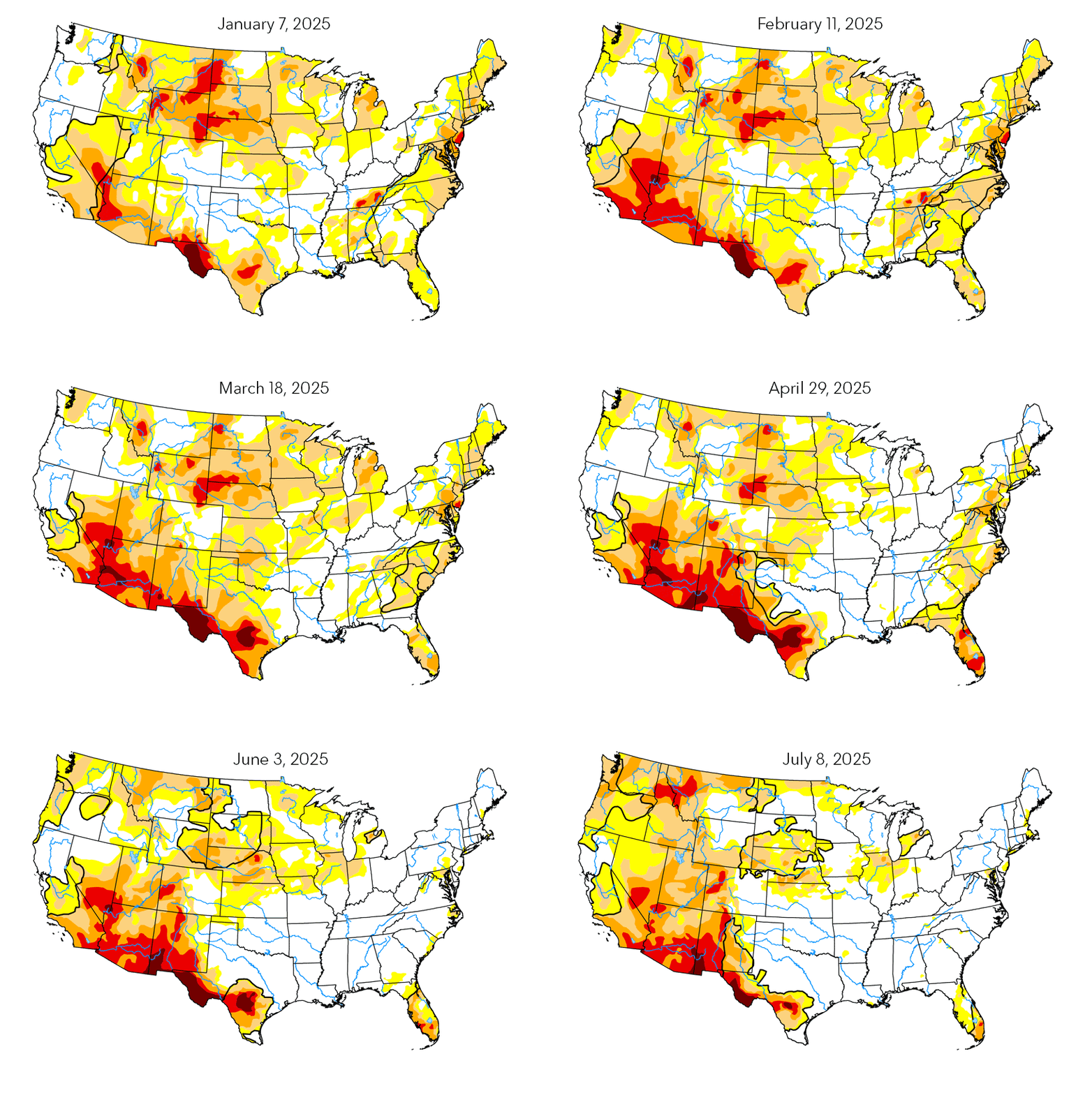
US Drought Monitor

Scattered showers were reported in Illinois during the week, limiting fieldwork in many areas. Another round of storms was expected in northern Illinois on May 16-17.

Indiana and Ohio received a needed break from steady rainfall at midweek, with temperatures climbing to the 70s and low-80s. While scattered showers were once again in the forecast late on May 16 for both states, sources said the coming weekend looked relatively dry, sparking hopes that spring planting would once again shift into high gear.

Corn planting as of May 12 was 42% complete in Illinois and 36% in Indiana and Ohio, with both Illinois and Indiana trailing their five-year averages. Soybean planting was estimated at 39% complete in Illinois, 34% in Indiana, and 27% in Ohio by that date.

Western Cornbelt:

The week got off to a wet start again in Iowa, with most areas reportedly seeing a half-inch or less of precipitation. Highs across the state were expected to reach the mid-80s by the end of the week.

Most of Nebraska enjoyed dry weather during the week, with highs climbing well into the 80s as the week progressed. Forecasts warned of potentially strong storms across central Nebraska over the weekend, however. Rain showers were also tracking though parts of Missouri late in the week.

Corn planting as of May 12 was 72% complete in Missouri, 57% in Iowa, and 55% in Nebraska, while soybean planting had progressed to 36-39% complete the region. Iowa and Nebraska were trailing the average pace for both crops, while Missouri was tracking ahead of average.

Missouri growers also had 87% of the rice and 63% of the cotton planted by May 12, with both tracking ahead of the average pace. Sorghum planting in Nebraska was just 5% complete by that date.

Southern Plains:

Corn Wheat Soybean Index

Strong thunderstorms moved through parts of Kansas at midweek, packing 60 mph winds, large hail, and 1-2 inches of rainfall. Severe storms were also reported in Oklahoma early on May 16, with reports of very strong winds that did considerable damage in Oklahoma City. More rain was expected in parts of Oklahoma late in the week.

Texas was also bracing for severe weather on May 16, with forecasts warning of large hail, damaging winds, heavy rain, and possible tornadoes and flash floods, particularly across central and eastern areas of the state. Scattered showers and thunderstorms were in New Mexico’s May 16 forecast as well.

Kansas growers had 33% of the soybeans and 61% of the corn planted by May 12, while corn planting elsewhere in the region was rated at 80% complete in Texas and 33% in Colorado. Cotton planting was 28% complete in Texas, 18% in Kansas, and 12% in Oklahoma, with sorghum planting rated at 74% complete in Texas, 22% in Oklahoma, 7% in Kansas, and 1% in Colorado.

Wheat conditions varied widely across the region due to drought, with good or excellent ratings assigned to 52-53% of the acreage in Oklahoma and Colorado, 42% in Texas, and just 31% in Kansas. “I’ve seen wheat fields dying, but drive a couple hundred miles and there might be record yields in wheat,” said one Kansas contact.

South Central:

Strong thunderstorms moved through Arkansas, Middle Tennessee, and southern Kentucky early in the week, but dry weather and high temperatures returned as the week progressed, with highs in the 90s possible by the coming weekend.

Tennessee was hit with multiple tornadoes on May 8, causing at least two deaths, widespread power outages, and a wide swath of damage. Another line of storms moved across Louisiana on May 13, sparking at least three tornadoes that left thousands without power. Forecasts warned of damaging winds, large hail, and possible tornadoes in Mississippi at midweek as well.

Planting was advancing rapidly in the South Central region, with rice, soybeans, and cotton seeding all tracking ahead of the average pace. Soybean planting as of May 12 was 79% complete in Mississippi, 76% in Arkansas, 69% in Louisiana, and 40-46% in Kentucky and Louisiana, with corn planting estimated at 73% complete in Tennessee and 58% in Kentucky.

Cotton planting had progressed to 52-54% complete in Louisiana and Mississippi, 48% in Arkansas, and 28% in Tennessee, while rice planting was nearly complete at 97% in Louisiana, 95% in Texas, 94% in Arkansas, and 84% in Mississippi.

Southeast:

Strong storms churned through the Southeast on May 14, spawning four tornadoes in North Carolina and prompting tornado watches in parts of Georgia and Florida.Virginia was also bracing for thunderstorms on May 16, while Alabama was expecting severe weather on May 17-18, with forecasts warning of potentially heavy rain, flash floods, and damaging winds.

Wet conditions continued to delay planting in some parts of the Southeast. North Carolina growers had 95% of the corn and 40% of the soybeans planted by May 12, while cotton planting had progressed to 34-35% in North Carolina and Georgia, 39% in South Carolina, 42% in Alabama, and 54% in Virginia.

Peanut planting as of May 12 was estimated at 30% complete in Alabama, 42% in Georgia and North Carolina, 50% in South Carolina, 55% in Florida, and 62% in Virginia.

Transportation

US Gulf:

Lengthy delays continued at Industrial Lock during the week due in part to an ongoing shutdown at Demopolis Lock, on the Warrior-Tombigbee Waterway. Wait times peaked around the 73-hour mark on May 12-15, according to Corps data, down from the maximum four-day delays reported previously, and locking was completely unavailable for six hours on May 15. Repairs at Demopolis Lock are expected to conclude by May 22.

Bayou Boeuf Lock repairs are set to begin in late May and run for approximately 30 days, blocking weekday travel from 7 a.m. to 6 p.m. Two full closures expected during the project will completely shut the site for 83 hours at a time.

Repairs at Brazos Lock scheduled to run through October halted Monday-Friday transits between 7 a.m. and 7 p.m. Corps data showed varied delays during the week, with some vessels waiting close to 10 days to pass while others were delayed by five hours or less. While only four vessels were officially queued to lock through the site on May 16, sources reported more than 70 unregistered tows awaiting passage on May 15.

High water levels and fast flows on the San Jacinto River in the Houston, Texas, area were reported slowing travels and forcing dock shutdowns. The resulting delays were said to lessen as the week wore on, though backups reportedly continued in the 12-24 hour range on May 13-16.

Guidewall repairs in progress through Oct. 30 at Bayou Sorrel Lock blocked weekday travel from 7 a.m. to 4 p.m. Delays were noted in the 5-11 hour range, down from 10-27 hours at last report. Calcasieu Lock is scheduled for repairs on May 13-31, shutting the site to weekday travel from 6 a.m. to 6 p.m.

Port Allen Lock delays were reported up to 20 hours, and intermittent Calcasieu Lock waits ran up to 13 hours. Corps data showed sporadic 7-31 hour delays at Colorado Lock.

Mississippi River:

Continued fast flows and high water levels prompted ongoing towing restrictions on the Mississippi River, sources said. Barge counts were reduced by 20% at the upper river’s Miles 1-200, sources said, while some tows were voluntarily limiting travel to daylight hours due to the hazardous conditions.

Sources put maximum St. Louis loading drafts at 9.5 feet for tows traveling northbound, while southbound drafts topped out at 10.5 feet. Depths were on the decline at St. Louis during the week. The area’s river gauge showed levels at 25.8 feet on May 16 after falling below the 28-foot action stage on May 12.

On the lower river, tow lengths were reduced by varying amounts based on location and vessel horsepower, sources said, resulting in 2-3 day delays on average. Waters were rising on the lower river, with the Vicksburg, Miss., gauge posted at an action-stage 38.4 feet and rising at midweek, while levels at Baton Rouge, La., stood at an action-stage 31.8 feet and moving higher on May 16. Both Vicksburg and Baton Rouge were under a flood watch through May 18.

Dredging underway at Mile 107 is scheduled to run through May 26. Corps data showed a handful of 5-7 hour delays at Mel Price Lock on May 16.

Illinois River:

Loading draft limits were reported at 10 feet below Mile 160 in both the northbound and southbound directions. Drafts fell to 9.5 feet at Miles 160-231 and nine feet above Mile 231.

Marseilles Lock delays were posted up to 5.5 hours during the week. Wickets were down at Peoria Lock and LaGrange Lock, allowing lockless travel through both locations.

Ohio River:

Sources continued to note draft reductions in the 10-15% range, equating to maximum 10-11.5 foot drafts, depending on location and direction of travel. Tow lengths topped out at 15 barges in both directions.

The main chamber at Willow Island Lock was scheduled to return from repairs and maintenance on May 15, ending the need for detours through the site’s auxiliary chamber. Residual delays were posted up to seven hours on May 16, falling from 20 hours at last report.

Repair operations in progress at Cannelton Lock and Markland Lock were projected to slow travel at both sites through June 7, though minimal delays were again reported during the week. Markland Lock will shut once more on June 10-28 for miter gate repairs, with delays expected.

Racine Lock machinery work is scheduled for June 1 through July 11. Miter gate repairs will slow navigation at Hannibal Lock from June 15 to Nov. 7, though players expected intermittent 12-hour delays for concrete pours in the weeks leading up to the project.

The primary and secondary chambers at Belleville Lock will close for 30 days apiece during the second half of the year. John T. Myers Lock will see a main chamber outage from Aug. 21 through Nov. 9, sources noted. A similar closure in October 2023 resulted in delays of up to four days.

Wait times topped out around the seven-hour mark at the Tennessee River’s Kentucky Lock. Vessels waited up to nine hours to pass Wilson Lock.

Arkansas River:

Vessel stoppages and dock shutdowns continued during the week due to high flows. While sources reported limited movements returning by midweek, full-scale operations were not expected to resume until May 18 at the earliest.

The Van Buren Bridge, at Mile 300.8 of the Arkansas River, will shut for repairs on Aug. 16-Sept. 8. Queued vessels will be cleared to pass following the ninth day of work, sources said.