All posts by mickeybarb@charter.net

Ammonium Thiosulfate

Eastern Cornbelt:

Ammonium thiosulfate pricing was steady at $400-$450/st FOB in the Eastern Cornbelt, depending on location.

Western Cornbelt:

Ammonium thiosulfate remained in a wide range at $350-$450/st FOB in the Western Cornbelt, with the low reported in Nebraska and the high in Iowa on a spot basis.

Northern Plains:

The ammonium thiosulfate market was pegged at $435-$455/st FOB in the Northern Plains, with the upper end confirmed in central North Dakota.

Eastern Canada:

The ammonium thiosulfate market firmed to C$655-$740/mt FOB in Eastern Canada, up from C$640-$655/mt FOB at last report.

Arkema Sells Febex to Prayon

Arkema, Colombes, France, announced on Oct. 28 the proposed divestment of Febex, Bex, Switzerland, a company specialized in phosphorus-based chemistry, to Belgian group Prayon, Englis.

Arkema noted that Febex is a global player in phosphorus derivatives (high purity phosphoric acid, sodium hypophosphite, and derivatives), used primarily in electronics and in the pharmaceuticals industry. It said Febex has been a part of the Performance Additives Business Line, with little integration within the Arkema’s other activities.

Febex reported sales were around €30 million in 2021. It employs 59 people, and operates one site in Switzerland.

Arkema said by joining Prayon, an industrial group specialized in phosphorus-based chemistry, the Febex teams will benefit from the Belgian group’s growth ambitions in this area.

“We are delighted to be able to welcome Febex’s teams in the Prayon Group, to pool our expertise in phosphorus chemistry, and to study together the opportunities for growth beyond our existing activities,” said Geoffrey Close, Prayon CEO.

Prayon called Febex the European market leader for phosphoric acid in the electronics industry. It said with 97% of the shares held, Prayon will become the majority shareholder in the company. Prayon said Febex is the European leader in the production and sale of electronic-grade phosphoric acid used in the manufacture of printed circuits and semiconductors. It said with its ultra-pure phosphoric acid and state-of-the-art facilities, it also offers solutions that meet the highest standards of the pharmaceutical industry.

Prayon said the project marks an important step in strengthening its position in phosphorus chemistry. Prayon will enter the electronics market, which it said has strong growth potential in Europe and the US. The acquisition will also enable Prayon to enter the pharmaceutical sector, gain access to the polyphosphoric acid market, and broaden the range of industrial solutions downstream of purified phosphoric acid production, in which Prayon already participates in Europe.

Prayon is jointly owned by OCP of Morocco and SRIW of Belgium.

The deal is expected to be finalized in first-quarter 2023, and is subject to information and prior consultation process with employee representative bodies in France and to approval by the relevant Swiss authorities.

Transportation

US Gulf:

Harvey Lock remained shut to navigation due to low water on the lower Mississippi River. Guidewall construction at Bayou Sorrel Lock was scheduled to continue through February 2023, prompting intermittent travel outages between 6:30 a.m. and 5:00 p.m., Monday through Friday. Delays were noted up to five hours.

Commercial navigation remained completely shut down through the Atchafalaya River’s Little Island Pass, Middle Island Pass, and Riverside Pass due to the presence of exposed underwater pipelines.

Tows transiting Algiers Lock without an assist vessel were subject to ongoing length and width restrictions, sources noted, slashing tow lengths to four standard barges or two 30,000 mt tankers per lockage. Larger tows continued to lock in a single pass when accompanied by an assist tug. Tows were sporadically delayed up to a reported nine hours during the week.

Dredging of the New Orleans Harbor is scheduled for Nov. 1-7. Port Allen Lock delays were noted up to six hours for the week, while wait times at Industrial Lock were reported in the 3-8 hour range.

Mississippi River:

Restricted travel conditions continued on the lower Mississippi River due to extremely low water conditions. Solid-cargo tows were limited to 9.0 feet of draft in both the northbound and southbound directions, while liquid cargoes were capped at 8.5 feet of draft. Tow lengths were restricted to 25 barges, down from the normal 30-40 barge limits.

Sources said the restrictions resulted in total capacity reductions of 25-50% or more from typical levels.

The river gauge at Memphis, Tenn., was reported at (-)9.25 feet and holding on Oct. 26, while Vicksburg, Miss., levels stood at (-)0.07 feet, with both locations below the Low Stage threshold. St. Louis rose to 1.08 feet from the week-ago (-)1.57 feet, but was expected to return to a negative depth reading on Nov. 3. All three gauges were forecast to remain at critically low levels through at least Nov. 10.

Dredging was reported at Miles 922-925, and pipeline removal was underway at Mile 189, blocking movements nightly between 7:00 p.m. and 7:00 a.m. Repair work at the I-10 bridge has prompted a blanket safety advisory for tows passing Miles 228-230 of the lower river.

Old River Lock is shut to navigation through Nov. 13 for repairs and maintenance, limiting access to the Red River. The Atchafalaya River was suggested as an alternate route.

On the upper Mississippi River, the Coast Guard was restricting drafts to 9.0 feet at Miles 109-186. Dredging was underway at Mile 173 during the week. Upon completion, the operation was scheduled to move to Mile 126.

Lock 27 wait times during the week were posted up to five days, increasing from 10-25 hours one week earlier.

Illinois River:

Raised wickets continued to be reported at Peoria Lock and LaGrange Lock for the week, forcing vessels to lock through both locations. Peoria Lock delays were posted up to six hours, while LaGrange Lock waits stretched to seven hours. Average Marseilles Lock wait times were noted at 5-7 hours.

Ohio River:

Low water levels persisted on the Ohio River during the week, holding maximum drafts at 9.0 feet for the full length of the Ohio, Tennessee, and Cumberland Rivers. Reduced barge counts were also noted in effect at Cairo, Ill., due to low levels. Dredging was underway in the Mound City, Mo., area, located at Miles 965-974.

A main chamber miter gate replacement project at Cannelton Lock will trigger detours through the secondary chamber through Nov. 11, with wait times reported in the 11-26 hour range during the week.

The Montgomery Lock primary chamber is shut for repairs and maintenance through Dec. 16, forcing all travel through the secondary chamber. Wait times were posted up to 18 hours during the week.

Low water levels and a developing sandbar in the Olmsted Lock area pushed wait times to seven hours during the week. On the Tennessee River, intermittent wait times were observed up to 22 hours.

Arkansas River:

Norrell Lock is scheduled to shut to daylight-hour travel through Nov. 30. Lockages will be unavailable daily from 7:00 a.m. to 7:00 p.m., while tows transiting during overnight hours are limited to 70 feet of width. A complete lock shutdown is scheduled for Jan. 30-31, 2023.

Crops/Weather

Eastern Cornbelt:

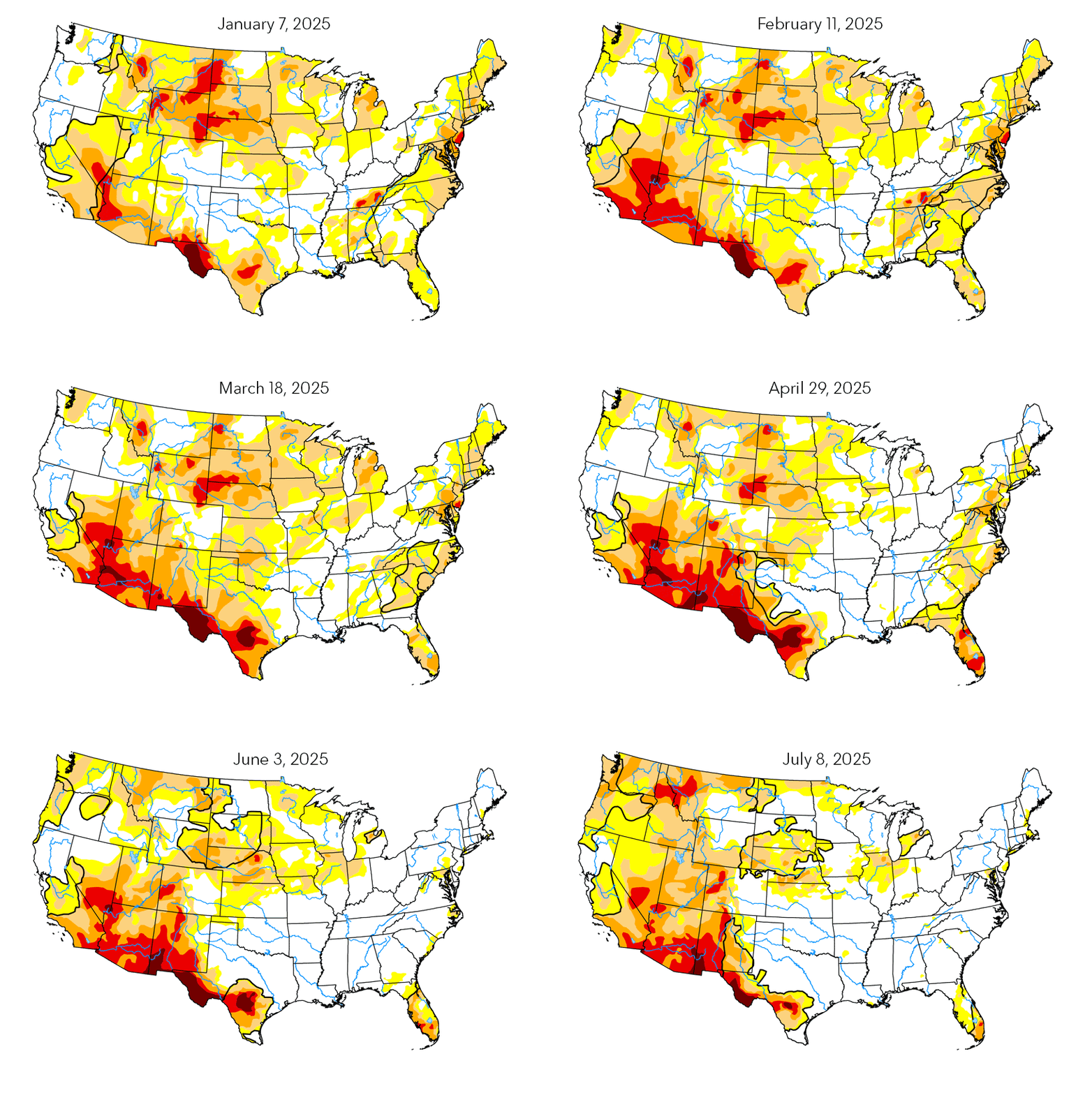
US Drought Monitor

Cooler temperatures moved into the Eastern Cornbelt during the week, with highs in the mid- to upper-50s across Illinois, Indiana, and northern Ohio. Mostly dry weather created favorable conditions for the fall harvest, and sources reported fall fertilizer applications picking up steam in many areas.

Unseasonably warm weather continued over much of Michigan during the week, however. Highs in the mid-70s were common across central and southern Michigan, with lows only dropping to the 50s in most locations. Some parts of the state picked up nearly an inch of rain on Oct. 25-26, but clear weather was on tap again for the weekend.

Highs in the mid-50s were reported in central and southern Wisconsin during the week, with lows falling to the mid-30s and low-40s. Highs were expected to reach the 60s in some locations by the end of the week, with mostly dry conditions likely over the weekend.

The dry, warm weather created ideal harvest conditions in late October. The corn harvest as of Oct. 23 was 65% complete in Illinois, 54% in Indiana, and 36% in Ohio, with the soybean harvest estimated at 70-78% complete in the region. Winter wheat planting was 84% complete in Ohio by that date, compared with 65-67% in Indiana and Illinois.

In the Great Lakes region, the corn harvest as of Oct. 23 was 22% complete in Wisconsin and 30% in Michigan, while the soybean harvest had progressed to 76% complete in Wisconsin and 63% in Michigan. Michigan growers also had 41% of the sugar beets picked by Oct. 23, and winter wheat planting was 85% complete in the state.

Western Cornbelt:

Corn Wheat Soybean Index

Although the week began with scattered showers across Iowa, drier weather returned for the final days of October, allowing growers to make rapid progress on the fall harvest. Highs in the low-60s were common across central Iowa by the end of the week.

Spotty rains also moved through Nebraska on Oct. 27, with highs topping out in the upper-50s and low-60s. A number of wildfires were fanned by dry, windy conditions in Missouri as severe-to-extreme drought conditions expanded across central and southern areas of the state.

The corn harvest as of Oct. 23 was ahead of the average pace at 78% complete in Missouri, 65% in Nebraska, and 59% in Iowa, with soybeans also tracking ahead of normal at 88-93% complete in Iowa and Nebraska, and 59% in Missouri.

Missouri’s rice was 97% harvested by Oct. 23, along with 55% of the state’s cotton crop. Nebraska’s sorghum harvest had progressed to 55% complete by that date. Winter wheat planting in the region was estimated at 96% complete in Nebraska by Oct. 23, compared with 51% in Missouri.

Northern Plains:

The week began with a powerful autumn storm that brought snow, rain, and 25-30 mph winds to parts of the Dakotas and Minnesota. Up to 3-6 inches of snow was reported in western North Dakota, while Bismarck, N.D., experienced strong thunderstorms.

Things began drying out on Oct. 25, with highs reaching the 50s in southern Minnesota and the 40s in northern areas of the state. Additional warming was expected as the week advanced, with highs expected to reach the 60s by the weekend.

The Twin Cities area posted its second driest June to October period on record this year, registering just 7 inches of precipitation, compared with an average of 18 inches. Nearly all of the Dakotas were in some form of drought in late October, with patches of extreme drought reported in southern South Dakota and southern Minnesota.

The dry field conditions for most of the month led to rapid progress on the fall harvest, with all three states tracking ahead of the average harvest pace for all crops. The corn harvest as of Oct. 23 was 64% complete in South Dakota, 61% in Minnesota, and 48% in North Dakota, while the soybean harvest had progressed to 92-95% complete in the region.

South Dakota’s sorghum crop was 68% harvested by Oct. 23. The sunflower harvest was 32-39% complete in the Dakotas by that date, and the sugar beet harvest had progressed to fully 95-96% complete in North Dakota and Minnesota.

Northeast:

The week got off to a wet start in New England, with steady showers contributing to rainfall totals of 3-4 inches across southern Massachusetts. A drier pattern emerged late in the week, however, with temperatures topping out in the 40s and 50s and frost warnings in effect for some areas over the weekend.

Showers were also reported across Maryland and Pennsylvania during the first half of the week, but clear skies and temperatures in the 60s returned on Oct. 27-28. Rain was once again in the weekend forecast for the Mid-Atlantic region.

The wet conditions limited harvest progress in much of the region. Pennsylvania’s corn harvest was only 20% complete by Oct. 23, well behind the 42% five-year average. New York’s corn harvest was 29% complete by that date, with 71% of the acreage rated as good or excellent. “Yields are very varied this year,” commented one Pennsylvania source at midweek.

Eastern Canada:

Warm, dry weather across much of Ontario and Quebec aided the fall harvest in late October. Record high temperatures were reported in a number of Quebec locations at midweek, with highs in Montreal reaching 24.6 C on Oct. 25.

Some scattered showers and gusty winds moved through southern Quebec at midweek, but warmer weather was once again on tap for the balance of the week and into the coming weekend. Thunderstorms were also reported in parts of the Maritimes at midweek.

The soybean harvest was nearly complete across southwestern Ontario by late October, with wheat planting well advanced as well. The corn harvest ranged from 10-50% complete in Ontario, depending on the region, with one source describing yields on both corn and soybeans as “better than anticipated” following a stretch of dry weather in July and August.

Sources reported “a fair amount of fall fertilizer moving” in the region in late October, with wheat starters mostly finished and fall plowdown application just starting. “We have had a few customers that will wait until spring in hopes of pricing relief, but for the most part we’ve had a fantastic start to the fall,” said one contact.

Ma’aden Plans to Produce Blue Ammonia, Buys Carbon Credits

Saudi Arabian Mining Co. (Ma’aden) is working on plans to produce blue ammonia, CEO Robert Wilt said in an interview with Bloomberg. Ma’aden already produces ammonia from natural gas, and is planning to trap the carbon dioxide emitted in the process so the product can be labeled blue.

“Right now there’s no premium for blue ammonia, but as we continue to help the energy transition globally it’s something we’re going to focus on,” said Wilt.

State oil giant Saudi Aramco is also looking to invest in carbon capture and storage, with the aim of producing blue ammonia. Saudi Arabia has so far only produced blue ammonia by capturing and using the CO2, rather than storing it permanently.

Aside from blue ammonia, Ma’aden is also looking to use solar energy to power its aluminum smelter, so it can market the product as green, Wilt said.

In other news, Ma’aden was one of the largest purchasers of carbon credits from the first MENA Voluntary Carbon Market auction and the largest in the world, held on Oct. 26, 2022, at the 6th edition of the Future Investment Initiative in Riyadh.

The auction offered CORSIA-compliant and Verra-registered carbon credits, with 15 Saudi and regional entities participating in the sale.

“As the world moves towards net zero, we need to do our part to ensure meaningful emission reductions in value chains,” said Wilt. “We are proud to support this world-leading initiative by Saudi Arabia, which reiterates the nation’s commitment to net zero ambitions.

“Ma’aden is committed to being an ESG leader in the Kingdom as the mining industry grows in prominence and becomes a key player in powering the energy transition,” he added. “We will continue to decarbonize our operations as we seek to build the mining industry into the third pillar of Saudi economy, in line with Vision 2030.”

Other Ma’aden initiatives include a commitment to build the world’s largest solar process steam plant in Ras Al Khair, which will reduce Ma’aden’s emissions by 600,000 mt/y, and a commitment to plant 20 million trees by 2040 to contribute to the Saudi Green Initiative.
Ma’aden has planted over 3 million trees since 2013.