All posts by mickeybarb@charter.net

Sulfuric Acid

U.S. Gulf:

Market players reported last-done spot imports in the $135-$140/mt CFR range, unmoved from recent levels. Indications for the next round of business continued to flare around the $160/mt CFR mark, sources noted.

U.S. Imports:

Sulfuric acid imports for July-March were up 13.6 percent, to 3.01 million st from the year-ago 2.65 million st. Imports fell 6.1 percent in March, however, to 320,921 st from 341,664 st in March 2020.

U.S. Exports:

Exports firmed 60.0 percent in July-March, to 278,388 st from the year-ago 173,994 st. March shipments stood at 150,734 st, lifting 657.3 percent year-over-year from 19,904 st.

Gulf Coast:

Annual contracts for sulfuric acid delivered to locations on the Gulf Coast were quoted at $85-$110/st DEL.

Midwest:

Midwest tons continued to be noted at $85-$110/st DEL, steady from the prior report.

West Coast:

Sources quoted West Coast contracts at $100-$130/st DEL for 2021 agreements.

Brazil:

Recent spot cargoes delivered into Brazil were noted in the $155-$160/mt CFR range, steady from the prior report.

Ammonium Thiosulfate

Eastern Cornbelt:

Extremely tight ammonium thiosulfate inventories continued to drive up pricing, with sources now reporting limited offers ranging widely from $400-$500/st FOB Ohio River terminals and $500-$525/st truck-DEL into the Illinois market. IOC reported that it is now sold out on rail through mid- to late-June.

Western Cornbelt:

Sources reported no ammonium thiosulfate prices circulating in the region during the week, but some speculated that any new offers would be firmly at the $400/st FOB level or higher for very limited volumes.

Southern Plains:

Ammonium thiosulfate prices continued to climb on reports of very tight supply. IOC on May 3 raised its Houston reference price to $300/st FOB, up $35/st from the last posting at that location. By this week, however, sources reported new and limited offers at $325/st FOB Houston and $335/st FOB Lubbock, Texas.

South Central:

Sources described ammonium thiosulfate supplies as extremely tight, with no current spot prices being offered at the moment. Sources said the last reported business fell in a broad range at $325-$400/st FOB in the South Central region, depending on location and supplier.

Sulfate of Potash

U.S. Imports:

March SOP imports totaled 4,014 st, down 26.5 percent from the year-ago 5,458 st. Imports totaled 85,903 st in the July-March period, however, a 30.8 percent year-over-year increase from 65,678 million st.

U.S. Exports:

July-March SOP exports totaled 42,881 st, off 46.1 percent from the year-ago 79,535 st. March exports were reported at 3,932 st, however, up 38.3 percent from 2,843 st in the prior year.

Southeast:

SOP pricing was steady at $605/st FOB in the Florida market for all grades, with mid-grade supplies described as very tight.

SOP Magnesia

Southern Plains:

Trio prices FOB Carlsbad remained at $310/st for premium, $300/st for granular, $265/st for standard, $375/st for OMRI-listed granular, and $340/st for OMRI-listed standard.

Southeast:

SOP Magnesia pricing in Florida remained at $360/st FOB for standard and $395/st FOB for premium grade, with sources continuing to report tight supply. In North Carolina, sources reported limited offers at $405-$410/st FOB and $435-$440/st DEL at mid-month.

Crops/Weather

Eastern Cornbelt:

Cooler weather was reported in central and northern Illinois during the week, with frost advisories posted for several locations earlier in the week.

A frost advisory was also in effect at midweek for parts of northern Ohio, with lows expected to drop to the low- to mid-30s before a warmup later in the week. Indiana enjoyed mostly seasonal temperatures and dry conditions during the week, but rainy weather was expected again by the weekend.

Corn planting as of May 9 was estimated at 74 percent complete in Illinois, 46 percent in Indiana, and 27 percent in Ohio, with Illinois and Indiana tracking ahead of their five-year averages and Ohio lagging slightly. Soybean planting was 57 percent complete in Illinois, 36 percent in Indiana, and 20 percent in Ohio by that date, with all three states ahead of normal.

Ohio growers also had fully 85 percent of the oats planted by May 9, compared with 74 percent on average.

Western Cornbelt:

Iowa and Missouri sources reported spotty planting activity through most of the week, although potentially heavy rains were expected to arrive by the weekend. Cool temperatures across portions of Nebraska and Iowa continued to delay corn emergence at mid-month.

Iowa growers had fully 86 percent of the corn and 67 percent of the soybeans planted by May 9, with both tracking well ahead of their five-year averages. Planting progress in Nebraska was rated at 71 percent complete for corn and 47 percent for soybeans, also ahead of normal for both crops, but corn emergence lagged at only 12 percent by May 9.

Missouri growers had 69 percent of the corn planted by May 9, along with 21 percent of the soybeans, 72 percent of the rice, and 10 percent of the cotton. While cotton and corn planting lagged, soybeans and rice were both ahead of their five-year averages.

Sources reported the start of corn sidedressing in some locations, particularly in parts of Missouri, but the wet weekend was expected to stall activity. “Sidedress should be good,” commented on Iowa source. “We are wet and have 20 percent of the corn to plant yet locally, so no sidedress activity yet as corn development is slow due to cold temperatures.”

Southern Plains:

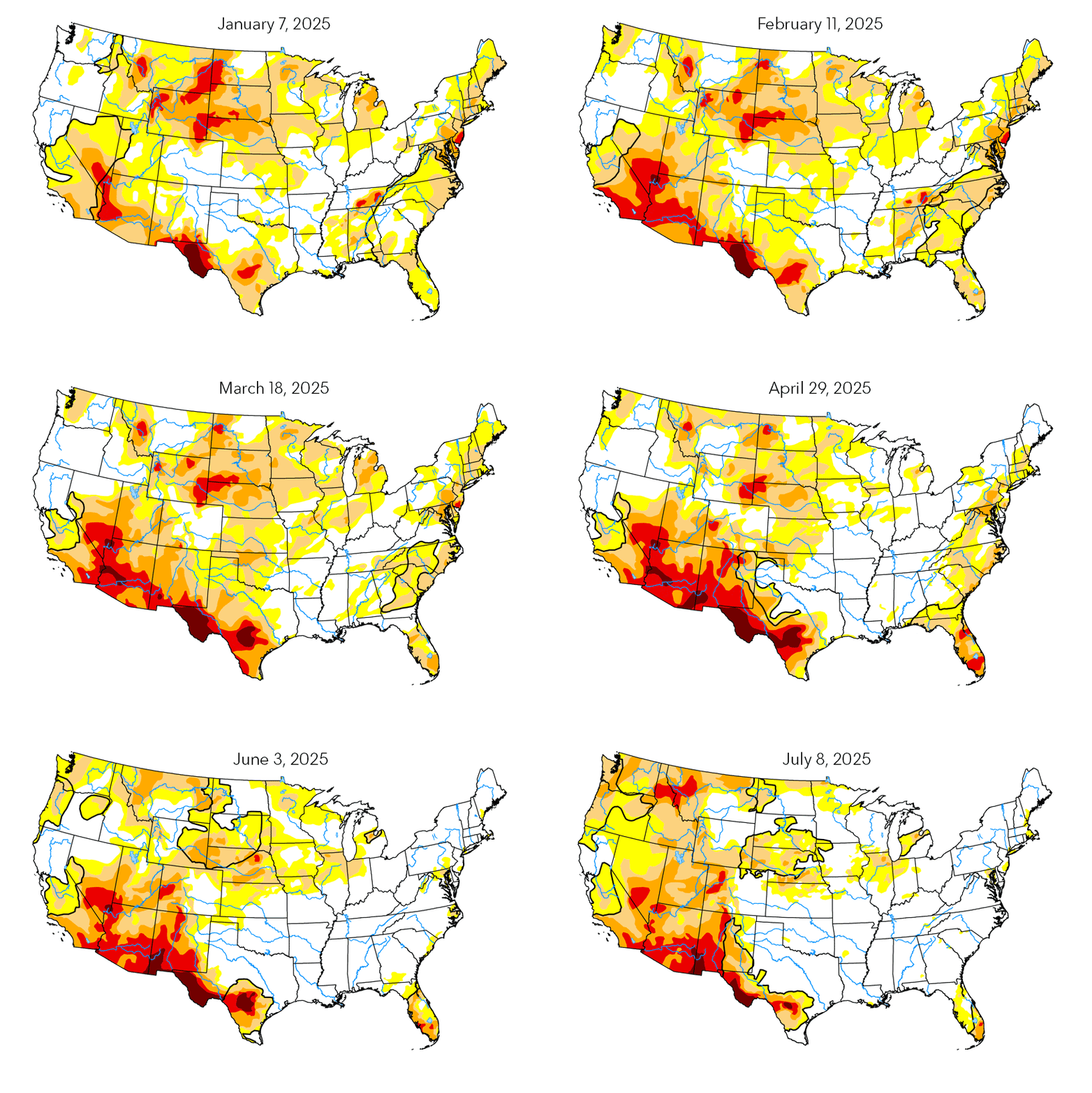
Heavy rain across much of central and eastern Texas in early May helped alleviate worsening drought conditions in the state, but the May 13 U.S. Drought Monitor continued to show areas of extreme-to-exceptional drought in southern and western Texas and across much of New Mexico.

News reports confirmed several severe thunderstorms across southern and central Texas on May 11, with reports of heavy rain, small hail, and some flooding in low-lying areas. Parts of Kansas and Oklahoma were also bracing for heavy moisture as the week progressed, along with portions of eastern New Mexico.

Texas growers had 76 percent of the corn crop planted by May 9, compared with 54 percent in Kansas and 41 percent in Colorado. Cotton planting had progressed by that date to 25 percent complete in Texas, 18 percent in Oklahoma, and 13 percent in Kansas, with soybean planting estimated at 27 percent complete in Kansas. While sorghum planting was fully 68 percent complete in Texas, progress was only rated at 3-7 percent in Kansas and Oklahoma.

Sources reported some brisk fertilizer movement on corn and cotton ground, as well as some pasture activity. “Fertilizer is moving strong,” said one Texas contact. “We got some much-needed rain the past couple of days, and more is scheduled for next week.”

South Central:

Strong thunderstorms moved through parts of Arkansas, Louisiana, and Mississippi on Mother’s Day, prompting tornado warnings and flash flood advisories in some locations. There were multiple reports of structural damage from 50-60 mph winds and penny-sized hail, along with heavy rain.

Sources reported good planting progress in the region in early May, although Louisiana was trailing its average pace for most crops. Roughly 40 percent of the state’s soybeans were planted by May 9, compared with 64 percent in Mississippi, 48 percent in Arkansas, 32 percent in Kentucky, and 25 percent in Tennessee.

Corn planting had progressed to 71-75 percent complete in Kentucky and Tennessee by that date, while cotton planting was reported at 35 percent complete in Mississippi, 30 percent in Louisiana, 19 percent in Arkansas, and just three percent in Tennessee. Rice planting was winding down by May 9, with progress estimated at 77 percent in Arkansas, 78 percent in Mississippi, 87 percent in Louisiana, and 92 percent in Texas.

Southeast:

Strong thunderstorms tracked through Georgia and the Carolinas early in the week, with reports of quarter-sized hail and damaging winds in parts of central North Carolina on May 10. Rains also moved through northern and central Florida during the week, with highs near 80. Mostly dry weather was reported in Alabama, with temperatures in the 68-74 degree range.

Sources said the rain helped ease drought conditions in some parts of the Southeast, which had slowed planting in some areas. Growers were reportedly trying to finish up corn while also moving on tobacco, soybeans, cotton, and peanuts.

North Carolina growers had 90 percent of the corn and 26 percent of the soybeans planted by May 9, while cotton planting had progressed to 22 percent complete in Georgia, 25 percent in North Carolina, 27 percent in Alabama, 35 percent in Virginia, and 40 percent in South Carolina.

Growers were also planting peanuts in early May, with progress as of May 9 rated at 43 percent complete in South Carolina, 40 percent in Virginia, 36 percent in Florida, 28 percent in Alabama, 22 percent in Georgia, and 14 percent in North Carolina.

Transportation

U.S. Gulf:

Industrial Lock was closed from 6:00 a.m. to 6:30 p.m. on May 11 for dolphin construction. Backups resulting from the shutdown were likely to push into May 12 or 13, sources said.

Repairs to the Port Allen Lock guidewall triggered intermittent, four-hour, daytime travel stoppages during the week. Unassisted westbound vessels were capped at one barge per turn through the site, while tows with two or more cargoes were required to use an assist boat. Unassisted tows traveling eastward were capped at 650 feet. Wait times were quoted up to 30 hours for the week, improving from 39 hours reported previously. The repairs are scheduled to continue through May 17.

Water levels pressed above the 30-foot action stage at Baton Rouge, La., once again during the week, registering a 31.1-foot reading on May 11. The rising levels dashed hopes of a quick return to unrestricted operation in the Gulf, solidifying barge reductions of 5-10 units below the typical 25-barge tows on Gulf travel above New Orleans.

Levels at Baton Rouge were projected to crest at 33.4 feet on May 18-19 and remain above action stage through at least May 25. A Flood Warning issued on May 11 for the Mississippi River at Red River Landing was scheduled to expire on May 26.

Harvey Lock was closed to navigation due to repairs to the nearby 4th Street Bridge, prompting detours through Algiers Lock until the project’s May 21 end. Unassisted Algiers Lock travel continued to be restricted to four standard barges or two 30,000 mt tankers, although lengthier tows were permissible when accompanied by an assist vessel.

The restrictions and added traffic pushed Algiers Lock delays up to 25.5 hours, sources said, with 21 tows counted in line to lock on May 11. Combined with the additional travel time resulting from the closure at Harvey Lock, travel times between the lower Mississippi and the West Canal were increased by up to one week, sources said.

Bayou Chene remained closed to overnight travel due to construction activities and diver operations. The route was reported shut nightly between 7:00 p.m. and 7:00 p.m.

Bayou Sorrel Lock is scheduled return to normal operation on May 15, ending traffic shutdowns from 7:00 a.m. to 6:00 p.m. daily. Most waits were noted in the 6-12 hour range during the week, although sources reported a handful of delays at 24 hours or more.

Industrial Lock waits were posted up to seven hours on May 11. Brazos Lock floodgate repairs were expected to prompt a 24-36 hour shutdown on May 13-14. Storm delays were reported on Gulf travel on May 10-12, and sources noted weather delays in the East and West Canals stretching into May 13.

Mississippi River:

Sources on May 12 reported a massive backup at Mile 736-737 after a routine safety inspection of the I-40 Bridge found a large crack in a load-bearing structure. Engineers were reported onsite on May 12-13, and shipping sources expected at least a multiday river shutdown while repair plans were formulated.

Extreme shoaling reported at Smith’s Bay, located at Mile 530 on the upper Mississippi River, prompted strong caution advisories despite remaining open to navigation. Sources expected the Corps to initiate dredging operations by May 12.

Repairs to the Burlington Railroad Bridge, near Mile 410 on the upper river, were expected to begin at midweek. Transit through the bridge will remain possible during the planned 3-4 week operation, although contractors were expected to require advance notice of at least one hour prior to arrival. Work is expected to run between 7:30 a.m. and 4:30 p.m. daily.

A return to high water conditions south of Cairo, Ill., renewed towing restrictions on the lower river, sources said. Overnight travel restrictions were reinstated through Vicksburg-area bridges, although requests for passage were reportedly considered on a case-by-case basis. Barge counts were reduced by at least five cargoes through to the Gulf.

The Vicksburg river gauge returned a 36.2-foot reading on May 12, above the 35-foot action stage. Depths were expected to peak at 36.9 feet on May 15-16, before falling out of action stage on May 21-22.

A six-day dredging operation at the lower river’s Mile 900 triggered intermittent delays for the week. Sources said wait times averaged 6-12 hours.

Revetment work at Mile 770 on the lower river was reported blocking movements daily between 6:00 a.m. and 6:00 p.m., prompting travel delays in the 6-12 hour range. Vessels were allowed to pass the site during daytime hours on a case-by case-basis. The project is scheduled to conclude on May 31.

July daylight-hour shutdowns remain on the docket for Lock 2, sources said, with intermittent 4-12 hour closures expected for miter gate installation. At Lock 25, daytime shutdowns for guidewall repairs are expected in both July and August.

Delays were noted up to 63 hours at Lock 13, while boats passing Lock 22 reported 3-8 hour waits on May 12. Sources described five-hour crossings at Lock 24, and eight-hour delays were common on travel through Lock 25. Mel Price wait times were quoted at 3-6 hours during the week.

Illinois River:

Hydraulic cylinder repairs triggered delays at Peoria Lock on May 8-9. Wickets were down at Peoria Lock and LaGrange Lock for the week, prompting lockless navigation through both sites.

Ohio River:

Rising water levels forced a primary chamber shutdown at Greenup Lock, sources said. All travel was reportedly taking place through the secondary chamber as a result, pushing delays into the 3-8 hour range.

Meldahl Lock primary chamber machinery repairs are now scheduled to run from May 17 through June 29 after initially being slated to start on May 11. Vessels will be expected to pass through the auxiliary chamber while work is underway, and delays are expected. Intermittent full-lock shutdowns are also likely, sources said.

The secondary chamber at Markland Lock is anticipated to remain closed to navigation through Oct. 29 due to cracks in the miter gate. Locking has remained available through the primary chamber, sources said. The auxiliary chamber at New Cumberland Lock was reportedly shut through June 10 for repairs and maintenance.

The Cannelton Lock primary chamber is scheduled to shut from June 21 through Nov. 19, forcing tows to pass through the secondary chamber. Sources warned of considerable delays.

On the Tennessee River, the Wilson Lock main chamber was due to conclude repairs on May 14. The project began on May 4 and was responsible for routing traffic solely through the secondary chamber, triggering delays up to four days during the week, sources said.

Chickamauga Lock will be completely shut on May 3-24 for electrical repairs, blocking navigation through the site. Wait times at Kentucky Lock were quoted at 3-9 hours for the week.

Bio-acoustic fish fence (BAFF) repairs kicked off on May 10 at the Cumberland River’s Cheatham Lock. The project will completely block transit on May 10-13; May 17-27; June 1-10; June 14-24; June 28-July 1; and July 12-22.

Arkansas River:

David D. Terry Lock navigation will be completely unavailable from Aug. 27 through Sept. 9 due to a dewatering and repair project. Additional intermittent stoppages are expected ahead of the full shutdown on Aug. 16-26.

CVR Reports 1Q Results; February Storm Negatively Impacted Shipments

CVR Partners LP, Sugar Land, Texas, reported a first-quarter net loss of $25.4 million ($2.37 per diluted unit) on net sales of $60.9 million, compared to the year-ago loss of $20.7 million ($1.83 per unit) and net sales of $75.1 million. EBITDA was $4.67 million, down from the year-ago $10.7 million.

“During the first quarter 2021, CVR Partners continued to operate safely and reliably while responding to Winter Storm Uri, which negatively impacted shipments from both our East Dubuque and Coffeyville fertilizer facilities,” said Mark Pytosh, CEO of CVR Partners’ general partner.

“However, we were able to quickly react to the weather event, reducing throughput at East Dubuque and selling contracted natural gas to capitalize on market opportunities,” he continued. “In addition, our Coffeyville facility was one of the only plants capable of operating during the storm due to its use of petroleum coke as its feedstock.

“The nitrogen fertilizer industry reached an inflection point during the first quarter of 2021, where improved farmer economics translated into increased demand for nitrogen fertilizer as well as much higher pricing,” Pytosh added. “So far, the spring planting season has gone well, with nitrogen fertilizer prices materially higher in the second quarter compared to the first quarter.”

CVR Partners will not pay a cash distribution for the quarter.

Sales (000 st) 1Q-21 1Q-20
Ammonia        32 54
UAN 239 284
Plant Gate Price ($/st) 1Q-21 1Q-20
Ammonia        300 264
UAN 159 166
Production (000 st) 1Q-21 1Q-20
Ammonia – gross 188 201
Ammonia – net 70 78
UAN 272 317
Feedstock 1Q-21 1Q-20
Petroleum Coke ($/st) 42.91 44.68
Natural Gas ($/mmBtu) 3.10 2.42

Intrepid Pulls Into Plus Column

Intrepid Potash Inc., Denver, reported first-quarter net income of $2.45 million ($0.18 per diluted share), up from the year-ago loss of $7.4 million ($0.57 per share). Sales were up at $71.5 million from $64 million. Adjusted EBITDA was $12.9 million, up from $8.8 million.

The year-ago net loss was impacted by the accrual of a $10 million settlement payment agreed upon relating to litigation with The Mosaic Co., Tampa, which was partially offset by a gain of $4.7 million on the restricted sale of 320 acres of fee land at the Intrepid South property.

“First-quarter results benefited from strong potash and Trio® pricing and sales, leading to improvements in net income, gross margin and EBITDA compared to the prior year,” said Bob Jornayvaz, Intrepid’s Executive Chairman, President, and CEO.

“Under-application of fertilizer in prior years and strong commodity prices continue to support fertilizer demand across our markets, and we expect robust cash flow from operations will continue in the second quarter,” he said. “Above-average evaporation at our potash facilities during the summer of 2020 will extend our production season into the second quarter and will allow us to meet the continued strong demand for fertilizer.

“We made substantial progress on our expansion into full-cycle water management during the quarter, increasing our recycling infrastructure and working to expand our current relationships with operators to include additional brine and recycled volumes,” Jornayvaz added. “Oilfield activity continues to improve in the Delaware Basin, with rig counts and permits steadily increasing throughout the first quarter, which we expect will lead to improved oilfield segment results in future periods.”

First-quarter potash sales volumes were up 18 percent, and the average net realized price 11 percent. However, Trio sales volumes decreased since the company opted to sell fewer tons into international markets as it focused on the higher-priced domestic market.

The company said potash production decreased 18 percent compared to the year-ago quarter due to lower brine grade at the HB facility and reduced run days at the Moab plant, as the company increased salt production to meet first-quarter demand.

Despite the decreased production, the company said it had sufficient inventory to meet the strong fertilizer demand in its markets and that it has significantly more inventory left to harvest in the solar evaporation ponds compared to the prior year. It expects to operate its potash facilities into second-quarter 2021, compared to the prior year, in which it ended spring production in mid-April.

Intrepid said its Oilfield Solutions water sales and sales of other oilfield products and services decreased as COVID-19 reduced oilfield activity from year-ago levels.

Potash 1Q-21 1Q-20
Sales (000 st) 43,578 33,791
Gross Margin ($000) 8,673 4,334
Sales Volume (000 st) 117 99
Production Volume (000 st) 113 137
Avg Realized Price ($/st) 282 255
Trio 1Q-21 1Q-20
Sales (000 st) 23,694 22,581
Gross Deficit ($000) (70) (3,555)
Sales Volume (000 st) 69 76
Production Volume (000 st) 56 50
Avg Realized Price ($/st) 233 193
Oilfield Solutions 1Q-21 1Q-20
Sales (000 st) 4,253 7,741
Gross Margin ($000) 505 4,844