

Cornbelt:
The NPSZ market remained at $590-$615/st FOB in the Cornbelt.
Pacific Northwest:
Simplot’s 40-Rock postings were reported at $685-$705/st DEL in the Pacific Northwest, depending on location.
Cornbelt:
The NPSZ market remained at $590-$615/st FOB in the Cornbelt.
Pacific Northwest:
Simplot’s 40-Rock postings were reported at $685-$705/st DEL in the Pacific Northwest, depending on location.
California:
The SOP market was steady at $615-$625/st FOB in California at mid-month.
Pacific Northwest:
The SOP market was quoted at $600-$610/st FOB in the Pacific Northwest, unchanged from last report.
California:
The SOP Magnesia market was unchanged at $350-$370/st FOB in California, depending on grade.
Pacific Northwest:
SOP Magnesia pricing remained at $360-$380/st FOB in the Pacific Northwest, depending on grade and location.
Southern Plains:
Intrepid on March 15 announced a $20/st increase on all Trio grades. The company said the increase was effective immediately and is in response to continued strong demand. New postings FOB Carlsbad, N.M., include $310/st for premium, $300/st for granular, $265/st for standard, $375/st for OMRI-listed granular, and $340/st for OMRI-listed standard.
California:
The crystalline potassium nitrate market in California was unchanged at $830/st FOB Stockton for bulk tons and $920/st FOB for 50-pound bags.
Eastern Cornbelt:
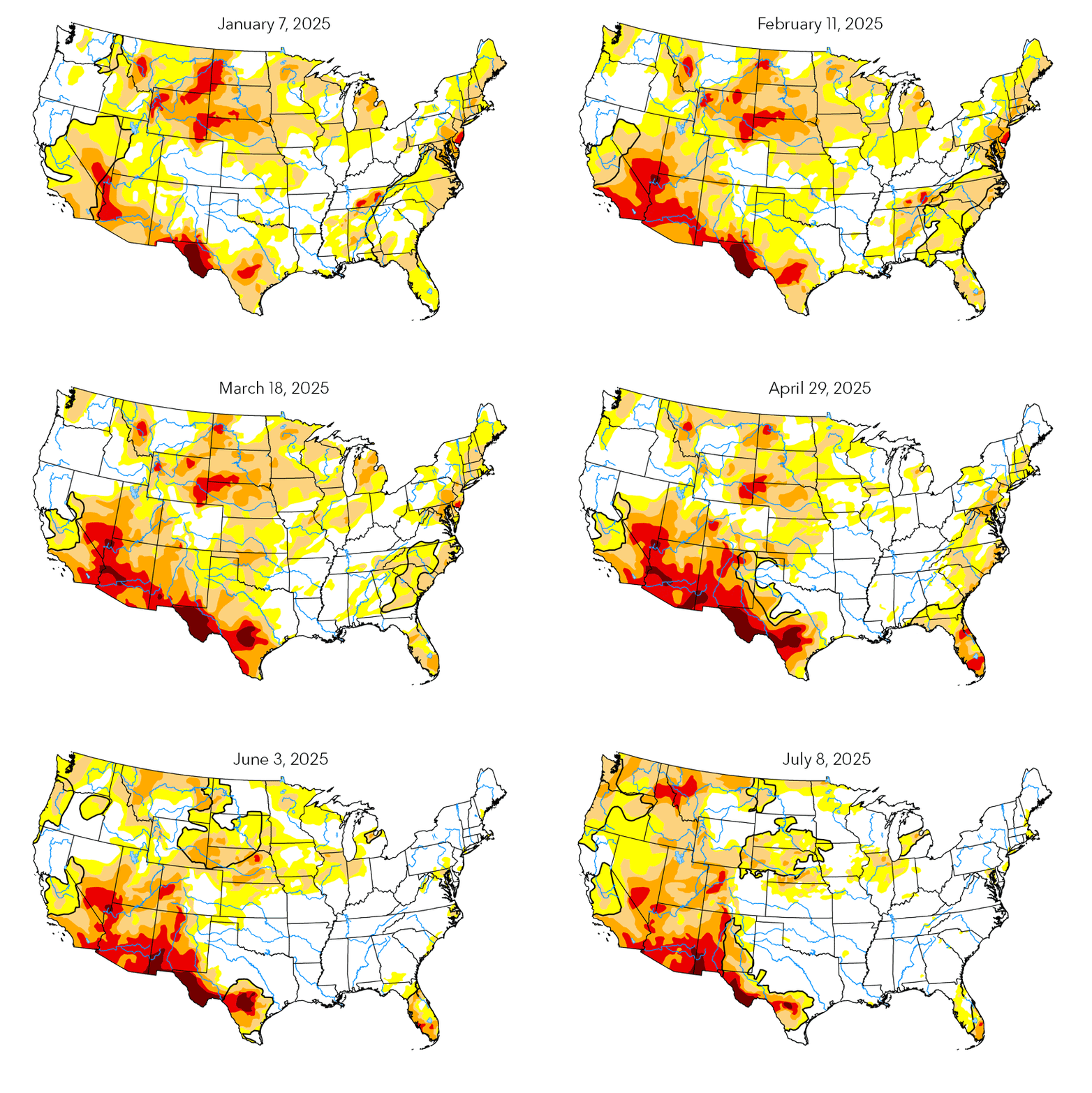
Much of the Eastern Cornbelt was hit with a wintry mix of precipitation during the week, along with strong winds that left thousands without power in central Indiana on March 15.
Chicago was blanketed with ice and up to an inch of snow early in the week, while 35-45 mph wind gusts churned through central Indiana. Strong winds also battered northern Ohio, and sources reported flood advisories for some areas due to heavy rain.
Forecasts warned of localized flooding in central Illinois late in the week as another system moved in, with some area rivers expected to reach minor flood stage by the weekend.
The regional fertilizer markets were mostly unchanged after weeks of rapid price movement, and sources said the wet weather will probably keep growers out of the field for several more weeks.
“We have received several inches of rain in the past week,” said one Illinois contact at midweek. “It’s going to be awhile before field operations commence. I think there is very little, if any, buying occurring.”
Western Cornbelt:

Winter Storm Xylia hammered parts of the Rockies and High Plains with heavy, wet snow and blizzard conditions on March 13-14. Storm totals included 48.5 inches west of Fort Collins, Colo., 30.8 inches in Cheyenne, Wyo., 19 inches near Gering, Neb., and 6-8 inches in parts of northern Iowa.
The powerful storm brought heavy rainfall to central and eastern Nebraska, with single-day records reported at 2.87 inches in Hastings, 2.56 inches in Grand Island, and 3.31 inches in Lincoln. Some areas in Nebraska’s Hall and Adams counties received well over five inches of rain before the storm moved out.
While Des Moines, Iowa, collected only a dusting of snow from the storm, the extra precipitation pushed the city’s snowfall total to 54.5 inches so far this winter, some 23.6 inches more than normal, according to the National Weather Service.
Kansas City, Mo., was hit with 1-3 inches of rain at midweek, with some outlying areas reporting 3-6 inches of snow. Warmer weather was on tap after the storm, however, with highs expected to climb from the 40s on March 18 to the 60s by the weekend.
California:
After some wet weather earlier in the week, much of Southern California enjoyed temperatures in the upper-60s, with a slight chance of showers returning to Ventura County over the weekend.
Northern California also enjoyed mild temperatures at mid-month after a series of storms earlier in March brought much-needed moisture to the Sacramento Valley and other locations. “Though we have experienced some welcome precipitation, field activities have been building,” said one Northern California source at midweek.
“Things are starting to move,” added another California contact. “I expect a big push once the weather clears next week.”
Pacific Northwest:
Sources reported wet conditions along coastal areas of Washington and Oregon as the week progressed, with potentially heavy snow at higher elevations. Most other areas of the Pacific Northwest enjoyed sunny weather and mild temperatures during the week, with highs climbing to the upper-50s and low-60s in parts of southern Idaho and western Montana.
The weekend forecast called for a greater chance of rain in the valleys and snow in the mountains across parts of Idaho and Montana. There were reports of some spring planting and other fieldwork happening in the Willamette Valley and Columbia Basin during the week, although it’s still early for most of Idaho and Montana.
Western Canada:
Double-digit heat was reported in southern Alberta during the week, with much of Saskatchewan experiencing single-digit highs at midweek along with steadily warming conditions as the week progressed. While heavy moisture was reported across British Columbia earlier in March, much of the province enjoyed warm, dry weather at mid-month.
Conditions in southern Manitoba remained mild and extremely dry, with some locations registering only a quarter of normal precipitation levels since September. While sources said this bodes well for spring flooding across the province, there were growing concerns about a lack of adequate soil moisture ahead of planting.
One Manitoba contact noted, however, that as much as 25 percent of the province’s annual snowfall normally occurs after March, so moisture levels could be recharged quickly if a number of big storms track through the province during the second half of the month.
Some parts of the Prairies were on the cusp of some early spring fieldwork. “Southern Alberta could start in the next couple weeks if the weather holds, and it looks promising,” said one source. “The biggest concern is soil moisture at this point.”
U.S. Gulf:

Sources said a Harvey Lock shutdown is scheduled for April 5-21, necessitated by planned repairs to the nearby 4th Street Lift Bridge. Vessels are expected to detour through Algiers Lock during the closure, with increased delays anticipated. High water levels reported in the Gulf could further amplify delays should the conditions persist into April.
The Colorado Locks system is slated to shut to daylight-hour navigation from March 22 through April 2, blocking movements daily between 7:30 a.m. and 4:30 p.m.
Bayou Sorrel Lock was reported closing to daytime navigation on March 16, prompting waits of 22-32 hours. The project, slated to conclude on April 7, is set to repeat from April 21 to May 15, blocking daylight-hour movements once again.
Towing restrictions continued at Port Allen Lock, a result of guidewall damage sustained during a January barge collision. Tows traveling to the west with two barges or more were permitted to pass with the use of an assist vessel, while vessels traveling with one or fewer barges were cleared to lock without assistance. All eastbound tows longer than 650 feet were required to use an assist vessel. Wait times for the week were reported in a wide 5-23 hour range.
The Port Allen Route’s Gross Tete Bridge, located at Mile 36, began drawbridge repairs on March 15. Travel through the bridge will be limited to the hours of 10:00 a.m. through 12:00 p.m., and 10:00 p.m. through 12:00 a.m., through an estimated May 15. Delays of 6-12 hours are expected.
Algiers Lock restrictions continued as well, with towing widths above 60 feet limited to 600-foot lengths. Tows narrower than 60 feet were permitted lengths up to 700 feet, sources said. The caps effectively restricted unassisted lockages to four standard barges or two 30,000 mt tankers per turn, although bigger lockages were possible with the use of an assist vessel. Most Algiers Lock delays were reported in the 11-16 hour range for the week, with intermittent wait times spiking to as high as 26 hours.
Overnight fog reportedly impacted travel in the Gulf and Canals through March 16, effecting nightly delays of up to 10 hours. Fog delays were expected to give way to slowdowns from rough seas and high winds, beginning as early as March 17.
The East Canal’s Rigolets Bridge concluded repairs on March 12, ending a period of limited access to the Pearl River.
High water levels in the Gulf and lower Mississippi continued to limit barge counts, with sources reporting cargoes cut by 5-10 units below the typical 25-barge limit. The Baton Rouge, La., river gauge was at an action-stage 32.77 feet and rising on March 16, and was forecast to crest at 34 feet on March 20-23, just shy of the minor-flood level.
Sources quoted Industrial Lock delays at a maximum 14 hours for the week.
Mississippi River:
Barge traffic resumed on the upper Mississippi River during the week, sources said, following the reopening of Locks 13-19 after winter maintenance and repairs. Lock 2 was reportedly shut for repairs through March 19, while passage through Lock 25 is scheduled to resume on March 22, marking a scheduled return to full navigational capacity in the week ahead.
High water levels on the lower river prompted towing restrictions between Cairo, Ill., and the Gulf, with sources describing barge counts limited to 15-20 units, down from the usual 25 cargoes. The restrictions increased per-barge transit times by approximately 24 hours. The river gauge at Vicksburg, Miss., was reported above the 35-foot action stage at 41.11 feet on March 17, and was expected to remain above action stage into early April.
Dike work planned for the lower river’s Mile 770 was tentatively scheduled to begin in late March. The project, set to run for approximately one month, is expected to intermittently block southbound travel daily from 7:00 a.m. to 6:00 p.m. while in progress.
Illinois River:
Demolition of the Utica Bridge was scheduled for March 18, sources said. Movements through the area around Mile 230 were projected to be blocked for at least 24 hours during demolition and the resulting cleanup effort.
With wickets lowered at Peoria Lock and LaGrange Lock, boats continued to pass both sites without locking. Delays were quoted up to nine hours on movements through Starved Rock Lock.
Ohio River:
Greenup Lock primary chamber repairs reportedly ended on March 17, concluding a period of closures that kicked off on Feb. 19. Following the main chamber’s reopening, the site’s auxiliary chamber was scheduled to shut through at least April 11. Waits were reported up to 30 hours earlier in the week, but dropped below six hours following the project’s conclusion.
The primary chamber at Meldahl Lock was slated to close for gate machinery repairs from April 12 through June 11, prompting detours through the 600-foot secondary chamber. Delays are anticipated. The secondary chamber at Markland Lock, shut since early 2020 due to miter gate structural damage, is projected to remain impassable through at least Oct. 29. Locking remains available through the primary chamber, sources said, with minimal delays reported.
One of Smithland Lock’s secondary chambers is shut through April 1 for maintenance and repairs. Navigation remains available through both the primary chamber and the alternate secondary chamber. The New Cumberland Lock auxiliary chamber was reported closed to navigation through June 10.
The Cannelton Lock primary chamber is scheduled to halt navigation from June 21 through Nov. 19, with substantial delays predicted.
The main chamber at the Tennessee River’s Pickwick Landing Lock was reported shut to daytime navigation through March 18. Despite vessels detouring through the smaller auxiliary chamber, wait times at the site were generally quoted below five hours for the week. Sources noted delays in the 6-18 hour range at Kentucky Lock.
Bio-acoustic fish fence (BAFF) repair at Barkley Lock, located on the Cumberland River, will begin on March 22 and run through April 2, sources said, blocking navigation daily from 6:00 a.m. to 6:00 p.m. BAFF repairs are scheduled for April 12 through June 3 at Cheatham Lock, with significant delays expected. The Corps has announced openings to pass waiting traffic at Cheatham on April 23-26, May 7-10, and May 21-24.
Arkansas River:
Structural testing at the Arkansas River’s Lock 3, located below Little Rock, Ark., at Mile 52, triggered intermittent delays and shutdowns starting on March 12. Interruptions were scheduled to continue through March 20, constricting access to Little Rock and above.
Lock 6 will shut for dewatering and repairs between Aug. 27 and Sept. 9, with delays expected.
The Mosaic Co., Tampa, reported increased sales revenues for all three industry segments for the month of February compared to the year-ago quarter. However, with respect to sales volumes, only the Potash and Phosphate segments saw increases, up 26 and 15 percent, respectively. Mosaic Fertilizantes volumes were off 4 percent.
| Potash | Feb. 20 | Feb. 19 |
| Sales Volumes (000 mt) | 617 | 489 |
| Sales Revenues ($/M) | 143 | 118 |
| Mosaic Fertilizantes | Feb. 20 | Feb. 19 |
| Sales Volumes (000 mt) | 711 | 737 |
| Sales Revenues ($/M) | 261 | 255 |
| Phosphate | Feb. 20 | Feb. 19 |
| Sales Volumes (000 mt) | 614 | 532 |
| Sales Revenues ($/M) | 297 | 172 |
OCI NV, Amsterdam, on March 8 announced goals and more plans to decarbonize and capitalize on the global hydrogen opportunity, adding to the news released on March 5 that it had signed agreements to advance the use of ammonia and methanol as shipping fuels (GM March 5, p. 1).
OCI said it has established group-wide targets to reduce Scope 1 and 2 CO2e emissions intensity by 20 percent by 2030 (on a 2019 baseline) and achieve carbon neutrality by 2050. It said it has an accelerated operational excellence program to deliver on energy and production efficiencies at limited or no cost, while resulting in additional $75 million per year of EBITDA in the next 3-5 years. The company said a large proportion of its targets are achievable with limited incremental capital spend.
“So, our priorities right now are the small, easy wins, and I can comfort you that we have 10 or 15 initiatives that are all small and easy wins and pretty obvious and accretive,” Executive Chair Nassef Sawiris said in a company conference call March 8.
OCI highlighted its position as a producer of both ammonia and methanol, saying it has the youngest asset base among its peers, and that it has heavily invested in its legacy projects such as OCI Beaumont in Texas and OCI Nitrogen in Geleen, the Netherlands, with the latter sitting in the top tier of ammonia plants in Western Europe.
OCI revealed that it plans to shut down its oldest and highest emission nitric acid plant in Geleen in second-half 2021 with no financial impact, given its ability to adjust product mix. It said it has achieved an industry leading position in NOx and N2O emission reduction in its nitric acid plants due to historical abatement investments.
OCI also noted that it is the only producer with facilities and extensive distribution and storage capabilities in the U.S., Europe, and the Middle East & North Africa (MENA), all of which are located on major global shipping lanes next to key bunkering hubs.
In addition, nearly all of OCI’s assets have access to ample and cost-effective solar and wind energy, facilitating a shift to renewable production processes and playing a key role in supplying major hydrogen-deficit markets such as Europe, as well as developing an ammonia fuel supply chain to support Asia’s green transition.
OCI’s European assets, which include an ammonia import terminal in Rotterdam, are strategically positioned to play a major role in fulfilling Europe’s hydrogen import needs as demand ramps up.
OCI said it has a pipeline of partnerships and projects in development to enable low-carbon ammonia and methanol production. In the Netherlands, it is already producing ISCC-certified low carbon ammonia from biogas to supply AnQore, an acrylonitrile producer. It said the greenhouse gas footprint is at least 50 percent lower compared to gray ammonia, and can be decarbonized further. OCI is also partnering with Essar Oil U.K., ExxonMobil, TWE, Nouryon, and ADNOC on other projects.
In the U.S., OCI said its Iowa Fertilizer Co. facility at Wever can produce up to 1 million mt/y of DEF, a premium product, and that it is positioned geographically to transport the product to key customers. It said in 2020, DEF volumes by the N-7 marketing joint venture with Dakota Gasification and Dyno Nobel achieved a 34 growth rate in volumes. OCI said it sees few near-term alternatives to DEF for emission abatement for the truck and rail industries, and that demand is expected to grow 15 percent over the medium term.
Asked if the company would be willing to shift downstream production from agriculture, CEO Ahmed El-Hoshy said “we will do it – absolutely we’ll do it.” He said the company is always looking to maximize value, and as an example, he said if blue or green ammonia were higher priced it would cut back urea production.
OCI is also setting up its governance to meet ESG goals. There will be dedicated board oversight by the HSE and Sustainability Committee, and executive compensation will be tied directly to ESG goals.
OCI also noted that it has launched a Diversity and Inclusion program at both the board and group levels to drive female representation. It increased female representation on the board to 23 percent in 2020, up from 17 percent in 2019. It has a group-wide target for women in senior leadership to be 25 percent by 2025. It said it increased the ratio of female-to-male hires by 16 percent year-over-year in 2020.
Hemisphere Limited LLC, a management company based in Somerset, Ky., announced in early March that it has entered into a contract to purchase Warner Fertilizer Company (WFC), Kentucky’s largest, locally owned independent fertilizer retailer, with 11 locations across 13 counties.
Also headquartered in Somerset, WFC was founded in 1965 and currently offers bagged and bulk fertilizer, crop protection products, farm supplies, and seed for corn, soybeans, small grains, turf, and other field crops. The company’s Kentucky facilities are located at Somerset, Nancy, Monticello, Russell Springs, Tompkinsville, Campbellsville, Albany, Liberty, Stanford, and Columbia.
WFC has approximately 55-58 full-time employees and an additional 20-25 seasonal employees, with annual wages and benefits averaging $2.1 million over the last five years. The company has been ranked on CropLife magazine’s Top 100 U.S. ag retailers list.
WFC services include custom application, spreader/no-till equipment rental, soil testing, and agronomic consultation from certified crop advisors. The company also produces its own branded and bagged fertilizer at Somerset under the Warnco name, which is distributed in Virginia, Tennessee, North Carolina, West Virginia, Michigan, and Pennsylvania.
Hemisphere was established in February 2020 as a holding company for a variety of businesses owned by Demetrios Haseotes, an entrepreneur in Pulaski County who also serves as Hemisphere’s CEO. Hemisphere’s businesses include oil refining, wholesale petroleum storage and distribution, real estate development, truck and maritime transportation management, and Circle K convenience stores.
Hemisphere has also been expanding into the agribusiness sector. Haseotes purchased Continental Refining Company LLC in Pulaski County in 2011, and recently announced plans to convert the facility to the production of biodiesel and other byproducts using regionally sourced soybeans. Hemisphere also owns Midland Farms, a New York-based fluid dairy producer.
“Hemisphere’s long-term strategy is to design and adopt value added products and services into WFC’s existing offerings, including the addition of products to serve new farm and garden clients as a ‘one-stop’ source,” the company said in press release. “WFC’s locations will be designed for optimal product visualization and placement, with selling space inside and outside each of its facilities.”
The Fertilizer Institute (TFI) on March 10 released a statement outlining its public policy priorities for 2021 as it works with the Biden Administration and a closely divided 117thCongress. TFI’s priorities are broken down into six areas: safety and security; energy and economic growth; environment; innovation; trade; and transportation and infrastructure.
“Our number one goal is to ensure the fertilizer industry is able to continue feeding the world sustainably within a legislative and regulatory environment that allows for industry growth and innovation,” said TFI President and CEO Corey Rosenbusch. “The policy priorities identified and approved by our members illustrate the industry’s focus on the safety and security of employees and the communities in which they operate, a commitment to environmental stewardship, and the efficient use of energy.”
On environmental policy, TFI highlighted continued efforts to encourage farmers to use sustainable fertilizer practices through adoption of the 4Rs. TFI said ag retailers are also well-positioned to assist farmers interested in participating in voluntary, market-based carbon markets that incentivize the implementation of fertilizer best management practices proven to help sequester carbon in the soil.
“The fertilizer industry is essential to our modern way of life, and our members have made minimizing the environmental impact of crop nutrients a key pillar of how they operate,” Rosenbusch said. “We want to see that reflected in public policy. It is absolutely critical that any climate change policies or initiatives must not impact our ability to provide farmers with the crop nutrients they need.”
On the issue of greenhouse gas emissions, TFI said U.S. production of nitrogen fertilizers is both energy intensive and trade exposed. “We need to make sure that policies are not put into place that send production to areas of the world that do not use more efficient production methods and lack the same type of environmental protections we have in the U.S.,” Rosenbusch said. “Greenhouse gas emissions are a global issue, and discouraging efficient production in the U.S. in favor of a dirtier process overseas actually harms the environment more than it helps.”
On the issues of trade, TFI said it supported the USMCA and remains hopeful that the Biden administration will seek to update other existing trade agreements and create new ones that promote open markets and fair competition.
On infrastructure, TFI said fertilizer distribution bottlenecks due to road and bridge closures or delays, as well as crumbling locks and dams, have the potential to be devastating. “Fertilizer needs to be delivered to growers exactly when and where they need it, and there is not much room for error,” Rosenbusch said. “When the optimal window opens it has to happen, and the industry must be ready and ensure the materials are all in place.”