

Southeast:
SOP remained at $770/st FOB in the Southeast for granular ag grade tons, with turf grade reported at the $820/st FOB level in Florida.
Southeast:
SOP remained at $770/st FOB in the Southeast for granular ag grade tons, with turf grade reported at the $820/st FOB level in Florida.
Southern Plains:
Following the company’s winter fill pricing offers, Intrepid’s postings for Trio FOB Carlsbad, N.M., included $380/st for standard, $415/st for granular, $425/st for premium, $430/st for OMRI standard and fine standard, and $465/st for OMRI granular.
Eastern Cornbelt:
Ammonium thiosulfate pricing slipped to $360-$390/st FOB in the Eastern Cornbelt, with the low reported at Seneca and the high at Terra Haute, Ind. The Cincinnati market was pegged in the $380-$390/st FOB range.
Western Cornbelt:
The ammonium thiosulfate market remained at $360-$390/st FOB in the Western Cornbelt, with the low reported at Waterloo, Iowa.
Southern Plains:
The last ammonium thiosulfate offers were steady at $300/st FOB Houston and Lubbock, Texas.
South Central:
The ammonium thiosulfate market was down $25/st, to $325-$330/st FOB Memphis in early April.
Cornbelt:
The NPSZ market remained at $655-$695/st FOB in the Cornbelt, depending on location.
Eastern Cornbelt:
Strong thunderstorms tracked across the Eastern Cornbelt on April 4-5, less than a week after a powerful storm system produced more than 20 tornadoes in the region on March 31.
A tornado plowed through Lewistown, Table Grove, and Bryant, Ill., early on April 5, with multiple injuries reported. On April 4, thunderstorms in northern Illinois caused wind and hail damage in the Quad Cities area, with a wind gust of 90 mph reported in Moline, Ill.
Severe thunderstorms also left thousands of residents without power in central Indiana on April 4-5, with the same system producing high winds and torrential rains in parts of central Ohio. Storms in western Michigan on April 4 dropped hail stones as large as tennis balls in some locations.
Despite the severe weather, sources said growers were able to get some fieldwork done before the precipitation. “We’re starting to get some movement of fertilizer, with wheat topdress and preplant applications going down currently, but we are going to get stopped by weather again tomorrow,” said one Ohio contact at midweek.
Western Cornbelt:

Strong storms in Iowa on April 4 sparked reports of multiple tornadoes, including one that caused damage in Pleasantville and another near Lacona. Gov. Kim Reynolds issued a disaster proclamation on April 5 for Marion and Warren counties in response to the severe weather.
Missouri also experienced several storms on April 4-5, including reports of a tornado in Bollinger County that caused injuries and fatalities.
Nebraska saw a mix of rain and snow during the first half of the week, with rain reported in southern areas of the state and snow in northwestern Nebraska. Temperatures in the teens and 20s followed the precipitation, with snowfall totals of nearly 10 inches reported in the far northwestern corner of the state.
Southern Plains:
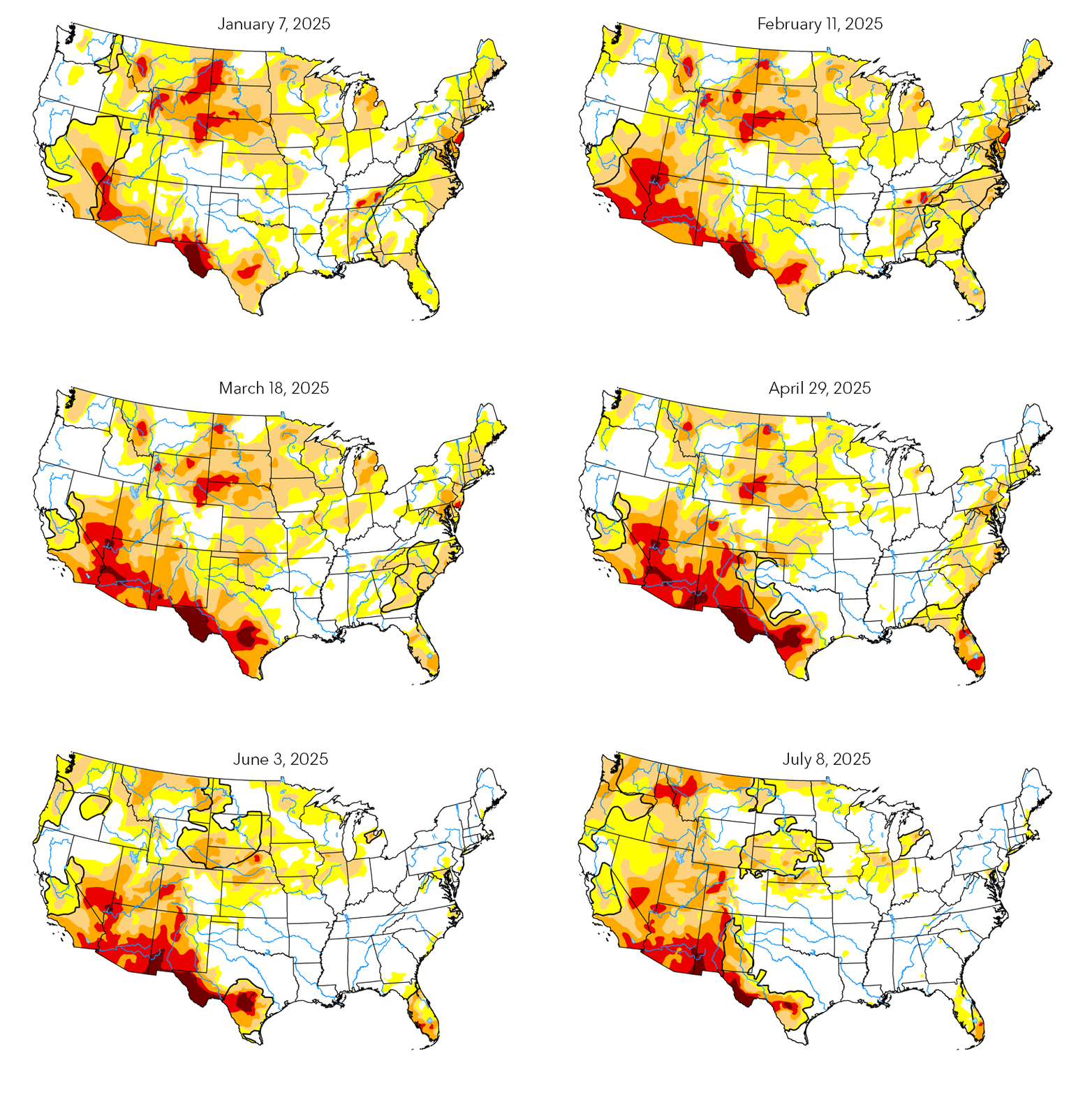
Strong winds were reported across Kansas on April 4, with extreme-to-exceptional drought now covering most of the western half of the state, along with much of northern Oklahoma. Strong thunderstorms churned through parts of eastern Oklahoma on April 4-5, with reports of damaging winds, hail, and spotty tornado activity.
Smaller patches of extreme-to-exceptional drought also covered western Texas in early April, though eastern areas of both Texas and Oklahoma were largely drought-free. Southeastern Texas was bracing for more rain late in the week, with 2-6 inches expected in some locations.
High wind warnings were also in effect for much of New Mexico at midweek, with temperatures expected to reach the 80s by the end of the week.
Corn planting was underway in the region, with USDA estimating progress as of April 2 at 1% complete in Kansas and 57% in Texas. Growers in Texas also had 7% of the cotton and 46% of the sorghum crop planted by that date.
“Corn looks pretty good,” said one Texas contact at midweek. “We are expecting some general rains over the next few days, and those are needed. A few dryland cotton fields have been planted, but the full season irrigated fields are just getting underway. Field conditions are decent, but we are counting on this rain.”
South Central:
Multiple thunderstorms tracked through Arkansas at midweek, bringing heavy rain and gusty winds to some locations. Both the Black River and White River in eastern Arkansas were experiencing minor to moderate flooding during the week.
Steady rains across Middle Tennessee and southern Kentucky prompted a flood watch for several counties in early April. A band of strong thunderstorms also moved through Louisiana during the week, with reports of 2-4 inches of rainfall and wind advisories in effect for some locations.
A State of Emergency was issued for the Mississippi counties of Pontotoc, DeSoto, Tishomingo, Lee, and Tunica on April 4 following the destructive storms that pushed through the state on March 31 and April 1. Jackson, Miss., has reportedly received nearly five inches of rain since mid-March.
Growers in Tennessee and Kentucky had 1-2% of the corn crop planted by April 2, USDA reported, while rice planting in the region had progressed to 1% complete in Mississippi, 5% in Arkansas, 35% in Texas, and 68% in Louisiana.
Southeast:
North Carolina was bracing for potentially severe thunderstorms late in the week, with forecasts warning of damaging winds, hail, and heavy rain on April 6-7 for parts of the state. Heavy rain was also tracking through parts of Georgia. Atlanta reported a total of 3.74 inches since mid-March, 121% of its historical average for that time period.
Weekend thunderstorms were also expected in Virginia, South Carolina, and Alabama, where highs in the 80s were posted at midweek. Strong-to-severe storms were in the April 6-7 forecast for much of the Mid-Atlantic region as well, with much cooler temperatures expected behind the precipitation.
Drought conditions were worsening in Florida in early April, though some parts of the state were expecting showers over the Easter weekend.
Sources reported brisk movement of preplant fertilizer on corn in the region, with one source estimating corn planting at 35-40% complete in his trade area. “Cotton has fallen in price, so corn is the crop of choice,” said one regional contact. Growers will start on tobacco and soybeans soon.
US Gulf:
High water levels on the Lower Mississippi River prompted tightening restrictions above New Orleans, with tow lengths reportedly cut by up to 25%. Delivery delays continued to be heard up to 48 hours as a result.
The Baton Rouge river gauge was posted at an action-stage 31.51 feet and rising on April 4, with a 34.5-foot crest predicted on April 8-10. The minor flood stage at Baton Rouge starts at 35.0 feet.
Overnight travel was restricted through the Black Bayou Bridge, located at Mile 237 in the West Canal, after a vessel reportedly collided with the structure on April 1. Nighttime transits required the use of an assist vessel, sources said.
Algiers Lock will be closed to navigation from 6:30 a.m. to 6:30 p.m., Monday through Saturday, through May 4. Waits were recorded up to 57 hours during the week, up from the week-ago 35 hours.
Guidewall repairs at Calcasieu Lock were set to run through April 6, blocking daytime travel on Monday through Friday. Waits were posted up to 21.5 hours during the week, rising from 4-11 hours reported previously. Daytime travel closures at Brazos Lock concluded on March 31, sources said.
Colorado Lock repairs underway since Dec. 5 blocked travel daily from 7:00 a.m. to 7:00 p.m., triggering delays up to 13.5 hours, off from 27 hours at last check. Movements were expected to begin normalizing on April 28.
Repairs to the Bayou Boeuf north chamber are scheduled to kick off on April 10, blocking weekday navigation between 7:00 a.m. and 4:00 p.m. Detours will be available through Bayou Chene for the duration of the project, currently scheduled through May 12. Intermittent shutdowns at the Morgan City Railroad Bridge, located at the West Canal’s Mile 121, were set to run from mid-April through September.
Port Allen Lock wait times were reported up to seven hours, while boats passing through Industrial Lock required up to 48 hours to lock. Fog and high winds delayed transits throughout the Gulf by up to 72 hours.
Mississippi River:
Water levels remained elevated on the lower river, prompting towing restrictions, increased travel times, and widening delivery windows. Maximum tow sizes were reduced by up to 25%, triggering delivery delays up to 48 hours.
The Vicksburg gauge, posted at an action-stage 39.82 feet and rising on April 5, was expected to crest at 40.3 feet on April 6-7. The Baton Rouge gauge was forecast to crest on April 9-10. Both locations will remain above action stage through at least April 19, according to NWS forecasts. An April 5 flood warning for the Mississippi River at Red River Landing was scheduled to expire on April 20.
Waits were reported up to five hours at Lock 18, while Chain of Rocks Lock saw intermittent 16-hour waits. Lock 1 and the St. Anthony Falls Upper Lock, both located in the Twin Cities area, remained closed to navigation during the week.
Illinois River:
Sources described minor flooding on the Illinois Waterway between Starved Rock Lock and Beardstown, Ill.
Wickets continued in the lowered position at Peoria Lock and LaGrange Lock due to the high water levels, allowing boats to transit both locations without locking. Waits were posted up to 10 hours at Marseilles Lock, while Starved Rock Lock delays ran up to 15 hours. Sources reported daytime slowdowns near Dresden Island Lock due to mechanical dredging.
The Illinois River is scheduled to shut to commercial travel from June through September for lock repairs and maintenance.
Ohio River:
NWS data showed falling water levels on the Ohio River. The Cincinnati river gauge was posted at 37.01 feet on April 5, after cresting at an action-stage 40.25 feet on April 3.
Floating mooring repairs underway at the JT Meyers Lock main chamber were scheduled through Aug. 20, triggering intermittent slowdowns. The site’s auxiliary chamber is due to close Aug. 21 through Sept. 10 for miter gate repairs, followed by an additional main chamber shutdown running Sept. 11 through Nov. 17.
Primary chamber work at Hannibal Lock, begun on Feb. 20, was extended through April 10, three days past the originally-scheduled April 7 end date. Corps data put delays up to 23 hours through the week. The Greenup Lock main chamber is shut until April 12. The auxiliary chamber at Melville Lock is due to close April 17 through Aug. 4 for maintenance.
The Tennessee River’s Kentucky Lock saw delays up to 18 hours. Wilson Lock transits were also delayed up to 18 hours.
Arkansas River:
The planned Maynard Lock shutdown has reverted to its original April 10-14 timeline, sources said. The scheduled outage was briefly reported shifting to April 13-14.
OCI NV said on March 28 that it will conduct a strategic review after one of its largest shareholders, activist investor Jeff Ubben, urged it to consider asset sales to unlock value, according to Bloomberg.
The Dutch chemical producer will “examine all potential suggestions” put forward by Ubben, OCI CEO Ahmed El-Hoshy said in a phone interview Tuesday. Ubben, whose firm, Inclusive Capital Partners, owns 5% of OCI, said the company is worth about 90% more than its current stock price.
In a letter to Executive Chairman Nassef Sawiris on Tuesday, Ubben said OCI has assets that would be attractive to oil and gas majors moving to cleaner energy forms. OCI is “both misunderstood and under-analyzed,” he wrote. The company’s shares rose as much as 14% in early trading Wednesday and were up 13% at 11:10 a.m. in Amsterdam, giving it a market value of €6.3 billion ($6.8 billion).
“We believe that OCI will struggle to achieve its full and fair value in its current structure,” Ubben wrote in the letter, a copy of which was seen by Bloomberg. “With such a valuable company at such a disconnected stock price, the status quo for OCI is clearly not working.”
OCI has an opportunity to lead the energy transition to decarbonize ammonia and methanol-based fuels, according to Ubben. The company should consider options for its methanol business and low carbon ammonia project in Beaumont, Texas, as well its Iowa Fertilizer Co. unit, he said.
El-Hoshy said he agrees with Ubben that OCI is undervalued. “Our DNA has always been focused on value creation and maximization over our history,” he said.
San Francisco-based Inclusive Capital also holds a stake in Fertiglobe Plc, the Middle Eastern fertilizer venture that OCI jointly controls with Abu Dhabi National Oil Co. Fertiglobe went public in a 2021 initial public offering, a deal that Ubben said showed the value within OCI’s portfolio. Fertiglobe’s stock has risen 56% since its listing.
“This IPO was a good first step to demonstrate value,” Ubben wrote. “To unlock further value, OCI should consider additional share listings or a sale.”
Ubben commended OCI management for positioning the company to generate “meaningful financial, environmental, and social value,” but said OCI should consider how to best harness this value to further return capital to shareholders.
Iowa Fertilizer may achieve a substantially higher valuation in a strategic sale and would be of great value to pure-play fertilizer producers, like Nutrien Ltd., seeking nitrogen production in the US Corn Belt, according to Ubben. Nutrien said it does not comment on speculation.
“We welcome the dialogue with our shareholders, and will evaluate the merits of the views and ideas of our stakeholders, including In-Cap,” OCI said in a statement late Tuesday.
Ubben left the hedge fund he founded, ValueAct Capital Management, in 2020 and started Inclusive Capital. The firm, which focuses on social and environmental investing, has previously taken positions in electric-truck company Nikola Corp., power generator AES Corp., and bioenergy firm Enviva Inc.
Earlier this year, it emerged that Ubben had taken a stake in German drugs and agriculture company Bayer AG, whose shares have slumped since its troubled takeover of agriculture giant Monsanto Co.
Pacific Green Fertilizer Corp., a Delaware corporation owned by Swiss-based Atlas Agro, is planning a green nitrogen plant for Richland, Wash., that will be focused on ammonium nitrate (AN) production. The company inked a real estate purchase and sale agreement with the Port of Benton, a municipal corporation in Washington, on March 8.
Pacific Green’s development plan is for a 1 million square foot fully renewable hydrogen production facility to form ammonia, nitric acid, and AN. The company has not yet indicated approximate capacity goals. The capital expenditure is put at $1.2 billion and the company expects the facility to employ 160. The project’s timeline is for groundbreaking is 2024, with the plant to be operational in 2026-2027.
According to the size of the plant, the company said peak electricity demand is between 220-300 MW, with Pacific Green exploring additional energy storage to help reduce the peak demand burden. The company said logistics is highly focused on the final product shipment to farmers, with minimal import of resources. It expects to use 10 railcars per day and/or 25 trucks, with rail highly preferable.
The Port of Benton has agreed to assist the company in securing rail access via spur to the Southern Connection 16-mile rail line to Kennewick, Wash. The port has a barge slip on the Columbia River.
The company said it would prefer to purchase land rather than lease, with an ideal site having access to rail and reasonable proximity to interstate or suitable state highways. It said if no rail option is available, the company is open to using barges to ship its products to farmers and distribution centers.
“We can focus on building new, green nitrate assets in the optimal locations,” the company said on its website. “We will build our factories in the market, near the farmer, providing security of supply and avoiding the traditional inter-continental shipping of fertilizer with an associated time, cost, and carbon emissions.”
Pacific Green said by 2030 it will build and license a number of renewable fertilizer plants, build a new generation of fertilizer distribution in attractive markets, and leverage its position as a large, low-cost hydrogen producer to help incubate hydrogen businesses.
Atlas Agro is focused on producing green AN fertilizer. It said most of the world’s nitrogen fertilizer capacity is for urea, which is a carbon-containing fertilizer that cannot be made green as it contains a CO2 in the molecule. The company touts AN as a superior fertilizer, saying it can directly be consumed by crops, unlike urea, which must be converted to nitrates by soil bacteria. This conversion process acidifies the soil, the company said, leading to burned roots.
The company added that AN has 90% lower volatilization loss than urea, provides a higher yield and better crop quality, and is more conducive to precision farming.
As a new entrant into the fertilizer sector, Atlas Agro said it does not have to worry about cannibalizing existing polluting assets or the costs involving in closing down unprofitable plants.
Atlas Agro said it is currently working closely with partners on project development in the US, Brazil, and Paraguay, and encourages anyone interested in zero-carbon nitrogen or explosives to reach out to the company.
Atlas Agro’s business model focuses on utilizing clean energy sources to power electrolyzers that will split water into hydrogen and oxygen. The company said its goal is to establish fully renewable production of three major nutrients—phosphate, potash, and nitrogen.
The local newspaper, Tri-City Herald, reported that the company indicated it will rely on nuclear power to fuel the operations, but this could not be confirmed with Atlas Agro this week.
The company put down a $400,000 deposit for land at the Port of Benton, and the exact acreage will be determined in connection with the company’s pre-development activities. Under the agreement, the company can buy up to 260.1 acres. The first 150 acres are priced at $1.39 per square foot, which would equate to a total of $9.08 million. Beyond 150 acres, the price is $2.09 per square foot.
Prior to closing the deal, the buyer would have to receive all approvals necessary from local governmental authorities with respect to permitting, construction, zoning and/or land use matters, as well as satisfying the requirements of the Washington State Environmental Policy Act. The deal must close by March 1, 2026.
Atlas Agro North America has opened an office in Richland. It has hired staff and is looking for more in the areas of general management, project development, sales, finance, and strategic operations.
Shipments out of major exporters Belarus and Russia are still at least partially constrained and a lot of alternative outlets for product have been exhausted, Nutrien Ltd. CEO Ken Seitz said in an interview at Bloomberg’s New York headquarters on March 29.
“Looking at 2023, we think there’s going to continue to be challenges which create a gap in the market,” he said. Seitz added that the Canadian company is monitoring conditions and will continue to adjust its planned ramp-up of potash production as farmer demand changes.
Seitz also commented on relations with BHP Group Ltd., which is developing the $5.7 billion Jansen project close to Nutrien’s mines near Saskatoon, Sask. The two firms held talks about a potential partnership two years ago, and BHP was said in January to have been interested in doing more deals, at the right price, with companies such as Nutrien.
“The relationship with BHP is good; we’re in the community together,” Seitz said, while declining to comment on whether the companies have been in talks more recently. “They’re focused on their work on Jansen project, we’re focused on the work that we’re doing, and that’s the focus at the moment.”