All posts by mickeybarb@charter.net

Muriate of Potash

U.S. Gulf:

Early-week potash barge trades were reported as low as $730-$740/st FOB, according to sources. By the end of the week, however, most were putting new trades in the $785-$805/st FOB range.

U.S. Imports:

MOP import data for January was not available at press time.

Eastern Cornbelt:

Potash pricing in the Eastern Cornbelt was quoted at $785-$820/st FOB, with the Cincinnati market pegged at $785-$800/st FOB during the week. Great Lakes sources confirmed new pricing FOB Toledo in the $870-$875/st FOB range, up another $15-$25/st from the prior week.

Western Cornbelt:

Potash pricing remained at $790-$825/st FOB in the Western Cornbelt, with both the high and low confirmed in St. Louis, depending on the time of the week.

Southern Plains:

Potash pricing was reported at $800-$820/st FOB Catoosa/Inola and up to $825/st FOB Houston. Intrepid’s last posting on Feb. 18 at Carlsbad, N.M., included $805/st FOB for 60 percent white granular and $825/st FOB for 62 percent white standard.

South Central:

The potash market was quoted at $795-$820/st FOB terminals in the South Central region, with the Memphis market pegged in the $795-$805/st FOB range and Arkansas warehouse pricing reported at $815-$820/st FOB. Those levels were up from $750-$800/st the week before, and a full $85-$90/st higher than late February pricing.

Southeast:

Potash pricing was pegged in a broad range at $760-$840/st FOB port terminals in the Southeast, with the low reported for the last confirmed spot sales and the high reflecting new reference pricing FOB Wilmington.

Germany/Canada:

K+S is fully booked on potash until April and even into May, company CEO Burkhard Lohr told analysts at a company earnings call on March 10.

Lohr said K+S has not yet concluded new supply contracts with China and India, with volumes to the former country currently under negotiation. He said, “it is becoming less important because of the current global supply situation.”

Russia:

MOP exports for January 2022 were reported at 879,000 mt, down from the 1 million mt exported in January 2021, according to Trade Data Monitor. Brazil remained at the top of the buyers’ list with 282,000 mt, followed by the U.S. with 112,000 mt, China with 104,000 mt, and Bangladesh with 96,000 mt.

India:

January 2022 imports were reported at 315,000 mt by Trade Data Monitor. This amount was about 44 percent down from the 568,000 mt imported during January 2021. The main source of MOP for India in January was Israel with 116,000 mt, Belarus with 83,000 mt, Jordan with 82,000 mt, and Lithuania with 34,000 mt.

Brazil:

Sources said potash supplies in Brazil are enough for the next 60-90 days. After that, more tons will be needed to replenish stocks and handle the rest of the application season. Unfortunately for Brazil, sources noted, about half of their total supply comes from Belarus and Russia, both of which are under stern sanctions.

MOP prices this week were reported at $1,000-$1,100/mt CFR at the ports. In Rondonopolis, sources put the market at $1,230-$1,380/mt FOB ex-warehouse. Further increases are expected, not only because of the expected limitations of supply, but also because the cost of transporting the product from the ports to the local distributors is rising. Sources point to higher fuel costs hammering the local buyers.

The Brazilian agriculture minister met with officials in Canada to encourage Canpotex to increase its output to help replace the material lost from Belarus and Russia.
Sulfur

Tampa:

Ongoing geopolitical uncertainty was expected to drive the Tampa sulfur price higher in the next round of contracting, sources said. Sharp increases observed from a number of international markets in recent weeks were expected to apply upside pressure, players noted, as were snug domestic supply and rising NOLA phosphate prices.

Players also turned an eye toward Moroccan phosphate producer OCP, which reportedly noted a shifting production focus toward MAP during the week due to that product’s reduced ammonia content relative to DAP.

“Sulfur could go up in price significantly if OCP gets enough ammonia to replace their roughly 50 percent dependency on FSU (Former Soviet Union) tonnage,” one player argued. “(Conversely,) sulfur could drop through the floor if they cannot source enough ammonia to make DAP.”

Some also questioned whether Tampa molten sulfur contracts could see a period of monthly settlements due to the market’s ongoing uncertainty, a change from Tampa’s traditional quarterly agreements.

The first-quarter Tampa contract was quoted at $282/lt CFR. Some speculated on a possible $70-$100/lt increase in the next contract.

Domestic U.S. refining capacity moved higher for the week, the Energy Information Administration (EIA) reported. Utilization was noted at 90.4 percent for the week ending March 11, up 1.1 points from the previous 89.3 percent. The rate continued to top both the year-ago 76.1 percent and the 86.1 percent five-year average.

Crude inputs were also noted higher, climbing to an average 15.601 million barrels/d through the period, a 224,000 barrel/d increase from 15.377 million barrels/d at last report.

U.S. Imports:

January sulfur imports totaled 334,411 st, up 13.8 percent from the year-ago 293,877 st. July-January imports were counted at 1.98 million st, however, an 8.3 percent decrease from the year-ago 2.16 million st.

U.S. Exports:

Sulfur exports for January stood at 49,570 st, down 28.3 percent from the year-ago 69,098 st. July-January exports were reported at 837,562 st, however, up 26.2 percent from the prior-year 663,781 st.

U.S. Gulf:

Following Brazil higher, market players generally pegged Gulf export sulfur values in the $365-$375/mt FOB range.

Brazil:

Brazil import pricing was reported firming to $410-$415/mt CFR for the week, increasing from $390-$395/mt CFR in the prior report.

Vancouver:

With China pricing on the rise, players reported Vancouver levels firming to the $380-$390/mt FOB range, rising from the week-ago $350-$355/mt FOB.

Alberta:

Alberta netbacks were expected to move higher based on rising Vancouver pricing, with values indicated in a wide $167-$320/mt FOB range for the period.

West Coast:

West Coast prills were noted on par with Vancouver at $380-$390/mt FOB, up from $350-$355/mt FOB at last report.Molten tonnage loading from locations on the West Coast was contracted at $230-$245/lt FOB for the first quarter, sources said.

China:

China import prices were reported moving up to $430-$435/mt CFR during the week, increasing from $400-$405/mt CFR in the prior report.

ADNOC:

Abu Dhabi National Oil Co. (ADNOC) prills were heard offered at $335/mt FOB Ruwais for March loading, up $15/mt from $320/mt FOB in February.

Qatar:

March tons offered by Muntajat were noted at $333/mt FOB Ras Laffan. Qatar pricing was reported at $315/mt FOB in February, an $18/mt difference.

Kuwait:

Kuwait solid sulfur offers were reported at $343/mt FOB, an increase of $28/mt compared to $315/mt FOB in the prior period.

Sulfuric Acid

U.S. Gulf:

No new pricing was noted on the Gulf vessel market, leaving the market at the last-reported $255-$260/mt CFR. Indications suggested a rise into the $260s/mt CFR in the next round of business.

U.S. Imports:

January sulfuric acid imports were noted at 294,065 st, falling 14.4 percent from 343,567 st in the prior year. July-January totals stood at 2.08 million st, off 14.8 percent from the year-ago 2.45 million st.

U.S. Exports:

Sulfuric acid exports firmed 73.6 percent in July-January, to 197,918 st from the year-ago 114,013 st. Exports totaled 11,605 st for January, however, a 0.4 percent decline from 11,647 st recorded in the prior January.

Gulf Coast:

Material delivered by rail to locations on the U.S. Gulf Coast were noted at $195-$230/st DEL for 2022 annual contracts.

Midwest:

Sulfuric acid contracts for the Midwest were called even with the Gulf Coast at $195-$230/st DEL.

West Coast:

West Coast sulacid pricing was reported in a $185-$220/st DEL range for 2022 annual agreements.

Brazil:

With nothing new reported, Brazil spot pricing continued in a $270-$275/mt CFR range, steady from the prior report.

Ammonium Thiosulfate

Eastern Cornbelt:

The ammonium thiosulfate market jumped to $675-$700/st FOB in the Eastern Cornbelt, with inventories described as very tight. “The rumor is that no producer has March or April railcars available to sell,” said one contact.

Western Cornbelt:

Ammonium thiosulfate pricing jumped to $675-$725/st FOB in the Western Cornbelt, with the high confirmed in the Iowa market on a spot basis.

Southern Plains:

Ammonium thiosulfate prices were up in the Southern Plains, with sources in Texas quoting new offers at $500/st FOB Houston and $600/st FOB Lubbock.

South Central:

The ammonium thiosulfate market was pegged at $550-$560/st FOB Memphis, up $10-$15/st from last report.

NPSZ

Cornbelt:

The NPSZ market covered a very broad range in the Cornbelt as prices adjust to the higher DAP/MAP levels. While some sources reported pricing as low as $905/st FOB at the start of the week, others confirmed new offers at a high of $1,060/st FOB by the end of the week, reflecting a $35/st premium over MAP.

Sulfate of Potash

U.S. Imports:

July-January SOP imports were noted at 105,277 st, up 34.5 percent from the year-ago 78,270 st. January imports were off 39.5 percent, however, slipping to 15,010 st from the prior-year 24,814 st.

U.S. Exports:

SOP exports moved up 13.8 percent in July-January, to 40,540 st from the year-ago 35,610 st. Exports were noted at 12,412 st for January, up 168.2 percent from the year-ago 4,629 st.

Southeast:

The SOP market in the Southeast was quoted at $900-$930/st FOB, with the low reported at Wilmington and the high in Florida.

SOP Magnesia

Southern Plains:

Intrepid’s Feb. 25 Trio postings FOB Carlsbad, N.M., included $480/st for standard, $515/st for granular, $540/st for premium, $555/st for OMRI standard and fine standard, and $590/st for OMRI granular. Those prices reflect a $35/st increase from the previous postings.

Southeast:

SOP Magnesia pricing was pegged at $650-$660/st FOB in the North Carolina market on a spot basis.

Crops/Weather

Eastern Cornbelt:

After a brief round of light snow across parts of northern Indiana and northern Ohio early in the week, much warmer temperatures settled over the Eastern Cornbelt at mid-month and helped spring fieldwork get off to a brisk start in many locations.

Central Illinois saw highs climbing into the 60s and low-70s during the week, with reports of minor flooding on a few regional rivers and streams. Rain and cooler weather was on tap for the coming weekend, however.

Highs in the 60s and 70s were also reported in central Indiana and central and northern Ohio as the week progressed, with showers expected to ramp up on March 18. Forecasts warned of up to a half inch of rain in parts of Ohio by the weekend, with highs dropping to the 50s.

Western Cornbelt:

After a dry and warm start to the week, Iowans were bracing for rain and colder temperatures by the end of the week, with a potential for snow in some northern areas of the state. Much warmer weather was once again on tap for the weekend, however.

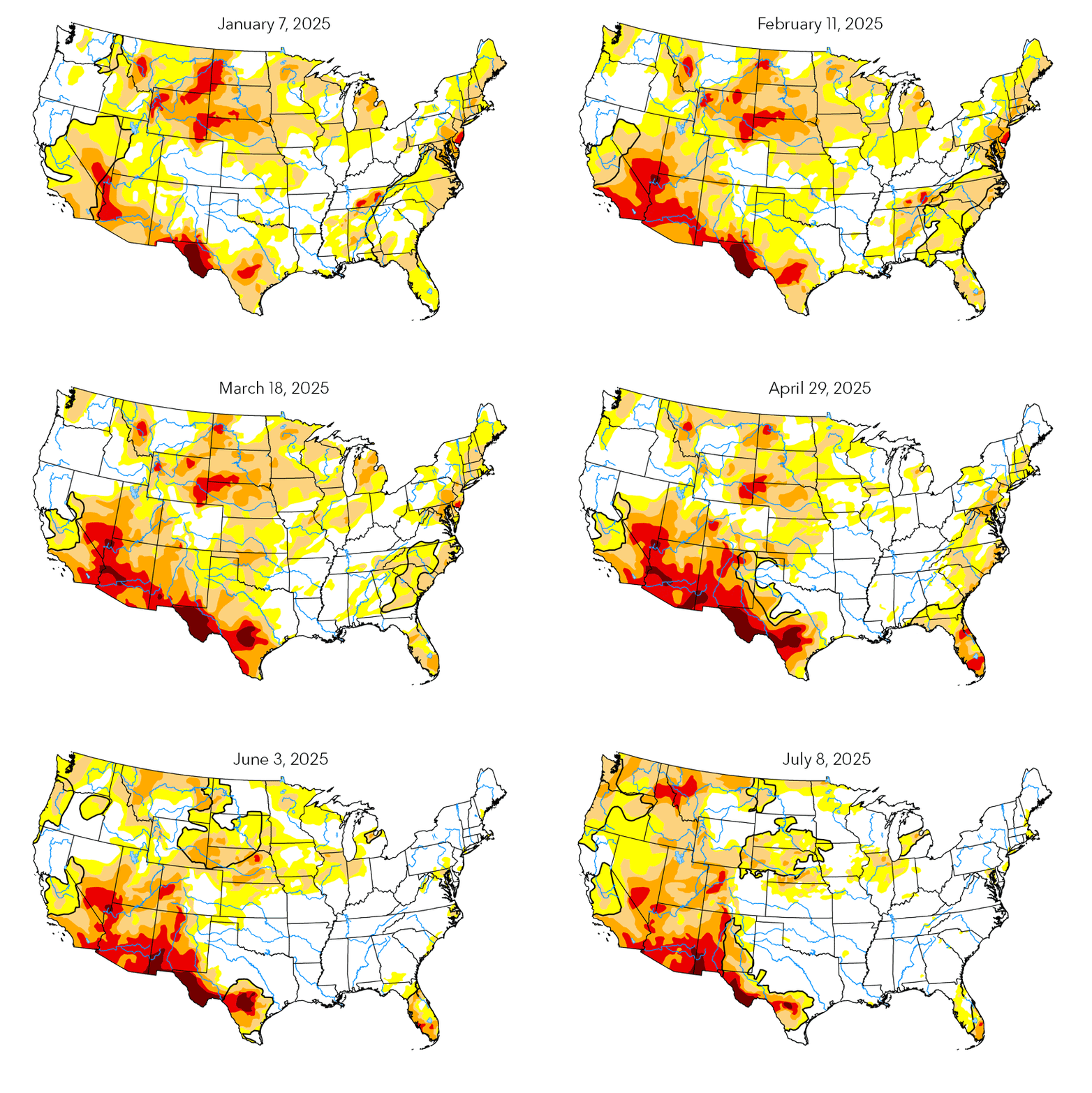
A chance of rain and snow was also reported in western Nebraska on March 17 after several days of spring-like temperatures. The March 17 U.S. Drought Monitor showed drought covering all of Nebraska, with a wide swath of severe-to extreme drought stretching across the central portion of the state.

Much of Missouri experienced temperatures in the 60s and 70s as the week progressed, which allowed for a flurry of spring fieldwork and preplant ammonia application in the state.

Southern Plains:

A winter storm brought rain and snow to Colorado, northern New Mexico, and western Kansas during the week, while temperatures in eastern Kansas pushed up into the 70s.

Denver collected nearly five inches of snow at midweek, with another three inches possible in some Colorado locations before the system moved out on March 17. Lesser amounts were reported across western Kansas, with eastern areas of Kansas expecting rainfall ranging from 0.25 to 1.25 inches late in the week.

Weather conditions varied greatly across Texas, from extreme warmth in the south to a potential rain/snow mix by March 17 in far northern areas of the state. Much of western Texas was under extreme fire danger during the week due to drought conditions and strong winds, while the eastern edge of the state was expecting potentially strong thunderstorms late in the week.

Soil conditions remain very dry across the Southern Plains, with extreme-to-exceptional drought reported across much of Oklahoma and a sizable swath of Texas on March 17. “We are very dry in this region,” commented one regional contact. “I was talking with a farmer yesterday who was planting oats, and even at four inches in the ground it was dry.”

Sources said fieldwork and spring fertilizer movement was starting to pick up in the region, but trucks remain hard to find. “Truck transportation is difficult and rates have adjusted higher, even before increases in fuel surcharges,” said one contact.

South Central:

After widespread snowfall across Arkansas, Tennessee, and Kentucky over the previous week, spring temperatures returned to much of the South Central region during the week, with highs climbing into the 70s and even 80s.

Some showers were possible across Tennessee late in the week, and a band of strong thunderstorms was taking aim at the southern edge of the region over the weekend and into next week, with the highest risk in eastern Texas, western Louisiana, and southwestern Arkansas. Forecasts warned of potentially damaging winds, large hail, and tornadoes on March 21.

Southeast:

Much of the Southeast experienced severe weather at mid-month, including an overnight storm in the Charlotte, N.C., area on March 12-13 that produced strong winds, widespread power outages, and up to 10 inches of snow in the North Carolina mountains.

Showers and thunderstorms were reported in parts of Virginia, South Carolina, Alabama, and Georgia at midweek, with reports of heavy rain in some locations and a heightened risk of tornadoes and hail. Multiple tornado warnings were also in effect across central Florida at midweek.

Much of the region was expecting drier weather with temperatures in the 70s later in the week, before another system ushers in more precipitation over the coming weekend.

Spring fertilizer application was underway with reports of corn being planted in some areas, although Florida sources said frost damage to citrus crops has cut down on early spring demand. “Between low prices, low production, and high input costs, most citrus growers are cutting back if not giving up,” said one contact.

Added another contact: “I’ve spoken to some farmers that are leery to plant with the fertilizer prices right now.” Availability was also a growing concern. “Containers are still a big issue,” said one source. “We are waiting on product that was ordered over six months ago.”

Transportation

U.S. Gulf:

Water levels above the 12-foot mark at New Orleans triggered fleet restrictions and towing surcharges starting on March 8, sources said. Levels stood at 12.77 feet and rising on March 16. Long-term forecasts showed the New Orleans gauge holding above the 12-foot mark through at least March 30.

Daytime navigation shutdowns at Brazos Lock were extended through mid-May, approximately 60 days beyond the previously mid-March timeline. Locking was unavailable between 7:00 a.m. and 5:00 p.m., Monday through Friday, driving delay expectations up to 24 hours.

Bayou Sorrel Lock guidewall construction is underway through May 31. The project will block weekday lockages between 7:00 a.m. and 11:00 a.m., and again from 1:00 p.m. to 5:00 p.m. Delays were reported up to 35 hours on March 14-16, with 18 tows noted in the locking queue.

Bayou Chene movements were unavailable during overnight hours due to ongoing floodgate construction, leaving access available daily between 7:00 a.m. and 7:00 p.m. Tows through the area during daylight hours were limited to 600 feet of length, while those wider than 54 feet were required to use an assist vessel. Delays were expected up to 6-12 hours.

Maximum Atchafalaya River drafts were posted at 10 feet through Miles 113-116 due to shoaling. In addition, lengths were restricted to 600 feet, while tows longer than 400 feet were encouraged to utilize an assist tug. Maximum widths were reported at 70 feet. Vessels were advised to avoid the restrictions entirely by detouring through the Port Allen Route.

Tows locking unassisted through Algiers Lock remained subject to strict length and width requirements, effectively holding lockages to four standard barges or two 30,000 mt tankers per pass. Larger configurations were reportedly possible with an assist vessel. Delays were noted in the 9-13 hour range, with additional intermittent stoppages heard in the 17-25 hour range.

Belle Chasse Bridge construction, scheduled to run into late 2022, prompted intermittent delay expectations up to 12 hours. The structure is located at Mile 3 in the West Canal.

Port Allen Lock movements were delayed up to 21 hours during the week, Corps data indicated, while wait times were posted up to 27 hours through Industrial Lock. Colorado Lock waits were observed up to 12 hours.

Mississippi River:

Elevated river levels required towing restrictions on the lower Mississippi River, sources said. In addition to reduced barge counts, some larger strings were running daytime-only through the Vicksburg, Miss., and Memphis areas, due in part to bridge clearance issues.

The river gauge at Vicksburg was at an action-stage 42.17 feet on March 16, just shy of the region’s 43-foot minor-flood threshold. Levels were expected to fall below action stage on March 25. The area between Baton Rouge, La., and New Orleans was also at an action stage 33.7 feet on March 16 and subject to a Flood Warning, set to remain in effect through March 30.

Rock placement work that kicked off in early January at Mile 642 on the lower river was scheduled to conclude on March 15. Tows moving in the downriver direction were reportedly delayed up to 12 hours while the project was underway.

Repair operations at the Fort Madison Railroad Bridge, located at the upper river’s Mile 383.9, were set to wrap up on March 14, ending a one-week period of limited daytime navigation.

Upper Mississippi River Locks 5A, 8, and 10 were tentatively slated to begin opening for spring navigation on March 17. Should current weather forecasts hold, sources expected the spring season’s first barges to begin reaching the Twin Cities area by the end of the month.

Illinois River:

Improved river conditions were reported on the Illinois Waterway during the week, allowing increased navigation speeds. Ice couplings were no longer required on lockages.

Brandon Road Lock is scheduled for a repair and maintenance operation from May 9 to Sept. 8. Overnight-only navigation will be in place between May 9 and Aug. 14, while towing widths will be capped at 70 feet. Navigation is scheduled to be completely unavailable Aug. 15 through Sept. 4, followed by a return to nighttime-only lockages on Sept. 5-8. Normal movements are set to return on Sept. 9.

Wickets were noted in the lowered position at both Peoria Lock and LaGrange Lock during the week, allowing for nonlocking navigation through both locations. Delays were noted up to five hours at Starved Rock Lock.

Ohio River:

High water levels continued to impact Ohio River transit during the week, but forecasts predicted improving conditions later in March.

Main chamber repairs and maintenance at Emsworth Lock that began on Feb. 22 forced tows to lock one barge at a time through the site’s auxiliary chamber during the week. Extensive delays were reported as a result, with most tows requiring 8-10 days to pass the site. The project is tentatively set to end on April 16.

Cannelton Lock repairs in progress through May 26 led to expected midweek delays of 12 hours or more. Cannelton Lock maintenance proposed for July 5 through Nov. 11 would limit access to the site’s primary chamber.

Dashields Lock main chamber work underway through March 31 forced tows to lock through the secondary chamber, leading to wait times in a wide 6-31 hour range. Following the main chamber shutdown, the site’s auxiliary chamber is scheduled to close on April 1-22 for repairs.

The primary chamber at Belleville Lock is projected to shut from May 2 through June 22 for repairs and maintenance, leaving traffic to lock through the secondary chamber. Hannibal Lock is scheduled to undergo a primary chamber shutdown from July 5 through Oct. 8 for repairs.

Extensive delays were reported at the Tennessee River’s Wilson Lock due to main chamber work scheduled through April 28. Passage has been relegated to the secondary chamber while work is underway, lifting delays to a reported 5-8 days during the week. The Corps has scheduled one main chamber opening on March 18-23 to pass waiting vessels.

Kentucky Lock delays were posted up to seven hours for the week, falling from 15.5 hours in the prior report.

Maintenance and inspections at the Cumberland River’s Bio-Acoustic Fish Fence (BAFF) will block Barkley Lock navigation between 6:00 a.m. and 6:00 p.m. on March 21-27. Detours will be possible through Barkley Lock and Kentucky Lock.

A proposed miter gate machinery repair project would limit Cheatham Lock navigation from May 31 to Aug. 5. Intermittent lock openings are expected to be scheduled during the closure.

Arkansas River:

Norrell Lock planned maintenance activities will necessitate a series of transit shutdowns running into January of next year, sources said. Lockages will be unavailable during daytime hours on June 1-11; June 22-July 21; Aug. 1-10; Aug. 21-Sept. 21; Sept. 30-Oct. 9; Oct. 20-Nov. 18; Nov. 29-Dec. 23; and Jan. 3-31, 2023.