Eastern Cornbelt:
A
line of powerful thunderstorms on June 20 produced at least three tornadoes in
the Chicago area and in northwestern Indiana, including one that registered as
an EF-3 with sustained wind speeds of 140 mph that touched down in the Illinois
communities of Naperville, Woodridge, and Darien.
The storm caused
widespread damage. Another round of potentially strong thunderstorms was taking
aim at southwestern and west-central Illinois late in the week, with forecasts
warning of tornadoes, heavy rain, and flash flooding. Parts of northern Ohio
were also bracing for a wet and stormy weekend after high temperatures and
humidity late in the week.
Soybean emergence in the
region had progressed to 94-95 percent by June 20, with USDA assigning good or
excellent ratings to 65-65 percent of the corn and soybean acres in Illinois,
70 percent in Indiana, and 72-76 percent in Ohio.
Western Cornbelt:
The Western Cornbelt was bracing for
severe thunderstorms as the week progressed. Forecasts on June 24 warned of
heavy rain, large hail, and damaging winds in eastern Iowa, with rainfall
totals of 3-6 inches expected in some locations.
A tornado warning was in effect on June
24 for eastern Nebraska and portions of Iowa and Missouri, with reports of
severe thunderstorms battering Nebraska, and heavy rain, 60-mph wind gusts, and
golf ball-sized hail in northwestern Missouri.
USDA placed fully 83 percent of
Nebraska’s corn and soybeans in the good or excellent categories on June 20,
along with 56-57 percent of the acreage in Iowa and Missouri. Missouri’s cotton
and rice were rated as 68 percent good or excellent on that date.
Southern Plains:
High
heat and humidity blanketed the Southern Plains during the last full week of
June, with highs climbing to the triple digits in Kansas, Oklahoma, western
Texas, and New Mexico.
Severe
thunderstorms moved through parts of eastern Kansas late in the week, and a
strong chance of precipitation was also in the weekend forecast for western
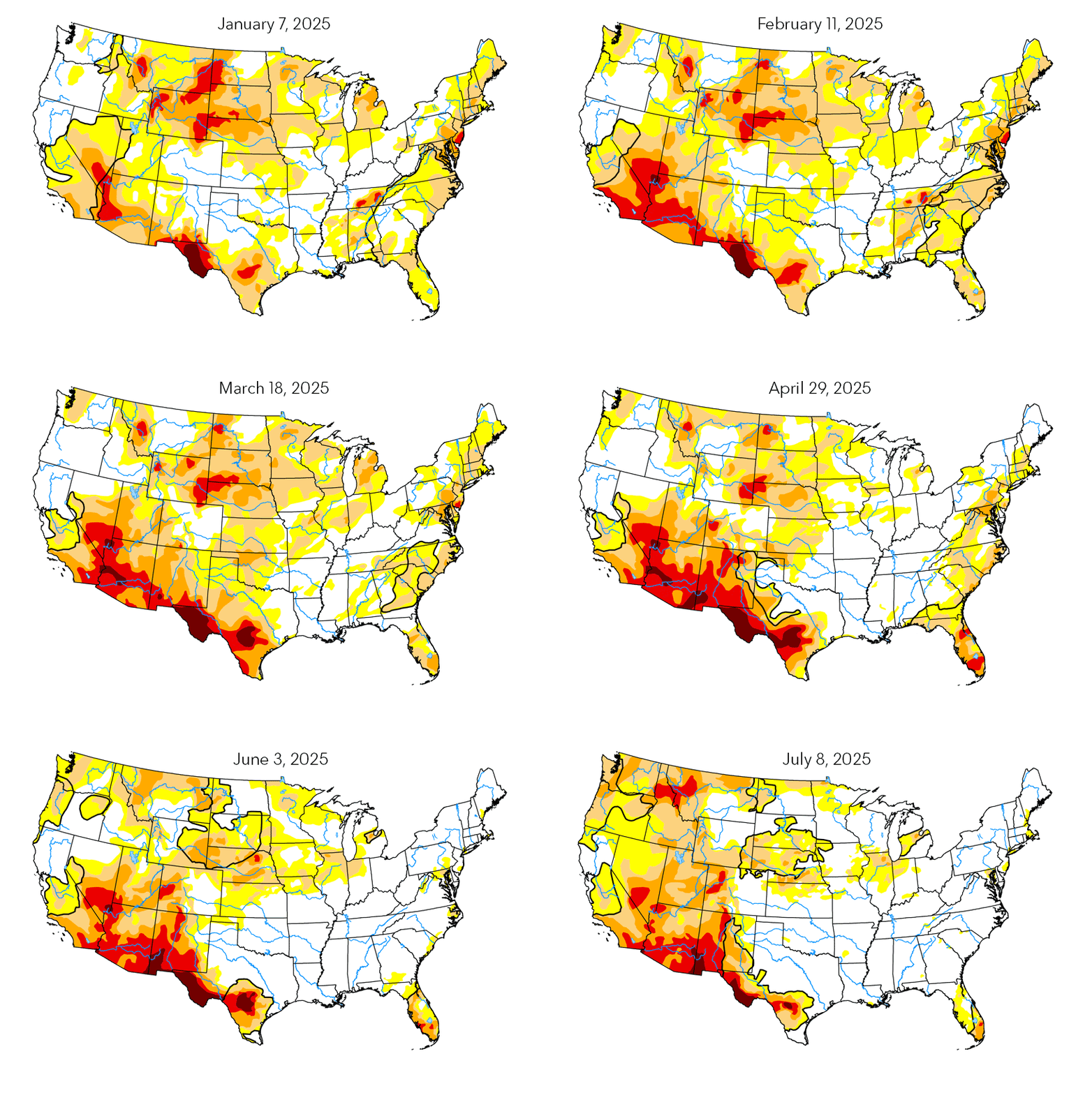
Texas and New Mexico, along with cooler temperatures. New Mexico is in
desperate need of rain, as much of the state continues to experience
extreme-to-exceptional drought conditions.
Growers
were wrapping up planting in the region in late June. The Kansas soybean crop
was 90 percent planted by June 20, while cotton planting had progressed to 75
percent complete in Oklahoma and 96 percent in Kansas and Texas. Sorghum
planting was 63 percent complete in Oklahoma by that date, compared with 85
percent in Kansas, 89 percent in Colorado, and 96 percent in Texas.
Sources continued to report fertilizer
moving in the region, including sidedress applications on corn and cotton and
movement on hayfields in Texas. Some early corn was also expected to be
harvested in Texas in early July. USDA on June 20 rated 77 percent of the Texas
corn crop as good or excellent, compared with 71 percent in Kansas and 78
percent in Colorado.
South Central:
Strong
thunderstorms moved through Middle Tennessee and southern Kentucky early in the
week, with high heat and humidity reported for the balance of the week. Hot,
muggy conditions were also reported in Arkansas, with temperatures climbing to
the mid-90s and heat index values expected to reach the triple digits by the
weekend.
Over
the previous weekend, Tropical Storm Claudette brought heavy rain and 25-55 mph
winds to parts of Louisiana and Mississippi, with some areas of Louisiana
collecting nearly a foot of precipitation.
Heavy
rain and flooding in June has taken a toll on Arkansas’ crops, with the state
estimating $200 million in crop losses. Some locations were hit with nearly 20
inches of rain in just two days, causing an estimated $70 million in losses to soybeans and rice, $60
million to corn, $6 million to cotton, and $1 million to wheat and sorghum.
Cotton
planting had progressed to 96-100 percent complete in the region by June 20,
while soybean planting was estimated at 95-97 percent complete in Louisiana and
Mississippi, 93 percent in Arkansas, and 86-87 percent in Tennessee and
Kentucky. Some 81-86 percent of the corn acres in Tennessee and Kentucky were
rated as good or excellent on that date.
Sources reported brisk topdress movement of
urea on rice in the region, with good or excellent ratings assigned to 86
percent of the acreage in Mississippi and 69-70 percent in the rest of the
region. “Shipments on rice are fast and furious
at the moment,” said one source. “Hoping we have a strong tail end of the
season still ahead.”
Southeast:
Tropical
Storm Claudette brought heavy rain and strong winds to a wide swath of the
Southeast on June 20-21.
The
storm impacted parts of Georgia, Alabama, North Carolina, and Virginia before
it moved off the Mid-Atlantic coast, with reports of flooding, power outages,
and several isolated tornadoes. Thunderstorms were also reported in Central
Florida at midweek, with reports of 50-55 mph wind gusts.
Planting
was rapidly winding down in the Southeast, with both cotton and peanuts
estimated at 97-100 percent planted in the region by June 20. North Carolina
growers also had 84 percent of the soybeans planted by that date.
Good
or excellent ratings were assigned to 77 percent of North Carolina’s corn crop
on June 20, while cotton in those two categories totaled 68-78 percent of the
acreage in the Carolinas, 69 percent in Georgia, 87 percent in Virginia, and 93
percent in Alabama.
“Application is well underway,” said one Florida contact at midweek. “Peanuts look great in most areas. Areas with recent rains have benefited cotton. Dry and irrigated crop looks very good. Corn that was planted on time looks fantastic. Overall, it all looks very good at this time.”