All posts by mickeybarb@charter.net

Ammonium Thiosulfate

Eastern Cornbelt:

The ammonium thiosulfate market remained at $400-$420/st FOB in the Eastern Cornbelt, with the low confirmed at Cincinnati for prompt material and the high for spring tons.

Western Cornbelt:

Ammonium thiosulfate pricing was steady at $390-$400/st FOB in the Western Cornbelt.

Northern Plains:

No current bids were confirmed for ammonium thiosulfate in the region. The last business was pegged at $435-$455/st FOB.

Eastern Canada:

Ammonium thiosulfate was unchanged at C$655-$685/mt FOB in Eastern Canada.

Crops/Weather

Eastern Cornbelt:

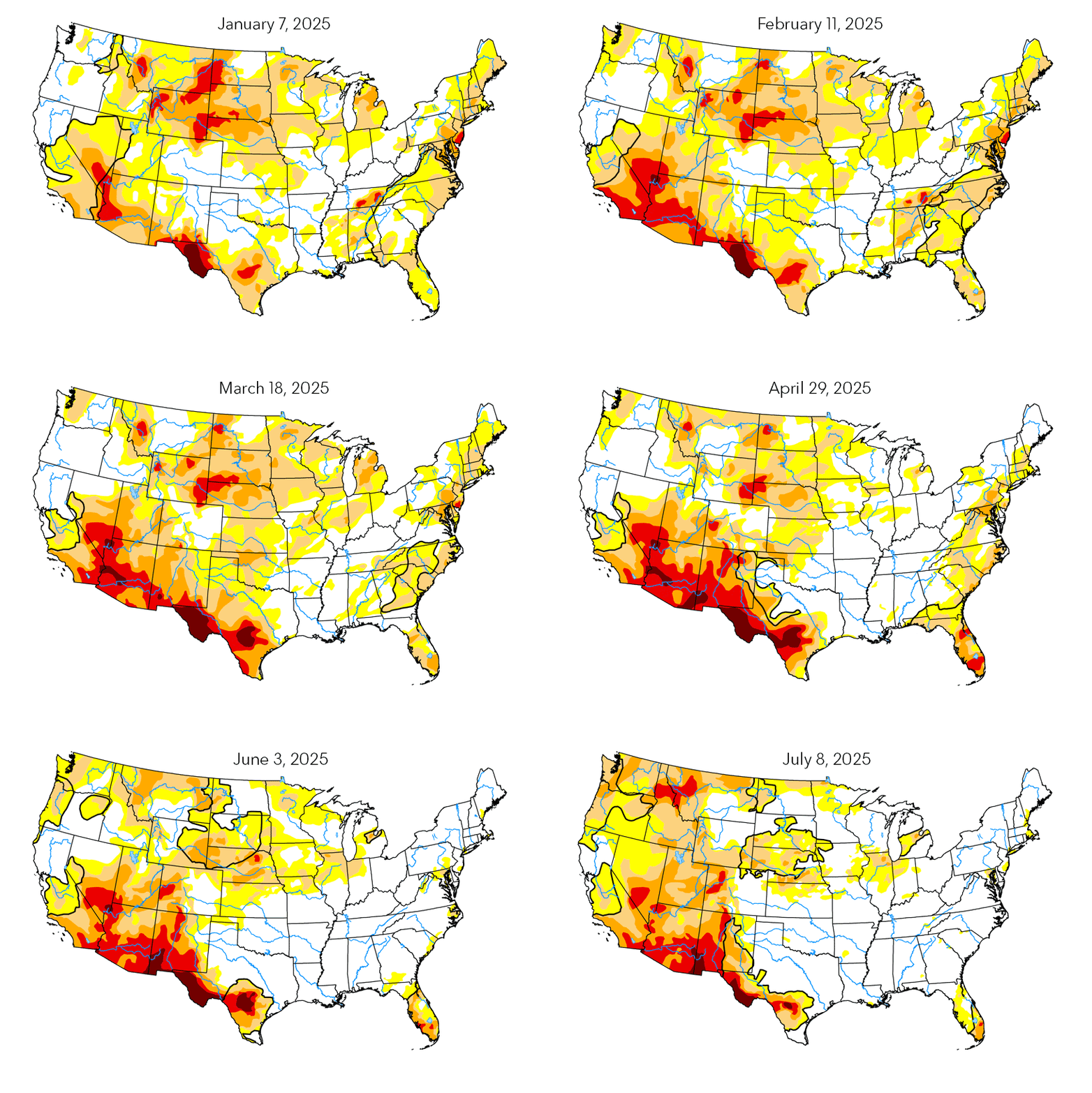
US Drought Monitor

Winter storm warnings and advisories were in effect for much of northern Illinois on Feb. 16, with 4-8 inches of snow and 35-mph winds expected. Stormy weather was also on tap for southern Ohio as the week advanced, with forecasts warning of rain, strong winds, and hail in some locations.

Parts of Indiana were also in the path of strong storms during the week. Damaging winds were reported in central and southeastern Indiana on Feb. 16, with highs falling from the low-60s to the 20s. Scattered snow flurries were expected in northern Indiana by Feb. 17.

Western Cornbelt:

Winter storm warnings and advisories were in effect for central and southern Iowa on Feb. 16 as a strong storm churned through the region, dropping as much as 1-2 inches of snow per hour. Forecasts warned of 8-10 inches of accumulation across southern Iowa and 4-6 inches in Des Moines by the end of the day.

Omaha, Neb., picked up 5-8 inches of snow from the same system, while Lincoln, Neb., reported 11 inches of accumulation. Whiteout conditions caused several accidents and temporary closures on Interstate 80 on Feb. 16.

Northern Missouri experienced rain and high winds on Valentine’s Day, with highs climbing to near 60 at midweek. A wintry mix of rain and snow returned to the state on Feb. 16, with highs in St. Louis expected to remain in the 30s on Feb. 17.

Northern Plains:

Corn Wheat Soybean Index

Blizzard warnings and winter weather advisories were issued for parts of the Dakotas on Feb. 14-15, resulting in several road closures, including portions of Interstate 29 and Highway 2 in the Grand Forks region.

Although Valentine’s Day began with mild temperatures in the upper-30s and low-40s across South Dakota, rain and gusty winds moved in as the day progressed, along with dropping temperatures and snowfall. The system left 3-6 inches of snow in eastern North Dakota and northeastern South Dakota, and 1-2 inches in the Sioux Falls, S.D., area.

The storm also brought rain, ice, and snow to parts of Minnesota, with 2-4 inches of snow accumulation reported in western Minnesota and an inch or more of rain in the Twin Cities area. A gradual warmup was expected later in the week, however, with temperatures climbing back into the 30s and low-40s across southern Minnesota and South Dakota by the weekend.

Northeast:

Record-high temperatures were reported across the Northeast during the week, with highs on Feb. 15-16 reaching the 60s in Connecticut, Rhode Island, and southern Massachusetts. Highs in Pennsylvania also reached the upper-50s and low-60s on Feb. 15-16, but rain was in the forecast late in the week, with lows falling to the teens and 20s by Feb. 17.

Boston posted a record 61 degrees on Feb. 16, but a cold front later in the week was expected to bring rain to southern New England and up to 6-10 inches of snow in parts of Maine. Highs in New York’s Hudson Valley climbed to 58 degrees on Feb. 15, but temperatures there were expected to drop to near 20 degrees on Feb. 17.

Eastern Canada:

Unseasonably mild temperatures across Eastern Canada resulted in numerous daily record highs on Feb. 15-16, but storms and colder temperatures were expected again by the end of the week.

Record highs on Feb. 15 in southern Ontario included 15 C in Toronto, 14.2 C in London, and 9.6 C in Ottawa. Northern Ontario, by contrast, was buried in 5-15 cm of fresh snow at midweek, with temperatures falling to the negative 20s C in some locations.

Quebec also posted several record highs at midweek, including 10.5 C in Montreal. A strong storm brought rain, freezing rain, and snow to the region late in the week, however, with 10-15 cm of snow and subzero temperatures expected in Montreal by Feb. 17. Quebec’s Beauce region was bracing for 15-25 cm of snow by the end of the week.

Similar conditions were reported across the Maritimes, with balmy temperatures in the high single digits and low teens on Feb. 16, followed by snowfall and freezing rain on Feb. 17 for much of New Brunswick, Nova Scotia, and Prince Edward Island.

Transportation

US Gulf:

Work underway since Jan. 30 at Calcasieu Lock was scheduled to continue through March 3. Waits were noted in a wide 10-30 hour range on Feb. 14.

Maintenance at Bayou Boeuf Lock, begun on Feb. 6, was expected to wrap up on Feb. 16, ending a run of daytime, Monday-through-Thursday navigation shutdowns. Intermittent waits were recorded up to 12 hours during the week.

Bayou Sorrel Lock guidewall replacement, in progress through March, triggered intermittent weekday travel outages between 6:30 a.m. and 5:00 p.m., resulting in delays up to 16 hours.

Sources are expecting Algiers Lock repairs to begin sometime in late February and continue for approximately seven weeks. Navigation through the site is anticipated to be unavailable for roughly 20 days, scattered throughout the project. Waits were observed up to 32 hours during the week.

Maintenance and repairs at Colorado Lock blocked travel daily from 7:00 a.m. to 7:00 p.m., sources said. Corps data put wait times as high as 11 hours.

Navigation through Belle Chasse Bridge, located at Mile 3.8 of the Algiers Canal, is scheduled to be unavailable from 6:30 a.m. to 7:00 p.m. on Feb. 20, 22, 24, 28, and March 2 due to an ongoing bridge replacement project. More shutdowns are anticipated in late March and April.

Port Allen Lock waits were seen up to 19 hours for the week, while Corps data showed Industrial Lock delays in a 15-22 hour range on Feb. 14. Boats transiting Brazos Lock waited up to 23 hours to pass.

Mississippi River:

Despite the St. Louis river gauge returning a 7.93-foot reading on Feb. 15, sources continued to note the potential for volatile water levels on the upper Mississippi River lasting through the end of March. NWS forecasts predicted levels to remain relatively steady at St. Louis through at least Feb. 29.

As a result of the week’s increased water levels, draft limits returned to normal on southbound travel through the St. Louis and Cairo areas, sources said. Drafts were capped at 9.5 feet one week earlier.

No towing restrictions were reported on the lower river. The NWS issued a flood warning for the Mississippi River at Vicksburg, in effect for the Feb. 15-20 period. Forecasts at the Memphis gauge improved as well, and no longer predicted depths falling below the region’s 5.0-foot Low Stage in February.

The Mel Price Lock and Chain of Rocks Lock main chambers are shut for repairs and maintenance through March 31. Transit is available through both sites’ auxiliary chambers, resulting in delays of 33 hours at Mel Price. Corps data put Chain of Rocks waits as high as 54 hours during the week.

Locks on the upper river are tentatively set to begin reopening for the spring navigation season on Feb. 26, starting with Locks 24 and 25. Movements are currently slated to be fully restored by April 1, weather permitting. Tows destined for Clinton, Iowa, and below began releasing from NOLA earlier in February, sources said, while cargoes headed north of Clinton were expected to begin departures in the third or fourth weeks of the month.

Illinois River:

Rising water levels and melting ice prompted Peoria Lock operators to lower wickets early in the week, sources said, allowing tows to transit through the site’s non-locking navigational pass. LaGrange Lock was expected to follow suit on Feb. 14 or 15.

Marseilles Lock waits were counted up to nine hours. Commercial navigation is projected to be unavailable on the Illinois Waterway June through September due to planned lock repairs.

Ohio River:

The auxiliary chambers at Bellville Lock and Racine Lock are slated to remain shut through Feb. 26 for repairs and maintenance. Racine Lock will see a primary chamber shutdown running Feb. 26 through March 12.

Floating mooring repairs underway at JT Meyers Lock, scheduled to continue through Aug. 20, will necessitate intermittent main chamber closures, sources said. The Dashields Lock primary chamber was reported offline on Feb. 16-18. Sources expected the Hannibal Lock primary chamber to close to navigation Feb. 20 through April 7.

The Greenup Lock main chamber will shut March 12 through April 12. The auxiliary chamber at Melville Lock is slated to close for repairs and maintenance April 17 through Aug. 4.

Sources reported planned intermittent shutdowns for the Tennessee River’s Kentucky Lock on Feb. 13-17. Corps data put Kentucky Lock delays in a wide 5-16 hour range through the week, while boats waited up to 35 hours to pass Wilson Lock.

Heartland Tank Services Inc. – Management Brief

Heartland Tank Services Inc., a liquid fertilizer tank manufacturer based in Oklahoma City, Okla., announced a leadership change on Feb. 6. Salvador Villagran, former General Manager of Heartland since 2012, has been named President and CEO following the retirement of Chris Brooks on Dec. 31, 2022. Brooks had served as President and CEO since the company’s inception in 2007. With Brooks’ retirement, Heartland’s headquarters also moved from Greenwood Village, Colo., to Oklahoma City.

In addition, Brian Hasselbring, former Regional Sales Manager, is now Chief Sales Officer for Heartland and will oversee all customer relationship management. Rick Buntt, former API 653 Inspector, is now serving as the company’s Chief Operations Officer. Villagran, Hasselbring, and Buntt are joined on Heartland’s Board of Directors by Paul Butler, Regional Sales Project Manager; Carlos Paredes, Liner Foreman; and Mario Romero, Liner Foreman.

Heartland currently has a workforce of more than two dozen employees engaged in the construction of liquid storage tanks ranging from 100,000 to 3 million gallons, tank liners and repair, secondary containment systems, and comprehensive inspections.

Grupa Azoty SA – Management Brief

Polish fertilizer and chemicals group Grupa Azoty SA subsidiary Azoty Puławy SA has appointed Marcin Kowalczyk as its CEO, effective from Feb. 10, the group said in a Feb. 9 media statement.

Kowalczyk was recently appointed Deputy CEO of Azoty, and replaces Tomasz Hryniewicz in both positions. Hryniewicz was removed from his Deputy CEO position on Jan. 16 and stepped down as Puławy’s CEO and from its Management Board, also effective Jan. 16 (GM Jan. 20, p. 24).

Kowalczyk was most recently employed as Head of the Political Cabinet of the Minister of State Assets.